

青岛民俗博物馆(青岛天后宫)作为山东省青岛市区现存历史积淀深厚的古建筑群落,是我国物质文化遗产体系中的重要组成部分,对于青岛海洋文化的传播和传承具有重要意义。传统建筑的保护与利用是当前文化遗产保护领域的重要研究方向之一。目前,关于青岛民俗博物馆的研究多集中于历史脉络、文化内涵及建筑艺术等维度,而针对其空间格局的系统性研究尚显薄弱。梳理相关文献可知,当前研究可归纳为以下四类。一是历史与考古研究,侧重于梳理天后宫的历史沿革,并通过考古发现证实其始建年代,例如,张海涛[1]研究明确了天后宫作为青岛市最早庙宇的历史地位;王欣[2]、韩安顺[3]分别对其历史概况与文化传播路径进行了梳理与阐述。二是保护与旅游开发研究,围绕遗产本体保护与旅游开发展开,如周双林等[4]总结了天后宫西式地砖的病害类型及保护技术;刘幸[5]、杨倩等[6]探讨了其作为海洋文化遗产的开发困境与旅游发展路径。三是文化研究,赵素菊[7]从文化背景方面分析了青岛天后宫的建筑风格与地域特征。四是建筑学相关研究,侧重于从建筑形制、艺术特征及文化交流的视角展开分析。韩雪[8]以天后宫为案例,分析了中德建筑文化的交流关系。总体而言,现有研究在空间—行为之间的互动关系,以及空间本体规律的精准量化方面有待进一步深入。
当前,风景园林三元论(ESA)研究已发展为理论扎实且持续演进的学术体系,在此基础上创立的人境场系理论,可系统性描述、发现并规范人类个体与环境的互动关系,定位和量化人境场中各种元素间的复杂关系,并在规划实践中指导着从区域到具体场地的设计。例如,在长三角水网地区的城乡野一体化发展研究中,该理论被应用于探索人居地方的主客互动与动态演化机制[9]。空间句法在建筑学中的应用广泛,在遗产保护层面,其被用于量化解析历史建筑与聚落的空间结构与价值,为保护和修复提供依据。例如,徐健等[10]借助空间句法解析冯玉祥旧居的空间格局;Ibrahim等[11]运用该方法进行空间对比研究,为跨区域历史遗产保护提供参考。在传统聚落研究中,空间句法聚焦古镇村落的空间拓扑关系解析,为其活态保护与文化传承提供技术支撑。例如,闵忠荣等[12]对河口古镇的空间形态与拓扑结构进行系统解析;Zou等[13]通过该方法完成张谷英村与老洞村的空间特征对比研究,为传统村落的差异化保护提供理论依据。此外,该方法还应用于旧建筑改造[14]与城市更新[15]领域,旨在优化空间配置与更新效能。在公共建筑领域,空间句法通过量化空间组构来关联功能效率与使用者体验,从而优化设计[16];还通过对比不同地域建筑空间形态来揭示其文化基因与地域特征[17-18]。
研究青岛民俗博物馆的空间形态,有助于深入探究海洋文化在中国北方沿海地区的传播路径、地方化特色。高崇勋[19]研究指出,青岛天后宫作为地方戏曲的重要展示载体,其戏楼表演区域狭小且后台空间不足等建筑格局问题对戏曲演出形成限制,在一定程度上影响了传统文化的广泛传播。本研究运用ESA的理论框架、空间句法中的视域模型、轴线模型,量化分析了青岛民俗博物馆的空间布局,通过其空间布局结构推导其潜在的行为活动模式,并阐述空间形态与行为模式二者之间的关系,为传统园林建筑的量化分析提供参考。
1 研究区基本情况
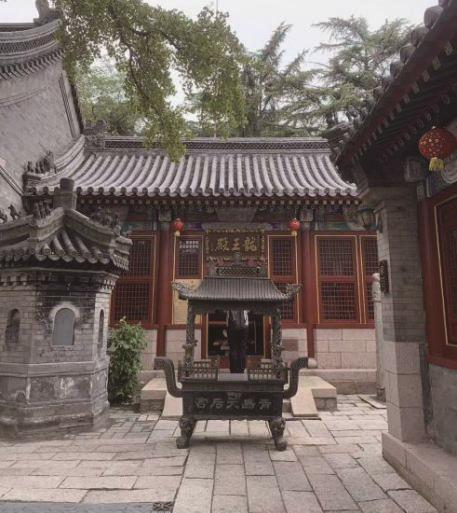
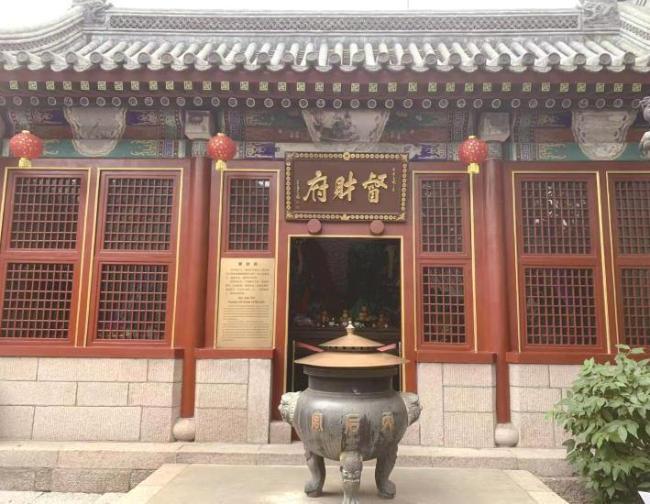
青岛民俗博物馆为青岛市现存最古老的明清砖木结构建筑群之一,该组建筑坐北朝南,为标准二进院合院式布局,由正殿、配殿、前后厢房、戏楼及钟鼓楼等共16座殿宇组成。其建筑风格兼具庙宇庄严与古典园林雅致,主体建筑采用清水墙、小灰瓦形制,梁枋间饰以苏式彩绘,唯戏楼以琉璃瓦盖顶,与主体建筑形成鲜明对比[2]。其布局、结构与风格特征,为研究山东沿海地区明清时期庙宇建筑的地域化演变提供了珍贵实物标本。
2 理论基础和研究方法
2.1 理论基础
2.1.1 风景园林三元论(ESA)
本研究以ESA为理论基础,其是由环境生态(E)、行为活动(A)、空间形态(S)构成的三元一体认识论与方法论体系,阐明风景园林的本质是三元耦合互动的理念。其中,环境生态是基础,空间形态是载体,行为活动是内核。三者相互依存,共同构成有机整体[20]。本研究侧重于对S进行量化研究,并探讨其与A之间的关联。
2.1.2 空间句法理论
空间句法是将空间单元转化为连接图式,借助拓扑计算量化空间结构的特征,包括4个模型:轴线模型、视域模型、凸空间模型和线段模型,以揭示空间结构与社会功能之间的内在联系。该方法在城市规划、建筑设计、遗产保护等领域应用较广泛,可有效分析空间使用的问题,并通过优化功能布局、预测人流分布情况等方式提升空间效能与用户体验。本研究主要运用视域模型与轴线模型。(1)视域模型,以空间特定观测点为基准,基于人眼实际可视空间范围,开展空间模型的分析与构建。通过系统量化空间单元间的视线关联强度,计算视觉整合度、平均深度等核心量化指标,可揭示空间的视觉可达性特征。该方法能直观反映空间的开放或封闭特性、视觉层次以及公共与私密属性。视觉整合度越高的空间,通常在整体空间的重要性越显著。(2)轴线模型,其核心是将空间抽象为最长且数量最少的特征直线,用以表征城市区域内人类移动的潜力与主导方向,进而构建区域空间的运动骨架。该模型通过轴线结构形态与整合度等关键量化指标,系统揭示了空间的通行组织逻辑与全局连通性特征。本研究涉及的核心指标包括深度值、整合度和连接度。(1)深度值,从起点到达某一空间所需的最少步数,标识空间的序列感与私密性。(2)整合度,衡量一个点在整个视觉网络中到达其他点的便捷程度,通常用最短视觉步数计算。整合度高的点通常是空间中人流聚集、易于导航的地方。(3)连接度,与该点直接相连其他点的数量。连接度高的点为该区域的视觉枢纽。
2.2 研究方法
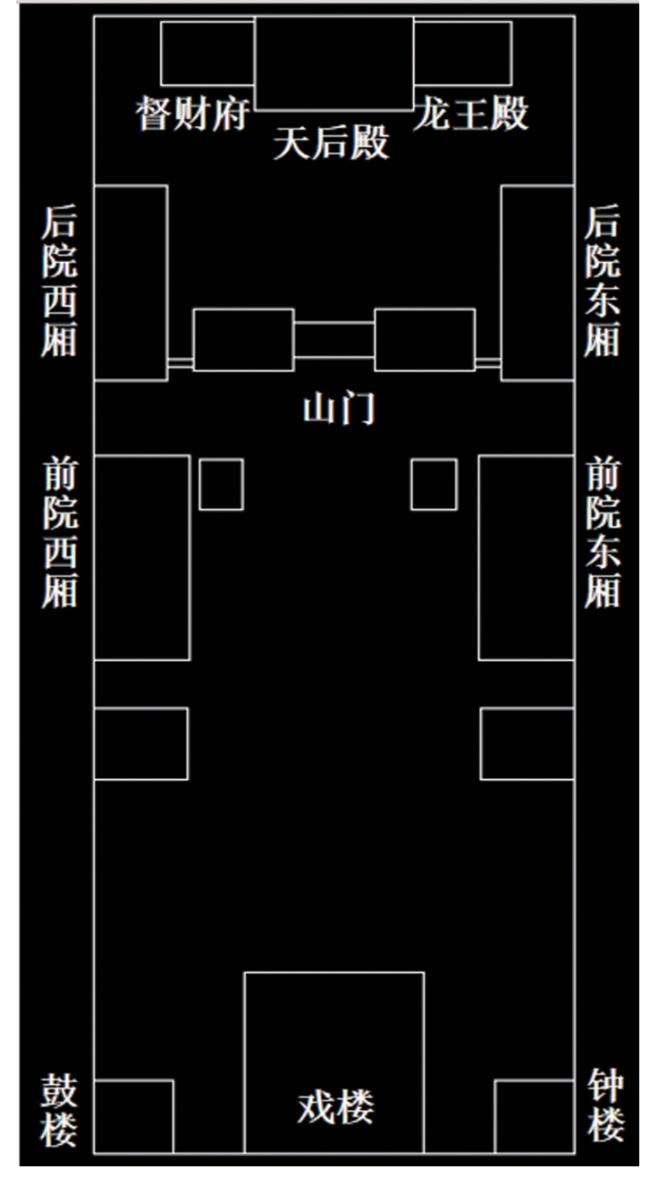
3 结果与分析
3.1 基于视域模型的分析
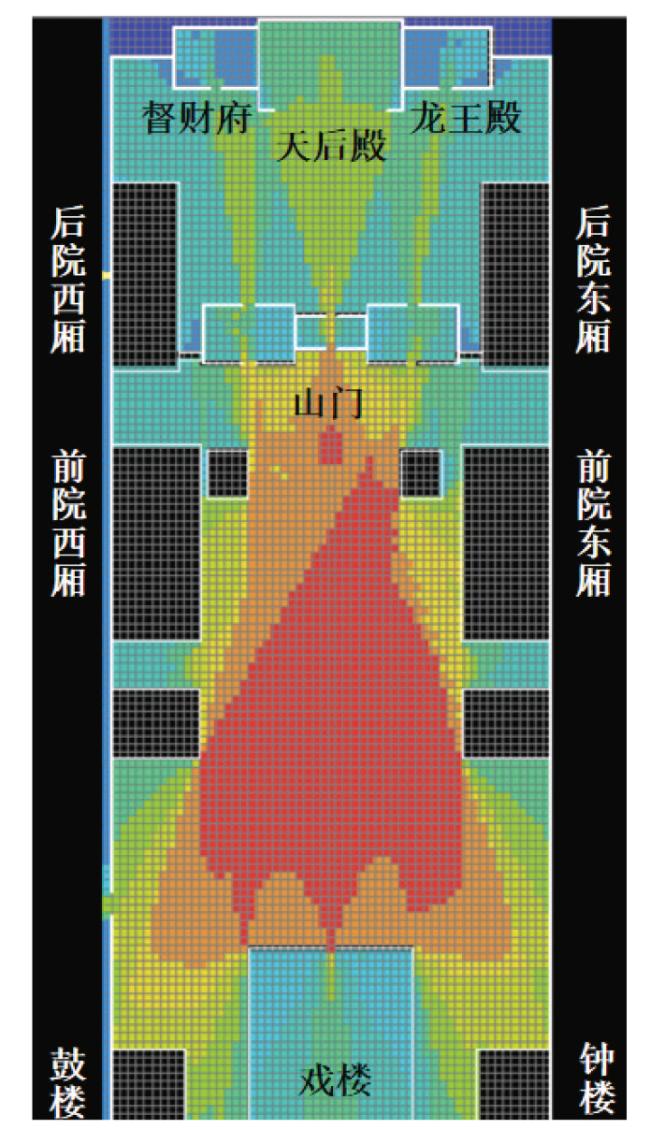
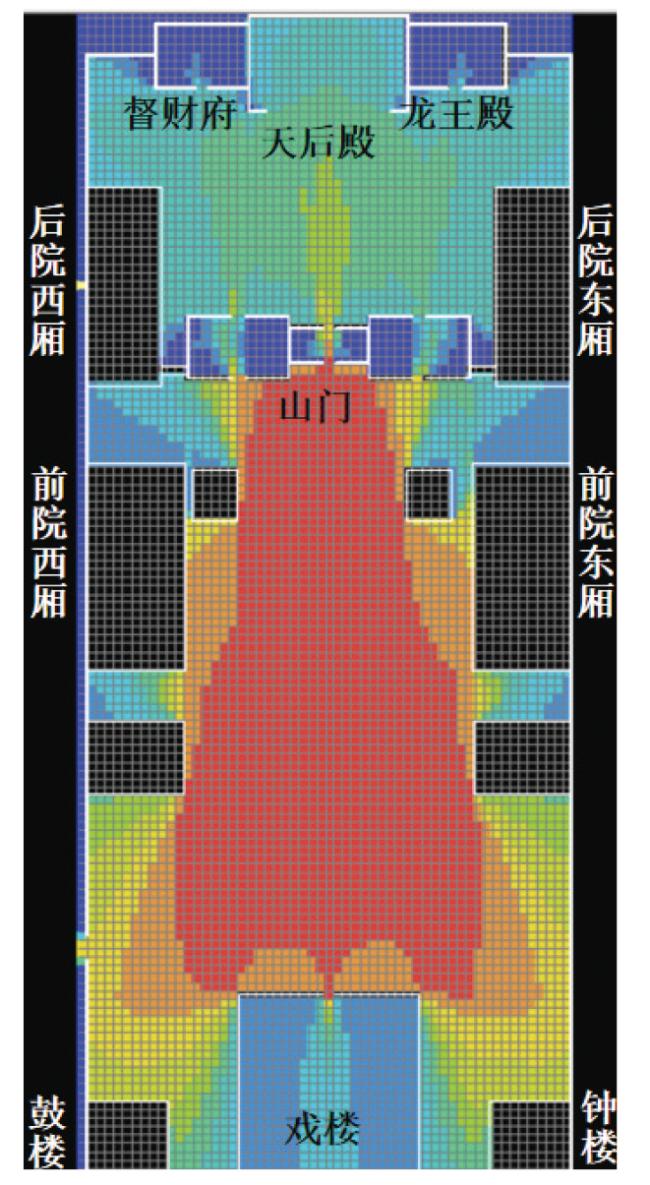
3.2 基于轴线模型的分析
由图4可知,整合度较高的轴线贯穿山门、戏楼和天后殿,数值呈“山门>戏楼>天后殿”的递减趋势,这表明山门是可达性最高的核心枢纽,由此至主殿形成了一条整合度递减但序列感增强的路径。轴线整合度高的区域是人流活动的主要区域,而厢房、督财府、龙王殿等整合度低的区域私密性较高,承担了相对安静的静默瞻仰与办公功能。这种由空间结构自发形成的动静分区,高效地组织了不同性质的行为活动,确保了核心礼仪空间的庄严性与边缘功能空间的静谧性。轴线分析进一步印证了其空间序列,山门作为整合度最高的起点,通过一条经前院、主殿整合度较高的主轴线,引导游客完成从公共领域到私密领域的空间序列过渡。
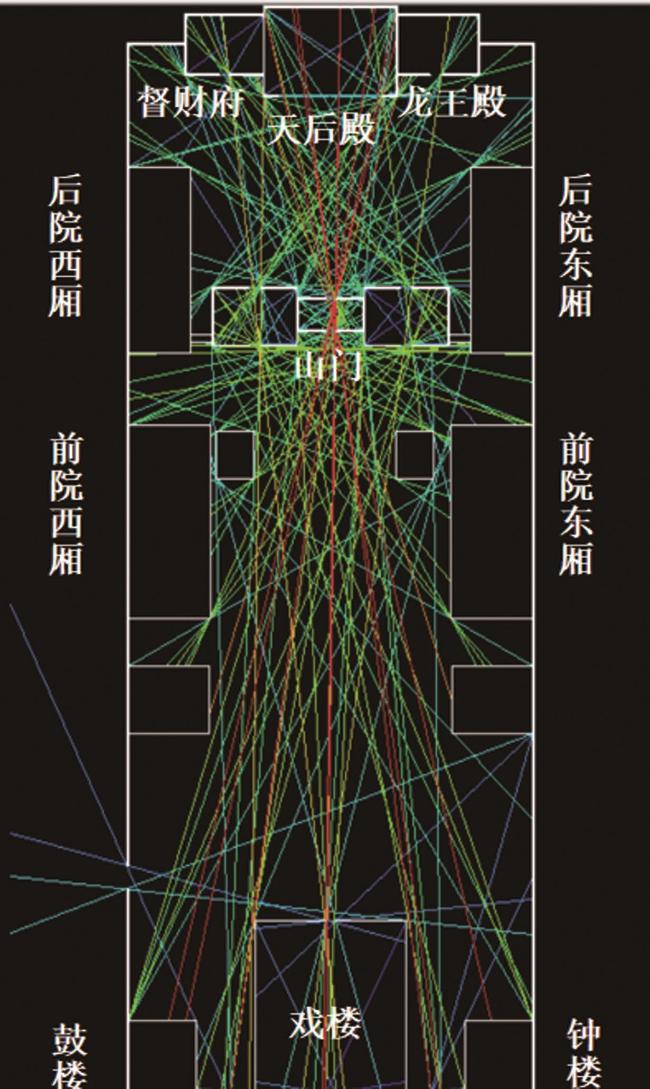
3.3 行为活动(A)的推导
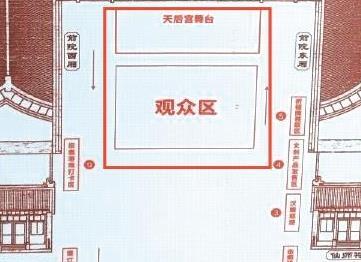
借助空间句法中的视域模型与轴线模型,获取了青岛民俗博物馆空间布局的量化指标,在此基础上推演出与之匹配的潜在行为模式。结合ESA中的空间形态(S)维度分析可知,戏楼至山门的前院区域的视觉整合度与轴线整合度最高,是兼具最高公共属性与核心重要性的关键区域,且该区域视野最为开阔(图5)。从空间功能来看,该区域凭借双重整合度优势,具备较强的人流吸引与聚集潜力,通常承担集散、观演及社交功能,可满足游客驻足休憩、观赏戏曲表演等需求,构成天后宫空间体系中的功能核心。


4 结论与讨论
本研究以ESA为理论框架,运用空间句法对青岛民俗博物馆的空间布局进行了量化解析,通过精确量化其空间形态(S),揭示了该地是以“戏楼—山门”为视觉与交通核心、以“山门→主殿”为递进序列的空间结构,并逻辑推导出该结构所支撑的行为活动(A)模式(公共观演、私密瞻仰),同时,论证了S—A二者间紧密的互动关系,解读了祠庙建筑如何通过空间布局引导行为、营造意境。
本研究验证了空间句法作为量化空间形态(S)的科学有效工具,能够为景观三元论分析框架提供量化数据支撑,进而实现研究从定性描述向定量分析的深度拓展。这一方法论的有机结合,突显了ESA理论在阐释复杂历史空间成因及人地关系方面的解释力。然而,本研究仍存在以下局限:对行为活动(A)的探讨多基于空间形态特征进行间接推导,缺乏实地行为数据的直接支撑与实证校验,未来研究可进一步引入实地行为观测、轨迹追踪、问卷调查等实证研究方法,对现有量化结论开展系统性检验与修正;此外,还可将环境生态(E)要素更深度地融入量化分析模型,通过完善三元维度的协同分析框架,更全面地揭示空间形态(S)、行为活动(A)与环境生态(E)三者间的相互作用机制。