

1 材料与方法
1.1 数据来源
以中国知网为数据来源,以“植物遗传转化”为主题检索词,“学术期刊”为检索大类,检索时间为1982年1月至2024年10月21日,经过手动删除无关文献以及软件去重处理,最终获得413篇有效文献,采用Refworks格式导出。
1.2 实验方法
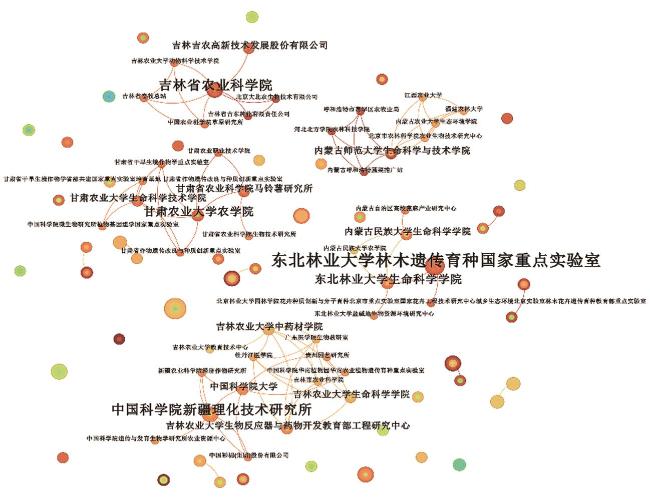
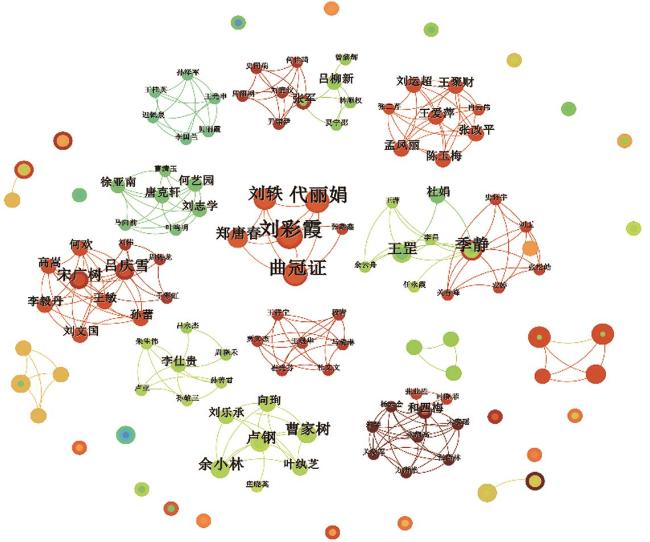
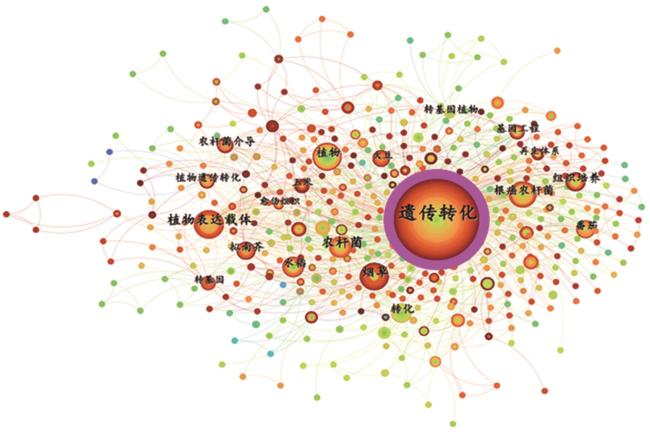
利用CiteSpace软件(6.4.R1版本)对文献发表时间、作者、机构、关键词情况进行信息采集和可视化分析。可视化时间节点选择1982年1月至2024年12月,时间切片为1 a,节点类型为机构、合作作者、关键词,其余设置均为系统默认。可视化网络图谱节点代表研究机构、作者、关键词元素,而节点间的连接线代表合作、共现关系。
2 结果与分析
2.1 发文量
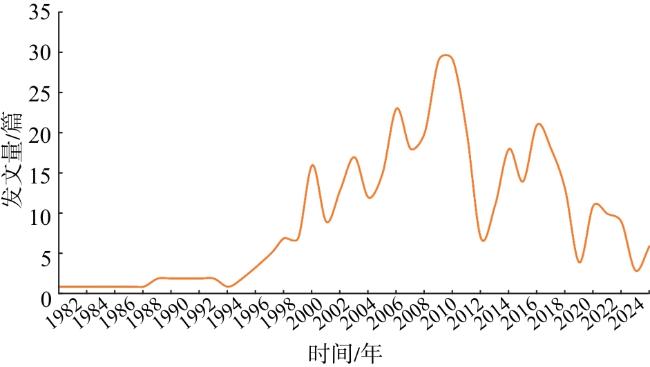
发文数量能够表现出该领域在一定时间内的发展趋势。由图1可知,植物遗传转化主题文章发文量随年度变化总体分为三个阶段:第一阶段为探索期(1982—1996年),其间关于植物遗传转化研究的发文量较少,年均发文量1.6篇,研究正处于起步阶段。第二阶段为增长期(1996—2010年),该阶段发文量呈快速增长趋势,年均发文量15.7篇;在2009和2010年,发文量达到峰值,为29篇。第三阶段为下降期(2010—2024),此阶段发文量总体呈下降趋势,但该阶段发文数量仍多于探索期,年均发文量为12.2篇。
2.2 发文期刊
对文献发表期刊进行分析,发现该研究领域的成果在180多个期刊发表。统计发文量≥6篇的期刊,结果如表1所示。植物遗传转化相关研究文献发表量前3的期刊分别是《分子植物育种》《生物技术通报》和《安徽农业科学》,篇数分别为28、18和17篇,占发文量总数的6.78%、4.36%和4.12%。
表1 发表文献数量6篇及以上的期刊 |
| 序号 | 期刊名称 | 发文量/篇 |
|---|---|---|
| 1 | 分子植物育种 | 28 |
| 2 | 生物技术通报 | 18 |
| 3 | 安徽农业科学 | 17 |
| 4 | 华北农学报 | 12 |
| 5 | 中国农学通报 | 12 |
| 6 | 中国生物工程杂志 | 8 |
| 7 | 农业生物技术学报 | 7 |
| 8 | 东北农业大学学报 | 7 |
| 9 | 植物生理学通讯 | 7 |
| 10 | 西南农业学报 | 6 |
| 11 | 热带作物学报 | 6 |
2.3 发文机构
2.3.1 发文机构发文量
发文量≥4篇的机构如表2所示。发文量最多的机构是西北农林科技大学园艺学院(8篇),主要研究了阔叶猕猴桃GalDH基因[12]、苹果PGIP基因[13]、辣椒ML基因[14]、白菜orf224基因[15]和鲑鱼降钙素基因[16]等多个基因的遗传转化。其次为东北林业大学林木遗传育种国家重点实验室(6篇),构建了拟南芥AP3[17] 、CYCD2;1[18]、AtP1[19]、CYCD3;1[20] 、PAP1[21]基因的植物表达载体,并在烟草中进行遗传转化。吉林农业大学农学院、吉林省农业科学院、东北农业大学生命科学学院、福建农林大学园艺学院、浙江大学蔬菜研究所、中国科学院新疆理化技术研究所和中国农业科学院生物技术研究所发文量均为4篇。
表2 发文量4篇及以上的机构 |
| 序号 | 机构 | 发文量/篇 |
|---|---|---|
| 1 | 西北农林科技大学园艺学院 | 8 |
| 2 | 东北林业大学林木遗传育种国家重点实验室 | 6 |
| 3 | 吉林农业大学农学院 | 4 |
| 4 | 吉林省农业科学院 | 4 |
| 5 | 东北农业大学生命科学学院 | 4 |
| 6 | 福建农林大学园艺学院 | 4 |
| 7 | 浙江大学蔬菜研究所 | 4 |
| 8 | 中国科学院新疆理化技术研究所 | 4 |
| 9 | 中国农业科学院生物技术研究所 | 4 |
2.3.2 发文机构合作关系
2.4 发文作者
2.4.1 作者发文量
发文量≥4篇的作者如表3所示,共发表论文28篇,占总量的6.78%。其中东北林业大学刘彩霞发文数量最高,为6篇;其次是代丽娟和曲冠证,发文量均为5篇。
表3 发文量4篇及以上的作者 |
| 序号 | 作者 | 所属机构 | 发文量/篇 |
|---|---|---|---|
| 1 | 刘彩霞 | 东北林业大学 | 6 |
| 2 | 代丽娟 | 东北林业大学 | 5 |
| 3 | 曲冠证 | 东北林业大学 | 5 |
| 4 | 刘轶 | 东北林业大学 | 4 |
| 5 | 季静 | 天津市天大天福生物技术有限公司 | 4 |
| 6 | 田志宏 | 长江大学 | 4 |
| 7 | 何勇 | 长江大学 | 4 |
2.4.2 作者合作关系
2.5 关键词
2.5.1 关键词热点
表4 频次9次及以上的关键词 |
| 序号 | 关键词 | 频次 | 中介中心性 | 出现年份 |
|---|---|---|---|---|
| 1 | 遗传转化 | 271 | 1.54 | 1995 |
| 2 | 植物表达载体 | 38 | 0.09 | 2002 |
| 3 | 农杆菌 | 35 | 0.08 | 1999 |
| 4 | 植物 | 23 | 0.05 | 1995 |
| 5 | 烟草 | 23 | 0.06 | 2002 |
| 6 | 根癌农杆菌 | 22 | 0.03 | 1992 |
| 7 | 水稻 | 17 | 0.04 | 1998 |
| 8 | 番茄 | 15 | 0.01 | 2002 |
| 9 | 拟南芥 | 15 | 0.05 | 2007 |
| 10 | 组织培养 | 14 | 0.01 | 2003 |
| 11 | 转化 | 13 | 0.05 | 1992 |
| 12 | 玉米 | 12 | 0.01 | 2000 |
| 13 | 基因工程 | 12 | 0.00 | 1997 |
| 14 | 植物遗传转化 | 12 | 0.05 | 1988 |
| 15 | 农杆菌介导 | 12 | 0.04 | 2000 |
| 16 | 大豆 | 11 | 0.02 | 2008 |
| 17 | 毛状根 | 9 | 0.02 | 2000 |
| 18 | 转基因 | 9 | 0.04 | 2001 |
| 19 | 再生体系 | 9 | 0.01 | 2003 |
2.5.2 关键词聚类图谱分析
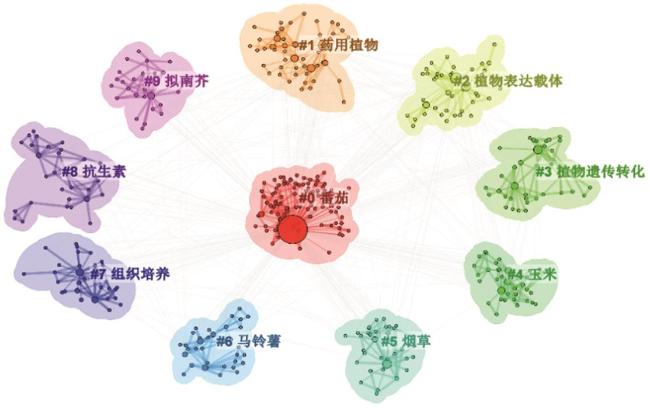
表5 关键词聚类信息 |
| 聚类号 | 聚类标签 | 节点数 | 平均轮廓值 | 主要时间 | 各聚类中排序前五的关键词 |
|---|---|---|---|---|---|
| #0 | 番茄 | 99 | 0.933 | 2010 | 番茄、遗传转化、载体构建、棉花、植物表达载体构建 |
| #1 | 药用植物 | 50 | 0.909 | 2004 | 药用植物、ri质粒、毛状根、转化、农杆菌 |
| #2 | 植物表达载体 | 47 | 0.801 | 2008 | 植物表达载体、根癌农杆菌、转基因、单子叶植物、不定芽 |
| #3 | 植物遗传转化 | 40 | 0.897 | 2006 | 植物遗传转化、纳米基因载体、植物、抗逆性、叶绿体基因工程 |
| #4 | 玉米 | 37 | 0.851 | 2012 | 玉米、农杆菌介导、小麦、转基因株系、大豆 |
| #5 | 烟草 | 35 | 0.895 | 2010 | 烟草、反义基因、白菜、基因表达、表达载体 |
| #6 | 马铃薯 | 34 | 0.939 | 2007 | 马铃薯、转基因植物、遗传转化体系、植物激素、抗旱性 |
| #7 | 组织培养 | 33 | 0.838 | 2008 | 组织培养、再生体系、外植体、基因组、石斛属 |
| #8 | 抗生素 | 31 | 0.888 | 2009 | 抗生素、愈伤组织、植物基因工程、正交实验、直接遗传转化 |
| #9 | 拟南芥 | 27 | 0.902 | 2012 | 拟南芥、盐生植物、耐盐性、RNA干扰、DNA重组 |
2.6 关键词突现性
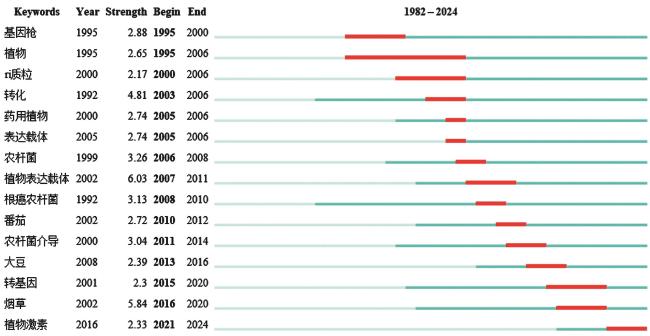


第一阶段(1995—2006年),该阶段存在6个突现词,分别是基因枪、植物、ri质粒、转化、药用植物和表达载体,表明该阶段研究人员主要围绕遗传转化方法、载体及受体3个方面开展植物遗传转化研究。
第二阶段(2006—2020年),该阶段存在8个突现词,且这些突现词在图上表现出了交替突现、不断推进的特点,表明此时该研究领域的研究热点层层递进,主要围绕遗传转化材料开展研究。此阶段,突现强度最强的关键词为植物表达载体,突现强度为6.03,表明该关键词迅速突现,是2007—2011年的研究热点。
第三阶段(2021—2024年),关键词植物激素在2021年突现。该阶段部分学者研究不同激素种类和配比对遗传转化效率的影响,另有学者通过构建激素相关基因的表达载体进行遗传转化,分析转基因植株的表型和生理变化,探讨目的基因对植物激素水平和生长发育的影响。根据突现趋势,该关键词可能在未来持续突现,成为未来一段时间的研究热点。
3 结论
本研究以1982年1月1日至2024年10月21日中国知网收录的413篇植物遗传转化相关文献为样本,利用CiteSpace软件对其文献的发文量、发文期刊、发文机构及作者、关键词等进行可视化分析,得出以下结论。
(1)1982—2024年,该研究领域的文献发文量呈先上升后下降的趋势,主要分为探索期(1982—1996年),增长期(1996—2010年)和下降期(2010—2024年)3个阶段;2009和2010年发文量达峰值。发表量前3的期刊分别是《分子植物育种》《生物技术通报》和《安徽农业科学》。
(2)发文量>4篇的机构有9所,其中,西北农林科技大学园艺学院和东北林业大学林木遗传育种国家重点实验室发文量较多;作者中以刘彩霞发文量最多;发文机构与作者之间均需进一步加强合作交流。
(3)关键词热点分析表明,植物遗传转化研究热点主要集中在植物表达载体、农杆菌和农作物。关键词聚类结果显示,以植物为聚类标签时,该领域相关研究主要包含遗传转化方法、载体构建、植物激素和植物性状4个方向;以遗传转化相关生物技术为标签时,则重点探究遗传转化表达载体和材料的选择。关键词突现结果表明,1995—2006年,该领域的转化方法中基因枪法使用较多,药用植物的遗传转化研究较为热门。2006—2020年,农杆菌介导法因其独特优势逐渐取代基因枪法,成为植物遗传转化中更为常用的方法;植物激素可能成为未来研究热点。
综上,本研究通过对植物遗传转化相关研究文献进行可视化分析,展现了该领域的知识结构和发展路径,为相关科研实践提供参考。随着植物遗传转化领域研究的持续深入与拓展,可以通过整合更先进的计量分析技术与智能化算法模型,实现对文献数据的深度挖掘与精准解析,为植物遗传转化领域的科研决策提供参考。