

随着城市化进程不断加快,工业、交通等导致的大气污染问题日益严峻,对生态环境造成破坏,同时对人类身体健康具有潜在的危害[1]。因此,探究控制大气污染的方法尤为重要。降水是影响大气污染物浓度的主要气象要素之一,其主要影响大气污染物的湿清除过程,可维持大气中污染物的源、汇平衡[2-3]。周彬等[4]分析了降水对气溶胶颗粒物的清除效果,发现其清除作用随降水强度、降水持续时间和降水总量的增加而增强。刘星等[5]分析了夏季降水对大气污染物的清除影响,结果表明,降水对污染物的清除效率受降水量、降水场数和降水累积时间的影响。王妮等[6]分析了夏季降水对大气污染物的清除作用,比较了不同日降水强度、日降水时长和累积降水量对SO2、NOx(主要是NO和NO2)、CO、O3、PM10和PM2.5的清除效果。Pranesha等[7]研究发现,降水对颗粒物的清除效果优于气态污染物。Bae等[8]研究结果显示,降水可有效减轻颗粒物污染。在农业方面,降水不仅是影响作物生长的关键气象因素,也是调节农田生态系统的重要自然过程。适量降水可以促进作物生长,提高产量,而降水过量或不足则可能导致作物减产甚至绝收。此外,降水还能通过湿清除作用减少大气中的污染物,改善农田空气质量,从而间接保护作物免受污染物的侵害。因此,准确预测降水事件,合理利用降水资源,对于优化农业生产和保障粮食安全具有重要的意义。基于此,本研究利用安徽部分地区2018—2021年的降水数据和大气污染物监测数据,分析研究区降水和大气污染物的分布特征,并探究降水对大气污染的清除效果。
1 材料与方法
1.1 数据来源
本研究大气污染物监测数据选取安徽地区的BB站、CZ站、SZ站、MAS站、WH站、XC站6个大气环境监测站点。此外,选取FY站、CZ-1站、DY站、QJ站、LA站、TC站6个气象站点来代表CZ部分区域的降水状况。
1.2 大气污染物及降水的分布特征
1.2.1 大气污染超标分项统计
根据大气污染物浓度以及表1中大气污染物的一级和二级浓度限值,统计BB站、CZ站、SZ站、MAS站、WH站、XC站的SO2、NO2、CO、O3、PM10和PM2.5的超标情况。
表1 环境空气污染物基本浓度限值 |
| 序号 | 污染物项目 | 平均时间 | 浓度限值/(μg/m3) | |
|---|---|---|---|---|
| 一级 | 二级 | |||
| 1 | SO2 | 年平均 | 20 | 60 |
| 24 h平均 | 50 | 150 | ||
| 1 h平均 | 150 | 500 | ||
| 2 | NO2 | 年平均 | 40 | 40 |
| 24 h平均 | 80 | 80 | ||
| 1 h平均 | 200 | 200 | ||
| 3 | CO | 24 h平均 | 4 | 4 |
| 1 h平均 | 10 | 10 | ||
| 4 | O3 | 日最大8 h平均 | 100 | 160 |
| 1 h平均 | 160 | 200 | ||
| 5 | PM10 | 年平均 | 40 | 70 |
| 24 h平均 | 50 | 150 | ||
| 6 | PM2.5 | 年平均 | 15 | 35 |
| 24 h平均 | 35 | 75 | ||
1.2.2 常规降水分级
本研究采用12 h和24 h 2个不同时段降水量筛选降水事件,根据GB/T 28592—2012《降水量等级》以及研究区的降水状况,将2018年1月1日至2021年12月31日的FY站、CZ-1站、DY站、QJ站、LA站、TC站的6个站点的降水数据进行等级划分(表2)。
表2 不同时段的降雨量等级划分 |
| 等级 | 时段降水量/mm | |
|---|---|---|
| 12 h降水量 | 24 h降水量 | |
| 微量降雨 | <0.1 | <0.1 |
| 小雨 | 0.1~4.9 | 0.1~9.9 |
| 中雨 | 5.0~14.9 | 10.0~24.9 |
| 大雨 | 15.0~29.9 | 25.0~49.9 |
| 暴雨 | 30.0~69.9 | 50.0~99.9 |
| 大暴雨 | 70.0~139.9 | 100.0~249.9 |
| 特大暴雨 | 140.0 | 250.0 |
1.3 降水对大气污染湿清除的影响
2 结果与分析
2.1 大气污染物的分布特征
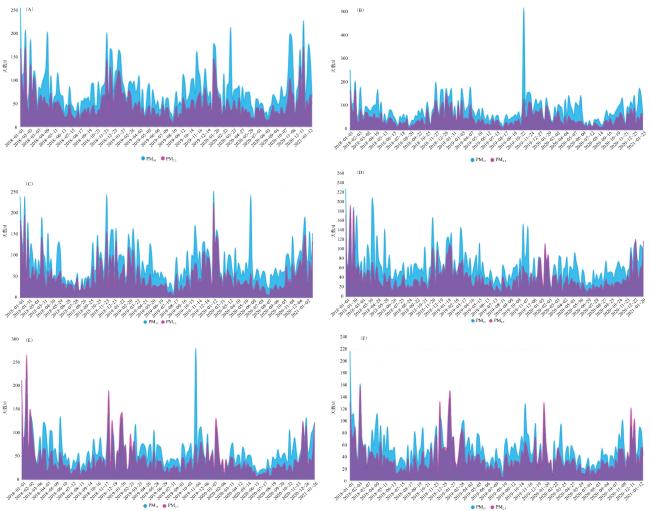
大气湿清除主要针对大气颗粒物污染起作用,因此,选取各站点的PM10、PM2.5作为大气污染超标分项。如图1所示,PM10、PM2.5浓度呈现出明显的增—减—增的“U”型变化。BB、CZ、SZ、MAS、WH、XC监测点PM10的浓度超标的天数依次为106、106、114、33、23和11 d;PM2.5超标的天数依次为183、183、221、111、127和93 d。由此可见,上述城市中PM2.5超标污染重于PM10污染。
2.2 降水的分布特征
如图2所示,在2018—2021年,FY站、LA站、CZ-1站、QJ站、DY站、TA站的降水特征总体为先减少再增加再减少的变化趋势,降水峰值出现在7月。降水在6—8月较为集中,接近200 mm左右。FY站的冬季累计降水量达到150.2 mm,夏季累计降水量达550 mm,主要是因为夏季的降水强度高,单次降水量高。空间上看,QJ站降水较多,而TC站降水较少。降水类型总体表现为小雨>中雨>大雨>暴雨>大暴雨。
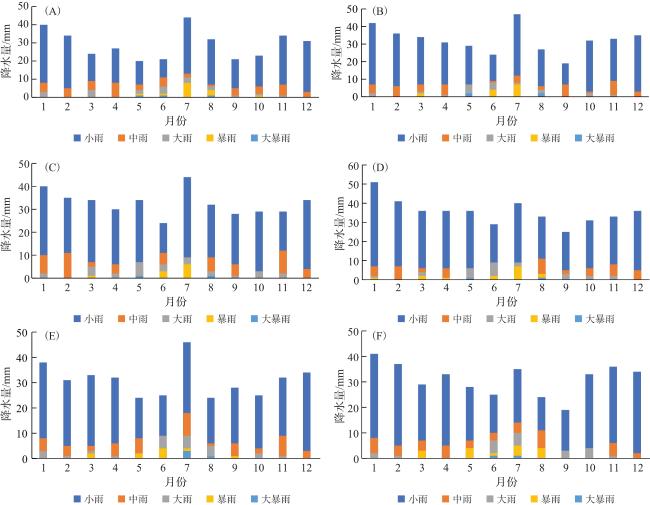


夏季降水丰富,尤其是6—8月,恰逢农作物的生长关键期,降水能够为作物提供充足的水源,促进作物生长。但过量的降水也可能引发水涝灾害,影响农田排水和作物生长。此外,不同地区的降水差异可能导致农作物的生长状况不均,影响农业产量和质量,因此农业气象服务需要对降水量进行实时监测与预警,以便采取有效的防灾减灾措施。
2.3 不同降水强度与大气污染湿清除的影响
以CZ站点为例,共选取494个降水事件,小雨、中雨、大雨、暴雨、大暴雨事件分别占比70.65%、18.63%、7.89%、2.43%、0.40%,无特大暴雨事件。由表3可知,PM10在小雨、中雨、大雨、暴雨、大暴雨时的清除率分别为-13.16%、-4.20%、0、-34.00%、38.77%,说明随着降水强度的增加,PM10的清除率不断上升。PM2.5在小雨、中雨、大雨、暴雨、大暴雨时的清除率分别为-11.86%、11.58%、-4.30%、-32.92%、34.75%,变化规律与PM10一致,总体上保持上升。综合来看,研究区颗粒污染物浓度随降水强度的增加而逐渐减少。气态污染物的浓度变化规律大体上保持一致,以SO2为例,小雨、中雨、大雨、暴雨时的清除率分别为0、8.00%、9.00%、18.00%,随降水强度的增加呈上升趋势。
表3 CZ站点不同降水强度对污染物清除率的影响单位:% |
| 污染物指标 | 小雨 | 中雨 | 大雨 | 暴雨 | 大暴雨 | |
|---|---|---|---|---|---|---|
| PM2.5清除率 | 最大值 | 85.71 | 81.20 | 80.00 | 60.00 | 51.35 |
| 最小值 | -528.57 | -278.95 | -200.00 | -222.22 | 15.79 | |
| 平均值 | -11.86 | 11.58 | -4.30 | -32.92 | 34.75 | |
| PM10清除率 | 最大值 | 94.24 | 86.14 | 81.25 | 68.42 | 53.73 |
| 最小值 | -550.00 | -338.46 | -150.00 | -312.50 | 21.88 | |
| 平均值 | -13.16 | -4.20 | 0 | -34.00 | 38.77 | |
| SO2清除率 | 最大值 | 64.71 | 92.86 | 55.56 | 50.00 | 36.36 |
| 最小值 | -1 600.00 | -71.43 | -42.86 | -14.29 | 9.09 | |
| 平均值 | 0 | 8.00 | 9.00 | 18.00 | 23.00 | |
| NO2清除率 | 最大值 | 80.00 | 87.50 | 70.83 | 78.00 | 47.73 |
| 最小值 | -250 | -233.33 | -88.89 | -64.29 | 30.77 | |
| 平均值 | 3.00 | 14.00 | 18.00 | 14.00 | 39.00 | |
| CO清除率 | 最大值 | 72.73 | 70.59 | 66.67 | 37.5 | 42.86 |
| 最小值 | -266.67 | -200 | -100 | -100 | -33.33 | |
| 平均值 | 0 | 2.00 | 3.00 | -10.00 | 5.00 | |
| O3清除率 | 最大值 | 75.13 | 68.52 | 75.54 | 54.41 | -64.79 |
| 最小值 | -358.33 | -461.54 | -83.33 | -171.64 | -84.85 | |
| 平均值 | -15.00 | -19.00 | -8.00 | -26.00 | -75.00 | |
除O3外的污染物随降水强度的递增正向清除效果愈佳,颗粒污染物以PM10为例,中雨、大雨、暴雨、大暴雨时正向清除率占比分别为55%,56%、58%、100%。气态污染物以SO2为例,中雨、大雨、暴雨、大暴雨时正向清除率占比分别为52%、54%、75%、100%(表4)。
表4 CZ站点不同降水强度对大气污染物浓度增减个例占比单位:% |
| 污染物类别 | 小雨 | 中雨 | 大雨 | 暴雨 | 大暴雨 | |
|---|---|---|---|---|---|---|
| PM2.5 | 减少个例 | 55 | 52 | 46 | 50 | 100 |
| 不变个例 | 1 | 4 | 5 | 0 | 0 | |
| 增加个例 | 44 | 44 | 49 | 50 | 0 | |
| PM10 | 减少个例 | 58 | 55 | 56 | 58 | 100 |
| 不变个例 | 2 | 2 | 3 | 0 | 0 | |
| 增加个例 | 40 | 43 | 41 | 42 | 0 | |
| SO2 | 减少个例 | 52 | 52 | 54 | 75 | 100 |
| 不变个例 | 18 | 21 | 18 | 0 | 0 | |
| 增加个例 | 30 | 27 | 28 | 25 | 0 | |
| NO2 | 减少个例 | 62 | 68 | 69 | 50 | 100 |
| 不变个例 | 3 | 3 | 5 | 17 | 0 | |
| 增加个例 | 35 | 28 | 26 | 33 | 0 | |
| CO | 减少个例 | 48 | 48 | 51 | 42 | 50 |
| 不变个例 | 17 | 25 | 18 | 25 | 0 | |
| 增加个例 | 35 | 27 | 31 | 33 | 50 | |
| O3 | 减少个例 | 46 | 46 | 44 | 33 | 0 |
| 不变个例 | 1 | 4 | 3 | 8 | 0 | |
| 增加个例 | 52 | 50 | 54 | 58 | 100 | |
2.4 连续降水对大气污染湿清除的影响
由表5可知,连续降水对颗粒污染物浓度的削减作用优于单次降水,不同的降水时间跨度对污染物浓度的增削效果不一致。就PM2.5和PM10而言,连续降水2和3 d的正清除率基本维持不变,保持在50.65%~55.04%;连续降水4 d的PM2.5和PM10正清除率分别为76.00%、68.00%;5 d连续降水的正清除率分别为42.31%、61.4%,相较4 d有所降低。这可能是因为经过连续几日降水后,颗粒物浓度已达到降水所能削减的边界值,后续降水对颗粒物的削减作用变弱。
表5 连续降水对大气污染物浓度增减个例占比单位:% |
| 连续降水 | 合计频次 | 污染物类别 | 减少 | 不变 | 增加 |
|---|---|---|---|---|---|
| 2 d | 129 | SO2 | 60.47 | 12.40 | 27.13 |
| PM10 | 55.04 | 2.33 | 42.64 | ||
| NO2 | 65.12 | 2.33 | 32.56 | ||
| PM2.5 | 55.04 | 3.10 | 41.86 | ||
| CO | 48.84 | 22.48 | 28.68 | ||
| O3 | 53.49 | 1.55 | 44.96 | ||
| 3 d | 77 | SO2 | 49.35 | 18.18 | 32.47 |
| PM10 | 54.55 | 0.00 | 45.45 | ||
| NO2 | 58.44 | 5.19 | 36.36 | ||
| PM2.5 | 50.65 | 0 | 49.35 | ||
| CO | 37.66 | 25.97 | 36.36 | ||
| O3 | 33.77 | 0 | 66.23 | ||
| 4 d | 50 | SO2 | 46.00 | 16.00 | 38.00 |
| PM10 | 68.00 | 0 | 32.00 | ||
| NO2 | 54.00 | 6.00 | 40.00 | ||
| PM2.5 | 76.00 | 0 | 24.00 | ||
| CO | 54.00 | 20.00 | 26.00 | ||
| O3 | 52.00 | 0 | 48.00 | ||
| 5 d | 26 | SO2 | 46.15 | 7.69 | 46.15 |
| PM10 | 61.54 | 0 | 38.46 | ||
| NO2 | 46.15 | 7.69 | 46.15 | ||
| PM2.5 | 42.31 | 7.69 | 50.00 | ||
| CO | 38.46 | 11.54 | 50.00 | ||
| O3 | 42.31 | 3.85 | 53.85 |
对于气态污染物,2 d内的降水对气态污染物削减作用较佳,2 d后的降水对气态污染物削减作用变弱。例如,SO2在降水2 d的正清除率为60.47%,而在3 d时下降至49.35%;NO2在2、3、4、5 d时的正清除率分别为65.12%、58.44%、54.00%、46.15%。说明长时间降水对气态污染物的削减贡献较低。
2.5 降水与大气污染物清除的相关性
由表6可知,正清除率事件的降水与PM10、NO2呈正相关(P<0.01);与PM2.5呈明显正相关(P<0.05);与SO2呈正相关,与CO和O3呈负相关,但相关性无统计学意义。负清除率事件的降水与SO2、NO2呈正相关(P<0.05);与PM10、CO、O3呈正相关,与PM2.5呈负相关,相关性无统计学意义。综上所述,降水正向清除对颗粒物削减作用总体强于气态污染物;降水对NO2正向清除作用强于负清除作用;降水对SO2的负清除作用强于正清除作用;O3与CO受降水影响较小。
表6 正清除降雨事件过程降水与大气污染间相关性分析 |
| PM2.5 | PM10 | SO2 | NO2 | CO | O3 | |
|---|---|---|---|---|---|---|
| 降水(正清除) | 0.126* | 0.198** | 0.104 | 0.164** | -0.044 | -0.036 |
| 降水(负清除) | -0.058 | 0.005 | 0.128* | 0.161* | 0.025 | 0.046 |
|
3 结论
本研究利用2018—2021年研究区部分站点的气象和大气污染数据,分析了大气污染和降水的分布特征,探究了降水对大气污染物清除效果的影响,得出以下结论。
(1)PM10、PM2.5浓度呈现明显的增—减—增的“U”型变化。BB、CZ、SZ、MAS、WH、XC站点的PM10浓度超标的天数依次为106、106、114、33、23和11 d;PM2.5浓度超标的天数依次为183、183、221、111、127和93 d。PM2.5污染重于PM10污染。
(2)在2018—2021年,以CZ站点为代表,FY站、LA站、CZ-1站、QJ站、DY站、TC站的降水特征为减—增—减分布,降水类型发生总体表现为小雨>中雨>大雨>暴雨>大暴雨,降水峰值出现在7月,降水在6—8月较为集中。
(3)降水对大气污染物的清除效果结果表明,研究区大气污染物在小雨、中雨、大雨、暴雨、大暴雨的清除率,随降水强度的增加而上升,表明大气污染物浓度随降水强度的增加而逐渐降低。此外,连续降水对颗粒污染物浓度的削减作用优于单次降水,不同的降水时间跨度对污染物浓度的增削效果不一致。随着降水时间的延长,降水对污染物的削减作用逐渐变弱,大气污染物的清除效果逐渐达到边界值。相关性分析表明,降水对颗粒物的清除作用总体强于气态污染物;O3与CO受降水影响较小。