

城市公园是城市生态系统、城市景观的重要组成部分,是市民休闲游憩的重要活动场所,也是市民文化的传播场所[1]。随着生活水平的不断提高,人们对城市公园的需求日益提高,而一些较早建成的公园,其基础设施、生态功能等已难以满足大众需求。因此,城市老旧公园的改造提升越来越迫切和重要。近年来,关于城市公园改造的案例越来越多,相关改造理念和原则日渐完善。例如,李佳祺[2]以疗愈理念为切入点,构建适宜不同人群的公园景观空间环境,营造良好的公园景观环境,为疗愈视角下的城市公园改造设计提供了思路。邓越[3]将城市文化内涵融入公园的改造设计,满足了城市居民的多样化需求,提升了其生活质量。蔡川[4]基于“城市双修”理念,遵循生态优先原则,结合公共空间营造,着重修复滨河公园受损生态,重塑了人工环境和自然环境的平衡。由于技术条件的局限,对城市公园的研究设计大多是基于问卷调查、访谈或快照等主观分析和设计经验总结,而客观理性的量化分析有待深入,关于空间结构和人的行为方式之间的关系更是关注较少。空间句法作为一种将人的行为活动与空间关系量化分析的理论,能够更加客观地分析公园的内部空间结构和使用情况,从而使设计者做出更加合理的布局[5]。本研究基于空间句法理论与Depthmap 10软件,对河南洛阳市西苑公园景观空间进行量化分析并提出景观优化策略。
1 材料与方法
1.1 研究区基本情况
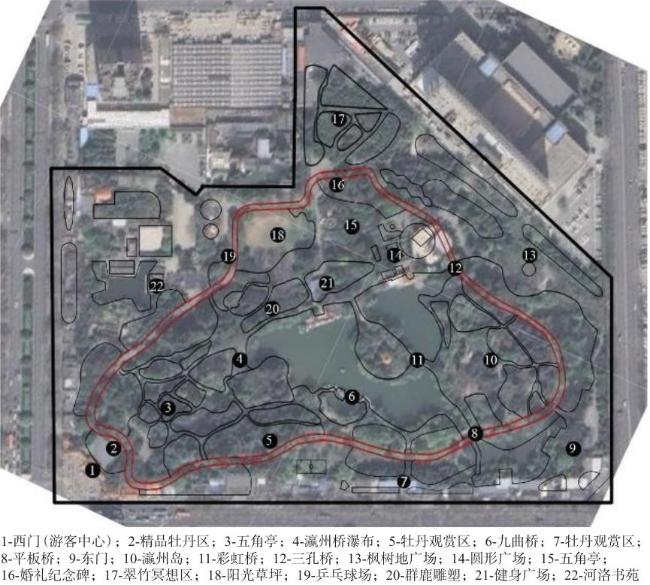
河南洛阳市西苑公园于20世纪50年代末建成,初建时将其界定为苗圃,于1962年更名为植物园。20世纪80年代,西苑公园的主要观赏景点建成并开始对外开放,后命名为西苑公园。园内是以湖面、山体为主要景观的山水景观园林风景,风景秀丽[6]。
1.2 研究方法
1.2.1 空间句法
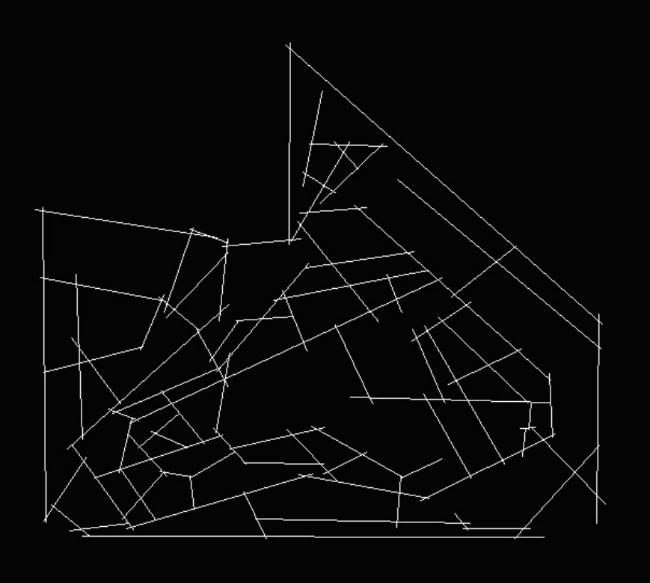
空间句法可以量化分析空间结构中的拓扑关系,结合相关参数指标,更加理性地分析公园内部空间[7]。基于空间句法理论,对西苑公园建立轴线模型,将模型导入Depthmap 10软件中进行运算分析,导出相关参数,分析相关区域的参数信息,并结合现场调研情况,总结分析目前该公园存在的问题,提出适合的景观优化策略。
1.2.2 指标选取
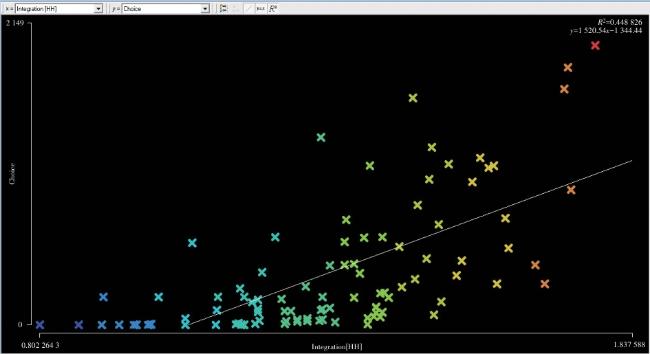
(1)整合度分为全局整合度和局部整合度,是空间句法中常用的一个量化指标。全局整合度表示整个空间内某个节点与其他节点之间的集聚和离散程度,数值越大表示该点在空间中越便捷,公共性更高,可达性更好,越容易聚集人流[8]。局部整合度主要侧重表示固定拓扑距离范围内某节点与范围内其他节点的聚集或离散程度。由于西苑公园内不允许车辆通行,所以仅选择半径(r)3、5和7的拓扑范围计算局部整合度。(2)选择度也称为穿行度,表示系统中一个空间实体在空间网络中任意一个点到另一个点时,能被其他最短路径穿行的可能性[9]。选择度越高,说明该点吸引人流穿过的次数越高。(3)协同度表示局部整合度和全局整合度相关性的参数,协同度可采用R 2表示,其值域在0~1,R 2值越接近1,表明其协同度越高,局部空间与全局空间的关联性越强,通达性越好。当R 2<0.5时,全局整合度与局部整合度相关性不强,空间局部与整体之间的联系不够紧密[10]。(4)可理解度用来描述局部空间结构与整体空间系统的关联性和统一性,反映空间系统局部和整体的感知是否具有一致性,即评价人位于局部空间时是否可以对整体空间形态形成系统的认识[11]。可理解度通常用选择度和整合度的比值R 2表示,以0.5为界限,当R 2<0.5时,说明不易从局部空间推断出整体空间特征;当0.5≤R 2≤0.7时,说明空间可理解度较好;当R 2>0.7时,说明空间可理解度较强。
2 结果与分析
2.1 整合度
2.1.1 全局整合度
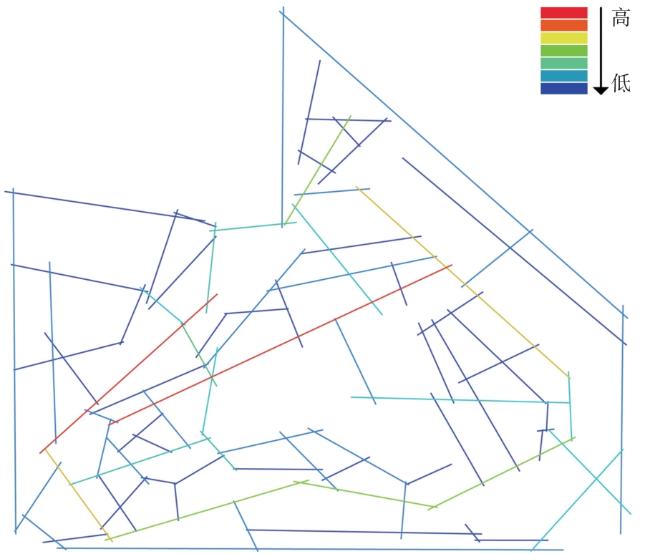
西苑公园的全局整合度最高值1.837,最低值0.802,平均值1.212(图3),全局整合度的跨度较大,说明公园内部道路层次丰富、错综复杂。按整合度数值大小排序依次为群鹿广场、五角亭、圆形广场、瀛洲岛、枫树地广场、牡丹观赏区和翠竹冥想区。其中,五角亭区域是公园全局整合度较高的区域,说明该区域游客容易集聚,结合实地调研发现此处是公园的主入口和游客中心,从西门进入的游客相对较多。该区域属于微地形,空间零散,有小路互相连接,道路错综复杂,且道路多是一些带有高差起伏的旱汀步,一定程度上限制了部分老年游客和腿脚不便者进入;此外,部分游客踩踏草坪,生态环境遭到一定破坏,其安全性和生态环境很大程度降低了该区域作为优质游客聚集地的可能性。
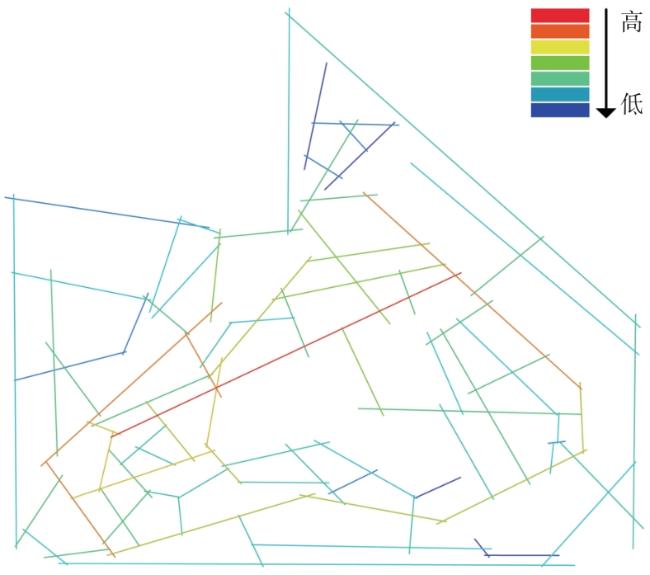
由图3可知,全局整合度最高的区域位于公园中部的沿湖景观道,其几乎贯穿整个公园中部,与公园中心的群鹿雕塑、健身广场和阳光草坪等均有道路相连,可达性较高,并且这些区域大多具有特色景观、休闲健身广场,场地面积大,功能较为齐全,可以很大程度上聚集人流。南区牡丹观赏区的浅色线条较多,说明其全局整合度偏低。其原因是牡丹观赏区由一条支路进入,内部空间较为零散,以蜿蜒小路为主,道路连通复杂,每年4—5月牡丹花开放季节该区域的人流量大,而其余时间游客人数较少,区域整合度较低。北区因地处角落,离内部空间和城市主干道有一定距离,两侧为不可通达的围墙和小溪,只有一条支路连接公园主路,到达此处的游客较少,所以该区域的整合度相对不高,可达性较差。
2.1.2 局部整合度
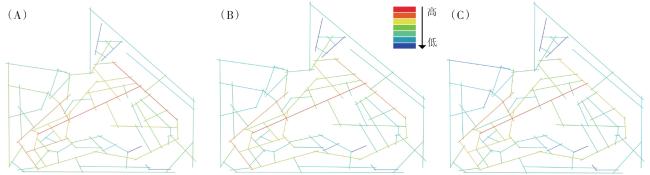
2.2 选择度
由图5可知,公园靠近湖面附近一圈的道路选择度颜色均较深,说明游客更易选择这些道路穿行;根据现场调查,这些道路大多为公园的主要步行道,能够很好地起到聚集和分流的作用。公园穿行度最高的区域位于健身广场和群鹿雕塑附近道路,且这些道路的全局整合度也最大,说明此处容易有大量游客聚集,且选择穿行此路的游客也较多,可能会造成拥挤情况,应适当增加支路进行分流,为游客提供更加便捷的游览路线。现场调查发现,此处打卡拍照、运动锻炼和休闲交谈的游客较多,但在景观营造方面有所欠缺,后期可结合洛阳历史文化和西苑公园的历史背景对此处景观进行改造提升,通过增加文化景观小品和优化植物景观营造,使其成为公园的主要名片之一。此外,除公园主要步行道外,其他区域大多是节点内部短而曲折的支路,选择度数值偏低,颜色大多偏冷色。
2.3 协同度
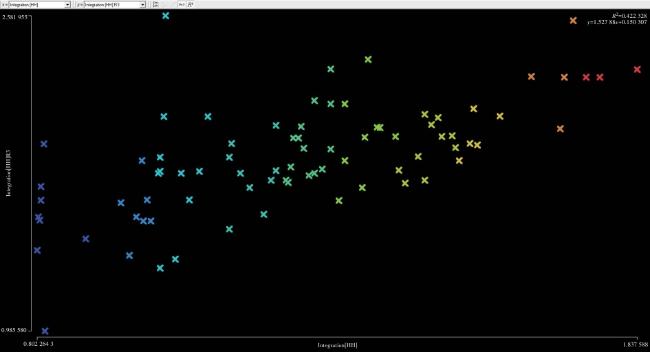
使用Depthmap 10软件计算得出西苑公园协同度为0.422(图6),该值小于0.5,说明公园的协同度较低,局部空间与整体之间的联系不够紧密,局部空间呈孤立状态。公园北部翠竹冥想区域的全局整合度较低,但局部整合度相对较高,说明此处从公园整体来看可达性不高,但作为小节点与周围空间的联系较为密切,可结合现场空间的环境特点打造具有独特功能的活动空间。
2.4 可理解度


3 结论与建议
3.1 结论
本文借助空间句法理论,结合对西苑公园场地、道路、休闲设施、景观植被和水域的实地调研,通过绘制轴线模型对公园的整合度、选择度、协同度和可理解度进行分析。结果表明,公园西部和中部的五角亭和群鹿广场整合度较高,且群鹿广场的选择度数值最大,说明位于中部的群鹿广场是公园的核心位置,但根据现场调查,此处在景观营造方面还有待进一步优化;南部牡丹观赏区和北部翠竹冥想区整合度较低,主要是因为道路联系不够紧密;公园除主要步行道外,其他节点的选择度均偏低;公园的协同度偏低,空间局部与整体之间的联系不够紧密;可理解度数值较低,不易从局部空间推断出整体空间特征,游客在公园易迷失方向。
3.2 优化策略
根据以上对西苑公园的量化分析结果,结合对公园五角亭、群鹿广场、枫叶地广场、牡丹观赏区和翠竹冥想区的实地调查情况,提出以下优化策略。
3.2.1 入口景观区
作为主入口和游客中心的西门是游客进入公园的首要选择,在公园的整体优化中起着较大的作用。在保留原有入口景观石的基础上补植乔灌木,丰富植物景观层次,增强其吸引力;同时增加公示栏,对园区节点的大致布局作简要说明,并向游客科普公园的历史文化。五角亭是公园全局整合度较高的区域,易聚集游客,而该区域多为微地形,植物生长无序,部分草坪、树木遭到一定程度的破坏,应加装注意安全和请勿踩踏草坪等指示牌,并丰富道路两边的绿化,如种植一些花灌木和草本植物,不仅可以提升观赏性,还可以作为天然栅栏防止游客践踏草坪。增设草坪灯和不同颜色LED树灯,为游客提供丰富的晚间景观,增强其安全感。
3.2.2 休闲广场区
全园全局整合度数值最高的区域集中在湖边的群鹿广场和健身广场,此区域较为空旷,具有聚集游客的功能,但周围景观较为单一,仅有一些群鹿雕塑和健身器材,广场附近多为草坪和小乔木,色相单一,缺乏层次感,与周围道路和景观小品联系不强。可增加一些具有当地文化特色的景观小品,在道路和草坪过渡区域种植一些灌木,打造乔—灌—草多层次景观,选择种植一些色相丰富的本土植物,营造“三季有花,四季有景”的园内景观。适当增加树池坐凳,既可以扩大夏季林荫面积又可以增加广场休闲座椅,给游客创造舒适的休闲空间。健身广场的健身器材需及时维修管理,更换部分更适合游客的健身器材,提升其幸福感[13]。
枫树地广场是园区东部区域唯一的集散广场,其选择度不高,人流量不大,主要是由于此处与周边道路联系不够密切,空间节点较为单一,旁边河道边景观单一,驳岸处理较为简陋。可增设连接道路,增加景观小品如廊架、景观石、乔—灌—草搭配的植物组团及趣味打卡点等,水体附近增添水生植物、鹅卵石等,搭配营造自然式的水体驳岸,为游客提供垂钓、戏水等趣味活动[14]。
3.2.3 生态休闲区
根据协同度分析,公园南部牡丹观赏区和北部翠竹冥想区的全局整合度数值均相对偏低,可增加小路与主要步行道连接,加强各个园区的可达性;其局部整合度数值有所上升,说明这两个区域从整体来看可达性不高,但作为小节点与周围联系密切。主要原因是原有铺装损坏较严重,道路附近植物元素较为单一且植被遭到一定程度的踩踏,景观效果不佳,可增添硬质铺装、植物介绍景观墙和休息服务设施等,结合牡丹和翠竹配置适合的植物组团,打造独具特色的园中园。
综上,本文基于空间句法理论和分析方法,通过绘制轴线模型,从整合度、选择度、协同度和可理解度4个方面对河南洛阳市西苑公园景观空间进行量化分析,并结合实地调查情况提出了景观优化策略,为该公园的景观优化提供参考。