

尾菜作为农业领域一种亟待处理和开发的资源,其妥善管理和有效利用,对推动蔬菜产业绿色可持续发展、促进产业升级转型,以及确保农产品持续稳定供应具有重要意义。近年来,许多学者针对尾菜资源化利用进行了一系列研究。刘佳豪等[1]对蔬菜废弃物资源化利用技术进行了分析总结;薛颖昊等[2]对蔬菜秸秆无害化处理技术优化进行了探讨;陈慈等[3]研究了蔬菜废弃物资源化利用的技术路径。本文以江苏连云港市为例,在总结其2019—2023年蔬菜生产数据的基础上,初步测算出尾菜资源量,探讨了其尾菜资源的当前利用状况及所面临的挑战,并针对尾菜高效转化利用提出了建议,为推进研究区尾菜处理与高效利用、减少农业面源污染和助力农业高质量发展提供参考。
1 研究区蔬菜生产及尾菜产生与利用情况
1.1 蔬菜生产情况
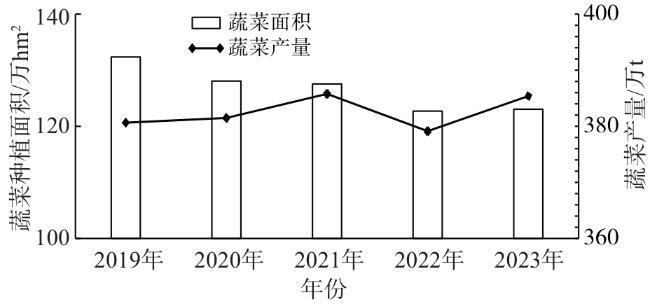
根据《江苏省农村统计年鉴》(2020—2024年)数据,2019—2023年研究区蔬菜种植面积和产量保持相对稳定。鉴于种植结构的调整及农田布局的优化需求,其蔬菜种植面积进行了适度缩减。然而,得益于品种优化、管理技术提升、机械化程度提高等,蔬菜产量实现了稳步提升。其中,2022年蔬菜种植面积和产量因受寒冷天气等因素影响出现明显波动,下降幅度均在1.7%以内;2023年,蔬菜种植面积达123万hm2,较2022年增长了0.26%;同期,蔬菜产量达385万t,相较上一年度增长了1.65%(图1)。
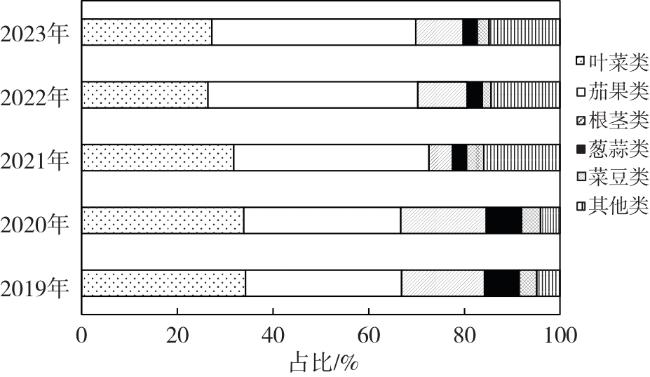
研究区常年种植蔬菜品种近30个,包括大白菜、普通白菜、结球甘蓝、花椰菜、青花菜、菠菜等叶菜类,西葫芦、黄瓜、苦瓜、丝瓜、南瓜、辣椒等茄果类,萝卜、胡萝卜、芋、莲藕、姜等根茎类,洋葱、大葱、大蒜等葱蒜类,菜豆、豇豆等菜豆类,等等。其中,茄果类和叶菜类蔬菜产量居前列,2019—2023年叶菜类和茄果类蔬菜产量之和该地占蔬菜总产量的65%以上,且茄果类蔬菜种植产量逐年提高。2019—2023年,研究区蔬菜种植类别占比情况如图2所示。
1.2 尾菜产生及利用情况
1.2.1 尾菜产生情况
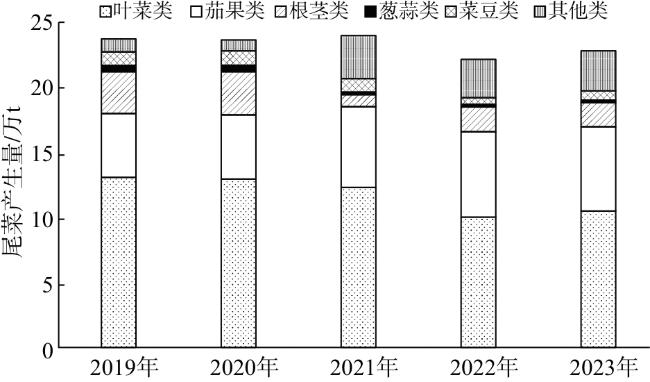
参考评估农作物秸秆资源量的草谷比率方法,采用废弃物生成系数计量蔬菜残余物的总体资源量[4-5],该方法在蔬菜尾菜研究中被广泛使用。通过文献研究和实地取样测定,结合研究区蔬菜生产实际,确定不同种类蔬菜尾菜的产生系数。具体而言,各类蔬菜尾菜的产生系数存在差异,其中叶菜类为9.7%,茄果类为3.8%,根茎类为4.7%,葱蒜类为1.7%,菜豆类为7.1%,其他类则为5.2%。如图3所示,基于研究区2019—2023年不同种类蔬菜的产量及其产生系数进行测算,得出这5年尾菜的产生量分别为22.92万、22.84万、23.17万、21.41万、22.04万t。其中,叶菜类尾菜产生量最多,占比超45%;其次是茄果类和根茎类,葱蒜类尾菜产生量最少(图3)。


1.2.2 尾菜资源化利用现状
(1)肥料化利用。尾菜肥料化利用是指通过堆肥技术将尾菜转化为有机肥料,从而实现尾菜资源的循环利用[2,5]。研究区尾菜肥料化利用形式包括直接还田、好氧堆肥还田和厌氧沤肥还田3种方式。一是直接还田利用。该方式避免了离田利用所需的收集、运输及贮存等环节,减少了利用成本,并通过改善土壤理化性状,明显提升了作物产量和品质。该方法的缺点在于需严格控制尾菜的还田量和还田次数,若连续累积还田,不仅容易出现连作障碍,还会增加病虫害发生风险。二是好氧堆肥还田利用。利用专性和兼性好氧细菌降解蔬菜废弃物及其他有机物料,生产有机肥料。该方式是研究区尾菜离田利用的主要方式,主要适用于蔬菜生产企业和种植大户。好氧堆肥能充分发挥就地肥料化利用优势,降低农药与化肥投入量。然而,由于尾菜碳氮比(C/N)偏低且水分含量高,该方法在实现高效好氧堆肥过程中,对添加的畜禽粪便、秸秆及EM菌剂等配料的比例要求较为严格,这对于蔬菜种植户有一定的技术难度,若操作不当,会直接影响肥料产品的质量。三是厌氧沤肥还田利用。尾菜是一种良好的厌氧发酵原料,经过微生物厌氧消化可生产沼气等清洁能源,副产物沼渣、沼液可用于制备有机肥。前期,研究区部分中小规模农业产业园区对尾菜开展了厌氧发酵处理,然而,受堆积场所限制及发酵温度等多种因素影响,尚未大规模推广应用。
(2)饲料化利用。尾菜含有丰富的营养物质,将其经过生物或物理技术处理并加工为动物饲料,可有效降低饲养成本。目前,研究区尾菜饲料化利用尚处于探索阶段,以直接饲喂家禽为主,利用效率相对较低。鉴于尾菜中蛋白质含量偏低及某些必要营养素缺失,直接作为饲料使用难以达到资源的最优化利用目标,若掺混辅料进行优化,对基层蔬菜种植户而言,不仅成本增加,而且实际操作也存在较大难度。
(3)基料化利用。尾菜基料化利用是指通过发酵处理将尾菜转化为培养料或基质原料,从而充分利用尾菜中所含的碳、氮、矿物质及激素等营养成分。研究区尾菜基料化利用主要用于食用菌培养料或作为蔬菜花卉基质的原料等。然而,该利用方式存在一定局限性,尾菜需经过堆肥处理方能作为基料使用,且利用范围有限,主要被食用菌栽培个体农户采用,以降低生产成本。
(4)能源化利用。尾菜能源化利用是指将含水率较低,纤维素含量较高的藤蔓类、根茎类蔬菜尾菜直接作为燃料,或作为沼气原料使用。研究区尾菜的能源化利用率不高,主要面向个体蔬菜种植户,其主要采用直接燃烧和作为沼气原料两种处理方式。对于含水量较高的叶菜类尾菜,其可与农村沼气利用相结合,将尾菜作为主要的发酵原料,通过厌氧微生物的分解作用,实现沼气生产。
2 尾菜资源化利用待完善的环节
当前,针对尾菜资源化利用进行了诸多实践探索,取得了一定的进展,形成了一系列技术模式。例如,腾飞等[6]探索建立了北京地区尾菜肥料化利用技术模式,并进行了示范推广;韦秀丽等[7]研究并推广蔬菜基地尾菜资源化利用模式,使尾菜处理利用率显著提升[7];葛米红等[8]研究表明,武汉设施蔬菜尾菜资源化利用方面取得阶段性成果;殷志明等[9]探究了淮安地区尾菜资源化利用技术模式,初步形成了尾菜处理技术体系。研究区在尾菜资源化利用方面进行了一定的探索研究,形成了一些技术模式并应用于生产实践。尾菜资源化利用技术尚处于试验示范阶段,暂未大规模推广与应用,且在资源台账管理、利用成本、技术装备研发、长效机制构建等方面仍面临诸多亟待解决的难题。
2.1 资源量底数
针对研究区尾菜资源量测算、利用方式与利用量等关键领域的专项调查研究尚显不足,尾菜产生系数等关键参数依赖现有文献,对于尾菜资源量底数、分布特性及利用现状的系统研究尚待进一步加强。
2.2 利用成本
尾菜具有高水分含量及易腐烂特性,其收集、转运及利用成本高且效率低。加之尾菜常混合不易降解的塑料捆绳、农膜等杂质,进一步增加了收集和除杂的难度及人工成本,市场上针对此类问题的专业处理技术与装备暂显匮乏。现有蔬菜离田利用技术在处理成本、转化效率、高价值产品开发等方面还存在较大提升空间。
2.3 技术模式
当前,研究区尾菜资源化利用主要有肥料化、饲料化、基料化和能源化4种方式,其推广应用规模有限,技术应用不深入,尚未形成具有地方特色的技术推广模式。
2.4 支持政策
相对于大田作物秸秆的利用,尾菜资源化利用在政策支持、资金投入、技术改良和模式创新等方面有待进一步强化,相关政策和技术支持力度有待加强。
3 尾菜资源化利用发展策略
为推动研究区蔬菜产业高质量发展、推进农业面源污染防治、促进尾菜资源循环利用、实现农业绿色可持续发展,针对尾菜资源化利用待完善的环节,提出以下对策建议。
3.1 构建尾菜资源台账
推进尾菜资源化利用的数据调研工作。依据各县区种植特色,科学确定并细化各类蔬菜尾菜的产生系数,建立科学规范的尾菜产生与利用情况监测方法和标准,以全面掌握尾菜资源及其利用情况的基础数据,构建全市尾菜资源台账及利用情况的大数据平台。
3.2 探索尾菜利用技术模式
积极与科研机构开展合作与交流,共同搭建尾菜利用技术合作平台,鼓励蔬菜企业和科研机构深化合作,共同推进尾菜技术模式的集成研发。同时,积极争取尾菜处理利用项目,遵循因地制宜、分类指导的原则,引进适宜本地实际的尾菜处理技术模式,选取具有代表性的蔬菜生产企业,开展尾菜处理技术试验示范,构建一批典型示范点,探索挖掘便于复制、普及性高、可操作性强的尾菜循环利用模式。
3.3 加大尾菜利用技术推广
改进常规尾菜利用处理技术,研发操作简便、资金投入和劳动力成本低的简易化、智能化、高效化处理技术,以提升经济效益。同时,加强尾菜资源化利用技术的研发与示范推广,重点聚焦关键技术研发,引进清洁收集、高效处理、高值产品转化等技术装备,构建经济实用的技术体系。此外,深入蔬菜种植基层一线开展技术宣传与培训活动,通过现场指导、案例示范等方式提升农户的技术应用能力,推动尾菜资源化利用进程。
3.4 构建尾菜处理利用长效机制
开展尾菜污染治理专项行动,恪守“生产者责任延伸”原则,明确处理责任主体及其责任清单,编制尾菜利用技术指南,强化政策约束和指导监督;加大资金补贴力度,支持尾菜处理基础设施建设,将补贴范围扩展至尾菜利用个人和中小企业,扶持壮大一批市场主体。
综上,本研究基于2019—2023年连云港市蔬菜生产数据测算,其5年间尾菜资源总量分别为22.92万、22.84万、23.17万、21.41万、22.04万t,资源化利用途径主要包括肥料化、饲料化、基料化、能源化4种方式;针对其资源化利用面临的资源量底数不清、利用成本高、技术模式单一、政策支持不足等关键问题,提出构建尾菜资源台账、集成技术模式、强化技术推广、完善利用长效机制等对策建议,为推进连云港市尾菜高效利用、减少农业面源污染及促进农业高质量发展提供参考。