

奶牛隐性乳房炎是奶牛养殖过程中的常见疾病之一,其具有隐蔽性强、难以察觉的特点[1]。奶牛感染该病后,外观和乳汁肉眼未见明显异常,但乳汁的理化性质和细菌学指标均会发生变化。如刘晓媛[2]和道力格雅[3]研究发现,奶牛感染隐性乳房炎后,乳汁酸碱度改变(pH>7.0),氯化钠含量明显增加,超过0.14%,体细胞数显著升高,超过50万个/mL;此外,患病奶牛的产奶量会逐渐下降,乳汁品质降低。造成奶牛隐性乳房炎的常见病原菌有金黄色葡萄球菌、大肠埃希菌、克雷伯氏菌和牛棒状杆菌等,若未及时治疗,隐性乳房炎可能发展为临床型乳房炎,导致奶牛泌乳功能受损[4]。调查该病的发病规律有助于精准诊断病原菌类型,避免抗生素滥用,减少耐药菌株的出现,有利于采取针对性的预防措施,从而减少隐性乳房炎的发生[5]。本研究对山东地区某奶牛养殖场进行了奶牛隐性乳房炎发病规律调查分析,分离鉴定其致病菌,分析不同产奶量、产犊胎次和泌乳阶段的发病情况,为防控该地区奶牛隐性乳房炎、保障奶牛健康提供参考。
1 材料与方法
1.1 试验材料
试验于2024年10月在山东聊城某规模化奶牛养殖场进行,以该场282头泌乳期奶牛为研究对象,进行奶牛隐性乳房炎的患病情况调查,无菌采集乳样用于后续检测。普通固体营养琼脂培养基、LB肉汤培养基、麦康凯琼脂培养基、甘露醇生化鉴定管和乳糖生化鉴定管等购自青岛高科技工业园海博生物技术有限公司。加州乳房炎检测法(CMT)试剂盒购自南京信帆生物技术有限公司。
1.2 奶牛隐性乳房炎的筛查及判定标准
将采集的乳样按试剂盒说明书加入乳房炎诊断盘中进行检测,判定标准:检测样品混合物呈液体状,倾斜检验盘时流动流畅、无凝块,检测结果为阴性;混合物呈凝胶或胶状沉淀物,黏稠,旋转摇动时,沉淀集于中心难以散开,检测结果为阳性。
1.3 奶牛隐性乳房炎病原菌的分离鉴定
将采集到的乳样于无菌条件下接种于配置好的扩增培养基中,在37 °C恒温培养箱过夜培养,再挑取单个菌落进行纯化培养,并按照说明书利用生化鉴定管对分离得到的单独菌落进行鉴定。
1.4 不同因素特征的奶牛隐性乳房炎发病情况
针对该场282头奶牛,根据奶牛产奶量分为高产奶牛(>20 kg/d)和低产奶牛(<20 kg/d);根据奶牛产犊胎次分为1~2胎次、3~4胎次和5胎次及以上;根据泌乳阶段分为泌乳初期、泌乳高峰期、泌乳中期和泌乳后期。比较不同因素对奶牛隐性乳房炎发病情况的影响。
2 结果与分析
2.1 奶牛隐性乳房炎发病情况及病原菌分离鉴定
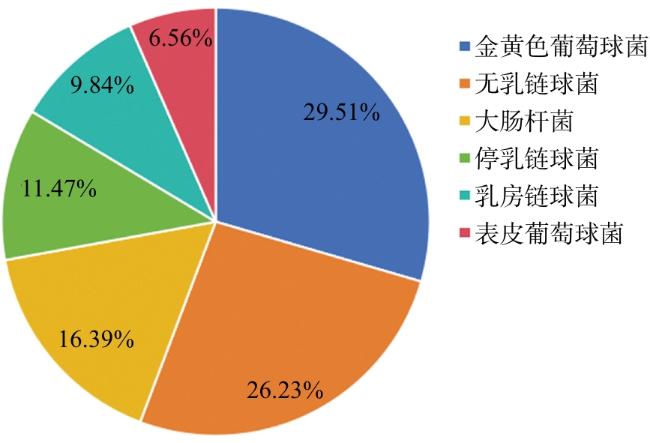
调查发现,282头奶牛中患有隐性乳房炎的有81头,患病率为28.72%,成功分离并初步鉴定了61株病原菌。由图1可知,有18株金黄色葡萄球菌(29.51%)、16株无乳链球菌(26.23%)、10株大肠杆菌(16.39%)、7株停乳链球菌(11.47%)、6株乳房链球菌(9.84%)和4株表皮葡萄球菌(6.56%)。说明金黄色葡萄球菌和无乳链球菌可能是该场奶牛隐性乳房炎的主要致病菌,应重点预防。


2.2 不同因素特征的奶牛隐性乳房炎发病情况
由表1可知,低产奶牛的隐性乳房炎检出39头,发病率为25.00%,高产奶牛的隐性乳房炎检出42头,发病率更高,为33.33%;说明高产奶牛比低产奶牛更容易患隐性乳房炎。1~2胎次的奶牛隐性乳房炎检出18头,发病率为19.57%,3~4胎次的奶牛隐性乳房炎检出30头,发病率为28.30%,5胎次及以上的奶牛隐性乳房炎检出33头,发病率为39.29%;说明随着胎次的增加,奶牛隐性乳房炎的发病率也随之升高。泌乳高峰期奶牛患隐性乳房炎的发病率最高,为35.80%;其次是泌乳中期,发病率为30.85%,泌乳后期发病率为22.92%;泌乳初期奶牛患隐性乳房炎的发病率最低,为20.34%;说明泌乳高峰期是奶牛隐性乳房炎发病的高危阶段,发病率随着泌乳量的减少而降低。
表1 不同因素特征的奶牛隐性乳房炎发病情况 |
| 因素 | 组别 | 检测头 数/头 | 检出头 数/头 | 奶牛隐性乳房炎发病率/% |
|---|---|---|---|---|
| 产奶量 | 高产奶牛(>20 kg/d) | 126 | 42 | 33.33 |
| 低产奶牛(<20 kg/d) | 156 | 39 | 25.00 | |
| 胎次 | 1~2胎次 | 92 | 18 | 19.57 |
| 3~4胎次 | 106 | 30 | 28.30 | |
| 5胎次及以上 | 84 | 33 | 39.29 | |
| 泌乳 阶段 | 泌乳初期 | 59 | 12 | 20.34 |
| 泌乳高峰期 | 81 | 29 | 35.80 | |
| 泌乳中期 | 94 | 29 | 30.85 | |
| 泌乳后期 | 48 | 11 | 22.92 | |
3 结论与讨论
3.1 奶牛隐性乳房炎发病情况及病原菌
奶牛隐性乳房炎易发展为慢性状态,形成难以根除的长期感染,严重危害奶牛养殖业的发展。本研究进行奶牛隐性乳房炎的发病情况检测和病原菌分离,结果发现,282头奶牛中患有隐性乳房炎的奶牛有81头,患病率为28.72%。苗苗等[6]对新疆地区某奶牛养殖场的奶牛隐性乳房炎发病情况进行调查,结果显示,该地区的平均发病率为5.84%。不同地区隐性乳房炎的发病率有所不同,这可能与当地的气候、养殖环境、饲养管理方式等因素有关。
本研究初步分离得到61株病原菌,其中有18株金黄色葡萄球菌、16株无乳链球菌、10株大肠杆菌、7株停乳链球菌、6株乳房链球菌和4株表皮葡萄球菌。金黄色葡萄球菌占比最多,该菌常出现在乳头管和乳房组织中,其通过产生生物膜,躲避免疫系统和抗生素的侵害,常引发慢性感染。无乳链球菌和大肠杆菌主要存在于垫料、粪便等饲养环境中,能破坏乳腺组织并躲避免疫系统,长期感染可能导致奶牛乳房坏疽。
3.2 不同产奶量奶牛隐性乳房炎的发病情况
产奶量是影响奶牛隐性乳房炎发病率的重要因素。本研究发现,低产和高产奶牛的隐性乳房炎发病率分别为25.00%和33.33%,高产奶牛的发病率更高。这可能是由于高产奶牛的泌乳量高,乳腺代谢负担重,乳腺组织更容易受到损伤,从而增加病原菌感染的机会;此外,高产奶牛的营养需求高,若营养供应不足或不平衡(如缺乏微量元素硒),会导致免疫力下降,进一步增加隐性乳房炎的发病风险。低产奶牛的泌乳量较低,乳腺代谢负担小,乳腺组织相对健康,病原菌感染的机会较少,且其泌乳期较短,乳腺组织的恢复时间较长,免疫力相对较高。
3.3 不同胎次奶牛隐性乳房炎的发病情况
奶牛隐性乳房炎的发生与年龄和胎次有着密切的关系[7]。本研究结果显示,奶牛隐性乳房炎的发病率随胎次的增多而升高,1~2胎次、3~4胎次和5胎次的奶牛隐性乳房炎发病率分别为19.57%、28.30%和39.29%。可能是因为中低胎次奶牛的乳腺组织较为健康,免疫力相对较高,且泌乳负担相对较轻,乳腺损伤和感染的风险较低;而高胎次奶牛的乳腺组织老化严重,乳头括约肌松弛,免疫力降低,乳腺负担加重,病原菌更易侵入。
3.4 不同泌乳阶段奶牛隐性乳房炎的发病情况
不同泌乳阶段的奶牛在生理状态、泌乳负担和免疫力等方面存在差异,这些因素共同影响隐性乳房炎的发生和严重程度[8]。在本研究中,泌乳高峰期奶牛隐性乳房炎的发病率最高,为35.80%;泌乳初期奶牛隐性乳房炎的发病率最低,为20.34%。说明泌乳高峰期是隐性乳房炎的高发阶段,该阶段奶牛产奶量高,乳腺代谢旺盛,泌乳负担重,乳腺组织更容易受损,因此感染率更高。
综上,本研究调查了山东地区某奶牛场奶牛隐性乳房炎发病情况及规律,结果表明,金黄色葡萄球菌、无乳链球菌等是该病的主要病原菌;在奶牛养殖过程中,产奶量、胎次、泌乳阶段等均对该病的发病情况有明显影响,高产奶牛、高胎次和泌乳高峰期的奶牛隐性乳房炎发病率更高。因此,对不同饲养条件制定针对性的防控措施,如改善饲养环境、规范挤奶操作、补充营养等,可有效降低隐性乳房炎的发病率,保障奶牛健康和经济效益。