

安徽作为粮食生产大省之一,秸秆资源丰富,枯树枝条、竹木料加工废弃物等生物质原料充足,为生物质颗粒产业发展奠定了坚实基础,使其形成了较为发达的产业规模。生物质颗粒燃料是一种可再生能源,其燃烧过程中释放的CO2量与生物质生长过程中吸收的CO2量相当,可接近实现CO2零排放[1-3]。因此,研制并推广应用生物质颗粒燃烧热风炉,对于缓解环境污染和能源问题具有重要意义。
段冀伟[4]通过数值模拟的方式研究生物质燃烧炉的结构特点,针对燃烧炉烟道提出了结构改进措施,有效提高了生物质燃烧炉高温烟气热量保留率、综合热效率,为生物质燃烧炉设计提供理论依据。赵鹏勃等[5]结合流化床燃烧工程实际经历,研究分析了生物质燃料流化床燃烧时的燃烧特性,NOx污染物排放控制、氯腐蚀以及碱金属引起的积灰结渣腐蚀问题。丁先等[6]研究指出了富氧燃烧技术易造成高温结渣等问题,通过烟气再循环动态调整再循环比例可有效控制炉内的温度水平,缓解污染物排放问题。单福朋[7]分析了几种典型的生物质颗粒热风炉的工艺流程及其特点,为生物质颗粒热风炉的设计提供了思路。
目前,市场上的中小型生物质颗粒热风炉存在燃烧率、热效率、自动化程度低等短板。针对上述问题,本文在此基础上研发了大型生物质颗粒热风炉,分析了其结构,并总结了产品熟化定型过程与推广应用情况,为大型生物质颗粒热风炉研发制造推广应用提供参考。
1 大型生物质颗粒热风炉结构设计
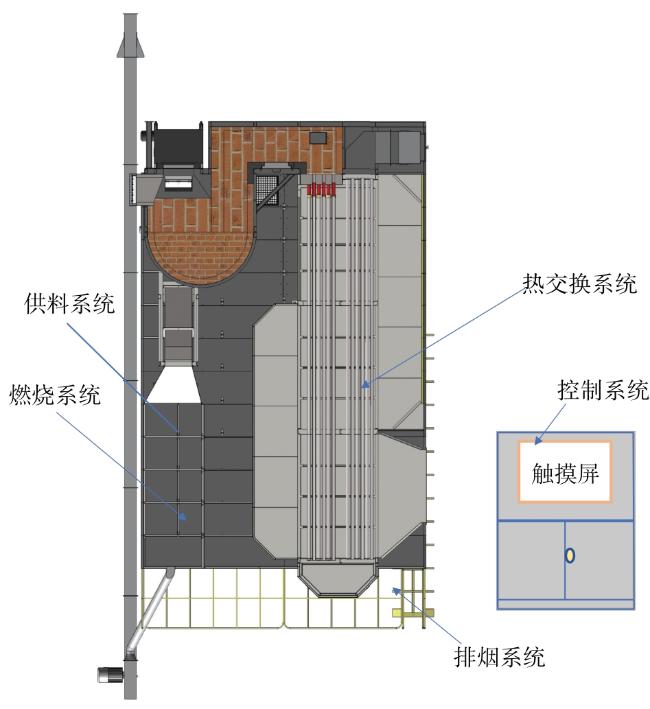
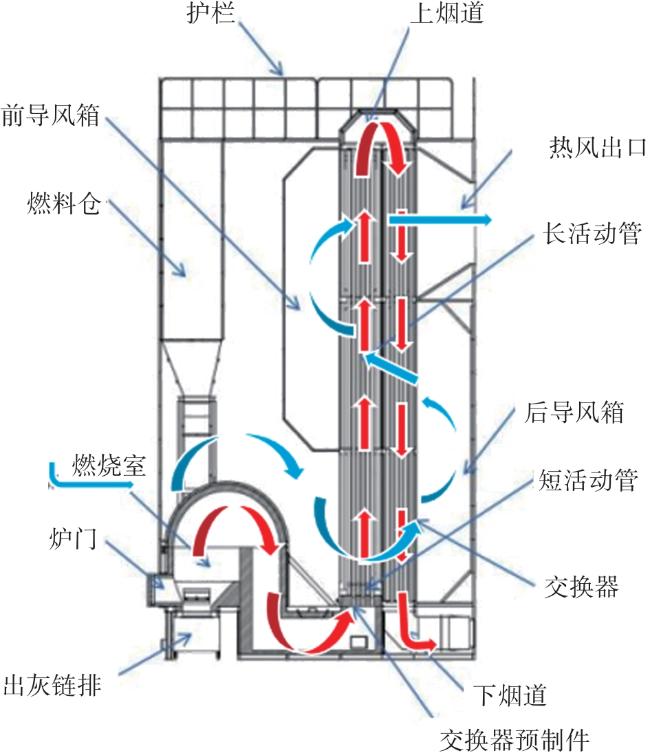
大型生物质颗粒热风炉是一种以生物质颗粒为燃料的热能设备,其结构主要包括供料系统、燃烧系统、热交换系统、控制系统和排烟系统等,供热在300万kcal/h以上,具体结构示意如图1所示。产品采用逆流+沸腾式燃烧方式,逆流是火焰燃烧方向与进料方向相反,将燃烧较为充分的废气引入燃烧器中与燃料一起燃烧,燃烧废气中含有的一些挥发物和气态碳烟可使燃烧更加充分,有效提高了生物质热风炉的燃烧率和环保性。沸腾式燃烧方式具备燃烧高效、燃料适应性强、温度分布均匀、污染物排放量低及操作维护简便等优点。采用逆流+沸腾式燃烧方式,可有效解决中小型生物质颗粒热风炉存在的燃烧率低、热效率不高等问题,通过高效的热交换将燃烧产生的热量转化为热空气,用于粮食等农产品烘干或供热等。
1.1 供料系统
供料系统主要由输送绞龙、储料仓、变频器、三相电动机等组成。在电机的驱动作用下,输送绞龙以一定的速度将生物质颗粒从储存仓沿着燃烧室的圆形炉顶切向射入,燃烧室底部火焰燃烧方向与料方向相反,使热烟气流经过燃料表面,既有利于促进燃料干燥,又助力其快速着火并实现充分燃烧。PLC控制系统根据安装在热风炉出口的温度传感器实时检测信号,通过改变变频器的输出频率控制供料电机的速度,实现变量供料有利于燃料均匀燃烧。热风炉内设置燃料储料仓,安装占地面积小,无需额外设置颗粒燃料储料仓。
1.2 燃烧系统
燃烧系统主要包括燃烧室、点火装置和燃烧器。燃烧室采用高强莫来石注料耐高温材料浇铸,燃烧室与热交换管连接处采用铝耐火泥和耐火耐磨修补料填充浇注,以承受高温并确保燃烧效率。点火装置是电火花点火或预热空气点火,确保在各种条件下均能点燃生物质颗粒[8]。在燃烧炉底部,采用链排式排灰设计,通过链板慢速循环运动,搅动燃烧料与空气良好混合,既延长了未燃尽碳粒在炉膛内的滞留时间,实现充分燃烧,又能确保各类颗粒燃料的灰烬顺畅排出。这些灰烬汇集于炉底集灰盒后,通过灰烬绞龙完成密闭回收,避免了粉尘外泄。
1.3 热交换系统
1.4 控制系统
控制系统是生物质热风炉智能化的重要体现,包括传感器、PLC控制器和执行机构(变频器、电磁阀等)。传感器用于监测燃烧过程中的温度、压力和氧气含量等参数;PLC控制器可根据检测的实时数据,通过变频器、电磁阀等调节供料速度、供热风量、排烟速度等,从而实现燃烧过程的优化。智能控制系统集成温度、压力、氧气含量等传感器,开发智能控制算法,实现燃烧过程的实时监控和自动调节。控制系统通过显示器实现远程监控和操作,提高操作的便利性和安全性。控制系统配备直观易用的人机交互界面(HMI),并集成完善的故障诊断与安全保护功能,确保操作管理便捷高效、运行安全可靠。具体设计包括:开发图形化操作界面,实时显示温度变化曲线与系统警报信息,让用户直观掌握设备运行状态;采用触摸屏操作模式,简化用户输入流程及参数设置步骤,降低操作门槛;构建多重安全保护机制,涵盖过热保护、熄火保护、防爆保护等,全方位防范意外事故的发生,保障人员与设备安全。
1.5 排烟系统
2 产品熟化定型与推广
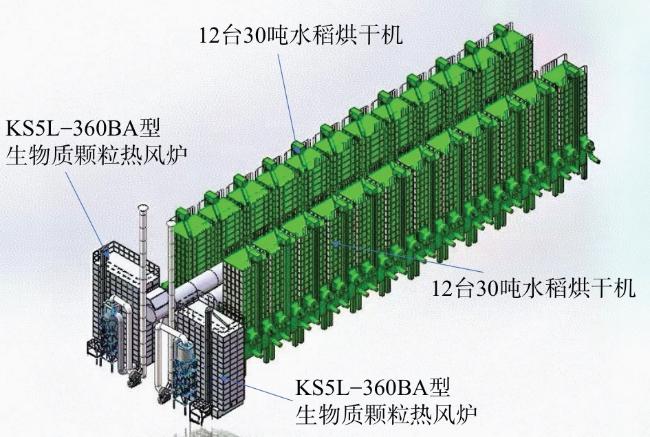
生物质颗粒热风炉与水稻烘干机集中供热系统示意如图3所示。图中共2台热风炉、24台水稻烘干机,水稻干燥能力为720 t/h。每台KS5L-360BA型生物质颗粒燃烧智能控制热风炉可输出最大热能360万kcal/h,能为12台30 t水稻烘干机提供热能。
2.1 模块化设计
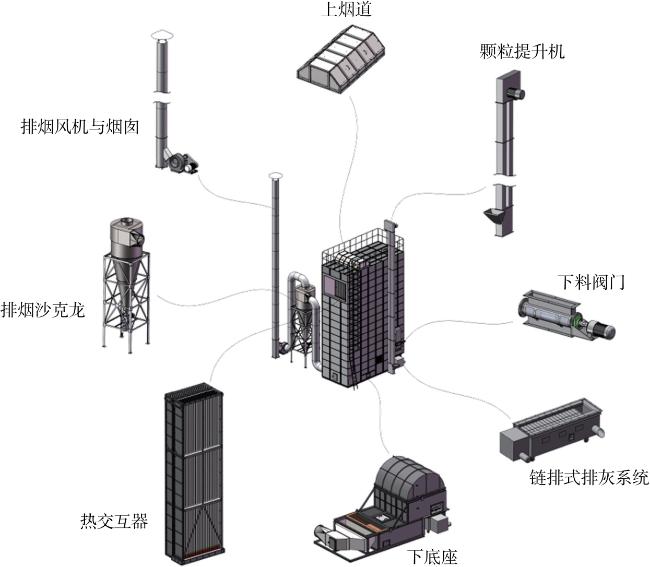
大型生物质颗粒热风炉采用模块化设计,其供料系统、燃烧系统、热交换系统、控制系统和排烟系统等能够并行生产,便于运输、安装调试以及维护,从而有效缩短了机具研发、调试与应用周期。由图4可知,将热交换器、下底座与燃烧室、链排式排灰系统、下料阀门、颗粒提升机、上烟道、排烟风机与烟囱、排烟沙克龙、热交互器等设计为独立模块,便于快速组装与维护。


2.2 稳定性测试与评估
2.3 主要技术参数
在热风炉符合国家环保标准和能效要求的基础上,通过安徽省农业机械试验鉴定站对KS5L-360BA型大型生物质颗粒热风炉进行鉴定检测,其KS5L-360BA型的主要技术参数具体如下:外观尺寸7 200 mm×4 630 mm×12 300 mm,热效率80%~90%,颗粒物≤20 mg/m3,NOx≤150 mg/m3,含水率≤30%,可与12台30 t水稻烘干机配套使用。
该产品可直接实现一炉拖10台以上30 t粮食烘干机的自动运行烘干;而Laube B-360 生物质颗粒燃烧机则需经过专门改造,才能满足一炉拖带多台的需求。用户使用反馈结果表示,与市场上小颗粒热风炉相比,该热风炉能节约30%的燃料,安全节能,实现全自动智能控制,多重运转监测,有效避免了烘干机燃烧的事故。
2.4 推广应用
遵循“研产推用一体化”理念,通过组建山区机械化校县服务联盟,构建快速响应的售后服务体系,有效破解了新产品、新技术推广中存在的农户接受慢、操作不熟练等难题。通过政策引导、服务指导、市场推广等方式,推动大型生物质颗粒热风炉在粮食烘干及农产品干燥领域的应用。加强与企业、农户等合作,开展热风炉示范工程,展示其优势和应用效果,跟踪产品应用与反馈改进意见,提高市场认可度。建立健全售后服务体系,为用户提供技术支持和维修服务。通过定期回访、技术培训等方式,帮助用户解决使用过程中出现的问题,提高用户满意度。目前,产品已在20多个省市得到应用,并出口泰国、菲律宾等东南亚国家,取得了良好的经济和社会效益。
3 结论与讨论
生物质颗粒燃料燃烧热风炉是一种以生物质颗粒(如木屑、秸秆、稻壳等压缩燃料)为能源的热风发生装置,通过燃烧产生高温洁净热空气,为粮食烘干机或农产品干燥设备提供稳定热源。其核心优势在于环保性、可再生性以及经济性。研制的大型生物质颗粒热风炉主要技术特点如下。
(1)采用变量供料、逆流+沸腾燃烧方式燃烧、链板蠕动密闭清灰等技术,解决了生物质颗粒燃烧不充分、颗粒物排放超标等问题,实现了高燃烧率、无结焦、颗粒物排放在国家标准规定范围内[15]。
(2)基于CFD流场仿真的切线旋流式配风结构设计的热能交换系统,解决了气体流动阻力大、热效率低等问题,热风炉循环烟道阻力小、热交换面积大、热效率高,不会发生回火和脱火现象,运行安全稳定。燃烧室采用高强莫来石注料耐高温材料浇铸,燃烧室与热交换管连接处采用铝耐火泥和耐火耐磨修补料填充浇注,耐高温且燃烧效率较高。
(3)针对传统生物质热风炉在运行中存在的温度波动大、控制精度低、能源利用效率不高等问题,大型生物质颗粒热风炉采用以PLC为核心的控制器,配备高精度温度、压力、氧气含量等传感器,配置可靠的电动阀门、变频器等执行器,并结合智能控制算法,实现对供料速度、燃料燃烧和空气流量的精确控制。控制系统配备直观易用的HMI和故障诊断与安全保护装置,确保操作便捷、运行安全。