

暴雨是主要的农业气象灾害之一,具有突发性强的特点,短时强降水易导致农田积水,形成渍涝灾害,淹没作物根系,造成缺氧烂根,对农业生产造成不利影响;同时,易引发洪涝和地质灾害,严重威胁着地方经济发展[1-2]。尚玥等[3]利用常规气象观测资料和MICAPS资料,分析了台风“暹芭”引发河南商丘暴雨成因,发现此次降水过程前期,大陆高压和西太平洋副热带高压不断加强,西南急流引导台风低压向北偏东方向移动,“暹芭”台风从两广北上,急流长时间维持,后随低槽东移配合台风倒槽继续向东北移动,进而持续为商丘带来降水。王佳禹等[4]利用MICAPS气象数据资料、地面自动站等资料,采取天气学诊断方法对大连地区的1次暴雨天气过程进行了诊断分析,发现500 hPa高空槽和温带气旋的移动和发展为暴雨发生发展提供了有利的环流背景。
近年来,高分辨率数值天气预报不断发展,在此过程中,发展形成的数值模式(CMA区域模式),已成为强对流天气预报的重要参考[5]。郭炳瑶等[6]利用不同分辨率的模式预报差异估计了GRAPES全球模式的预报误差。黄丽萍等[7]研究发现,CMA-MESO预报的近地面要素检验评分高于GRAPES-MESO。袁晨等[8]研究表明,GRAPESMESO区域中尺度模式对低温预报能力较好。Yin等[9]分析了Fy-4A Giirs水汽通道资料同化对CMA-MESO模式预报河南“7·21”特大暴雨的影响。
黑山地区位于辽宁省西部、锦州市东北部,地处中纬度地带,冬季寒冷干燥,夏季炎热多雨,四季分明,7—8月为该地区强降水集中出现的月份[10]。本文以2022年7月6—7日黑山地区1次大暴雨天气为例,探究此次大暴雨天气过程的成因,对区域模式在黑山地区的表现效果进行评估,研究为农业生产中的气象预测提供参考,助力农业健康生产。
1 资料与方法
1.1 天气实况
受台风“暹芭”变性后的温带气旋与高空槽共同影响,2022年7月6日夜间至7月7日凌晨,研究区出现暴雨到大暴雨天气,22个站点均出现降水,平均降水量120.0 mm,16个乡镇降水量达到大暴雨级别(100.0~249.9 mm),其中,最大降水量出现在镇安镇200.1 mm,最大小时雨强出现在太和镇46.3 mm。根据DB21/T 1454.1—2006《气象灾害评估 第1部分:暴雨》,此次降水过程为一级暴雨灾害。
1.2 环流背景与物理量诊断分析
1.3 区域模式表现效果评估
本研究结合研究区所处的地理位置及地形条件,选取中国气象局数值业务区域模式(CMA区域模式)中的国家局中尺度天气数值预报系统(CMA-MESO)、中国气象局区域台风数值预报系统(CMA-TYM)、中国气象局全球同化预报系统(CMA-GFS)、华东区域数值模式(CMA-SH9)为检验模式。检验时段为2022年7月6—7日研究区大暴雨过程,选用的模式产品包括降水量预报TS检验和降水预报偏差(BIAS)检验。根据本次强降水过程特点,检验起报时次选取为5:00。同时,将检验阈值设置为>0.1 mm、≥50.0 mm、≥100.0 mm、≥150.0 mm共4个不同等级的累计降水量,所用的实况数据为研究区22个区域站的降水量观测资料。
式中,NA是区域站预报正确的个数、NB是区域站空报的个数、NC是区域站漏报的个数。
2 结果与分析
2.1 环流背景与物理量诊断
2.1.1 500 hPa环流背景
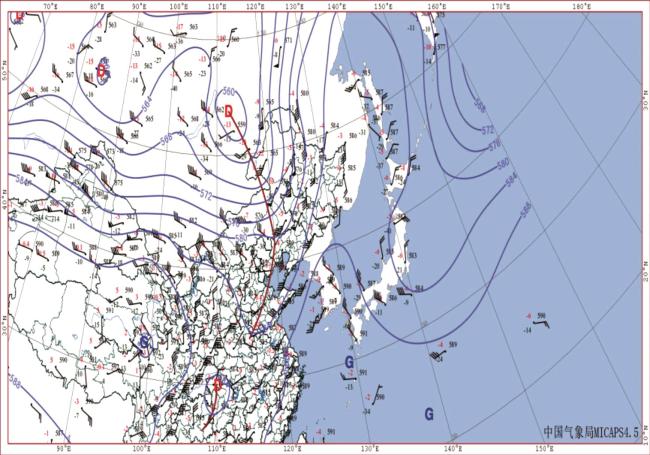
如图1所示,7月6日8:00,欧亚大陆为“两槽一脊”形势,高空槽东移发展形成低涡,研究区位于槽前位置。副热带高压受到热带气旋“艾利”的影响西进北抬,副热带高压与高空槽之间西南急流建立,台风“暹芭”变性后的温带气旋沿西南急流向东北方向移动,引导暖湿气流向北输送,在7月6日20:00达到38° N,源于西太平洋副热带高压南侧的水汽通道,在纬向型环流主导下的东北区域持续性极端暴雨过程中起主导作用,高空西南急流加强[12]。“暹芭”变性后的温带气旋自海南登陆后,沿西南急流向东北方向移动,引导暖湿气流向北输送,研究区位于气旋顶部位置[13]。同时,高空槽不断东移加深,槽后有冷平流南下,冷暖空气在辽宁地区交汇,辽宁省出现大范围降水。东南部地区受低空急流与地形的相互作用,触发中尺度系统发生发展并产生“列车效应”;中西部地区位于高空槽前部和低空急流左侧,斜压锋生加强,大尺度动力抬升强,出现100 mm以上大暴雨的可能性极大,研究区上空受到温带气旋顶部及高空槽的共同影响,为此次降水过程提供了持续充足的动力抬升条件[10]。
2.1.2 850 hPa环流背景
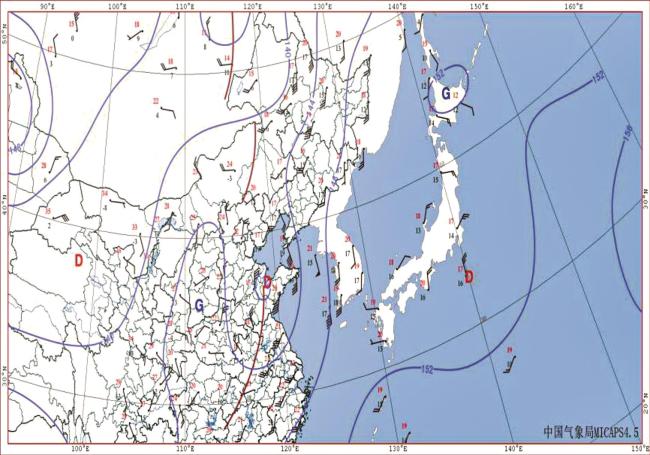
7月6日0:00,“暹芭”所处的西风槽经向度显著加深(图2),这是高空冷涡发展,中高纬度冷空气向南入侵,“暹芭”东侧维持着一条来自孟加拉湾、西北太平洋和南海的水汽通道,低层大气湿度条件依旧较好[14];7月6日夜间,“暹芭”逐渐移入渤海,其变性后的低涡中心位于渤海湾南部,且低涡在高空槽前,距离槽线较近,受高空西南急流影响,沿着副热带高压边缘向北移动。7月6日20:00,研究区处于台风倒槽附近,处于高空槽前和低空急流左侧,斜压锋生加强,大尺度动力抬升强,受强烈辐合作用影响,暖湿空气与北方干冷空气交汇,产生大暴雨,而副高后部低空急流加强,以及台风北上携带的水汽源源不断向辽宁中西部地区输送暖湿空气,为本次大暴雨过程提供稳定的水汽条件。
2.1.3 地面影响系统
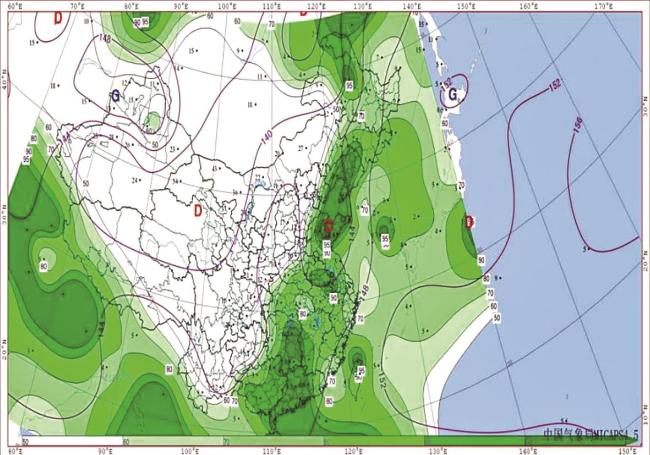
7月6日8:00,地面气旋向东北地区移动,途经渤海湾后加强。7月6日20:00,气旋顶部移动到研究区,该区强降水时段开始;7月7日8:00,地面气旋移动到研究区东部,此次降水过程趋于结束。从环流整体上来看(图3),此次大暴雨天气过程是由于“暹芭”变性后的温带气旋东移北上后,逐渐接上斜压能量,与高空槽相互影响带来动力抬升条件,二者互相增强,配合副热带高压北抬的西南急流带来的充足水汽条件导致的混合型降水。
2.1.4 探空分析
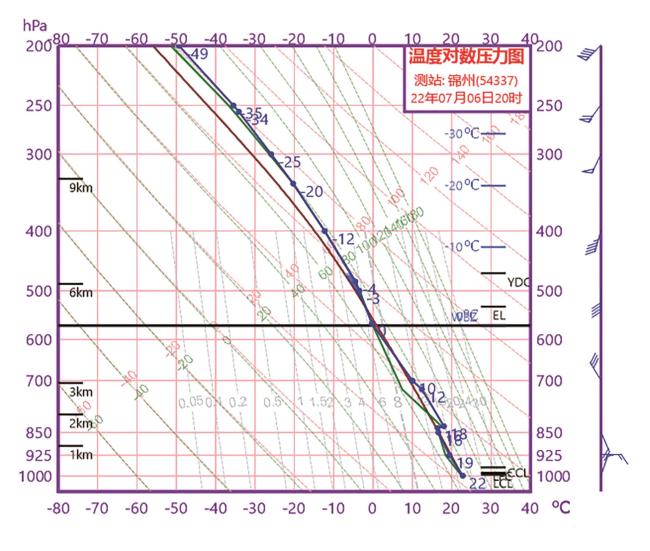
从2022年7月6日20:00的探空图来看(图4),CAPE 值在1 200~1 500 J/kg,达到研究区夏季暴雨的CAPE阈值(≥1 000 J/kg);0 ℃层高度在4 651.8 m;K指数35.7 ℃。925~700 hPa,风向随高度从偏东风转为西北风,呈顺时针旋转,有强烈的暖平流,700~500 hPa,偏北风转偏南风,有冷平流,层结不稳定。1 000 hPa位于台风倒槽顶部,为东北风,850 hpa为东南暖湿气流,存在逆温层,同时低层存在强风切变,为降水提供动力条件及不稳定能量和充足的水汽条件,700 hPa为西北风,有明显干冷空气入侵,有利于对流天气发生,易产生局地雷暴[15]。700~600 hPa外,其他高度层大气均呈饱和状态,湿层深厚,整层大气降水量在60~65 mm,因此对流天气主要以短时强降水为主[16]。
2.1.5 水汽条件
7月6日12:00,研究区850 hPa比湿场的比湿在12~14 g/kg,层结曲线850 hPa处存在逆温层,同时暖湿空气和中低层强垂直风切变,为强降水提供动力条件及不稳定能量,整层温度露点差低,水汽在近饱和的状态,湿度条件较好,为降水提供了充足的水汽条件;6日23:00至7日2:00,研究区上空水汽通量散度辐合显著增强,易出现短时强降水,对比实况分析,发现该时段内降水强度为本次强降水过程的最大值。
2.1.6 动力条件
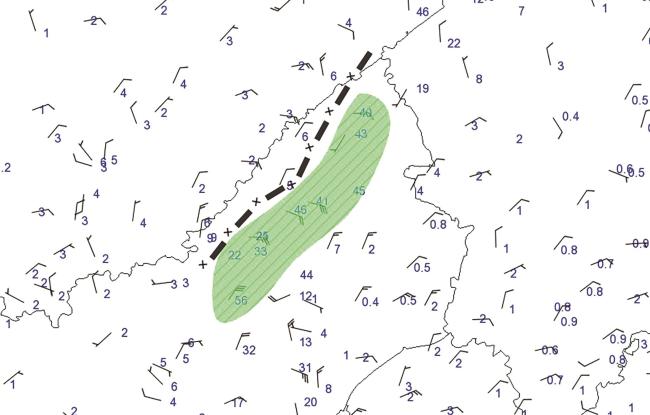
此次大暴雨天气过程中,研究区低层存在辐合、中层存在风切变、高层辐合位于中低层辐合后方。冷暖气流交汇,层结不稳定,低空急流稳定保持在15 m/s左右,是不稳定能量形成和维持的关键。地形作为影响降水的重要因素之一,在局地降水形成和发展中起着重要作用。本次降水过程雨带是完全沿着地形分布的“带状”,西北部地势高,地面气旋沿山前东移北上。此外,地形对边界层风向风速也有显著影响,在山前易形成地面辐合线,有利于上升运动。图5是研究区7月7日0:00—1:00的雨量和地面最大风速,此时研究区存在东南风和东北风的地面辐合线,降水效率较强,是研究区此次降水过程中小时雨强最大的时段。
2.2 区域模式表现效果评估
2.2.1 降水量预报TS检验
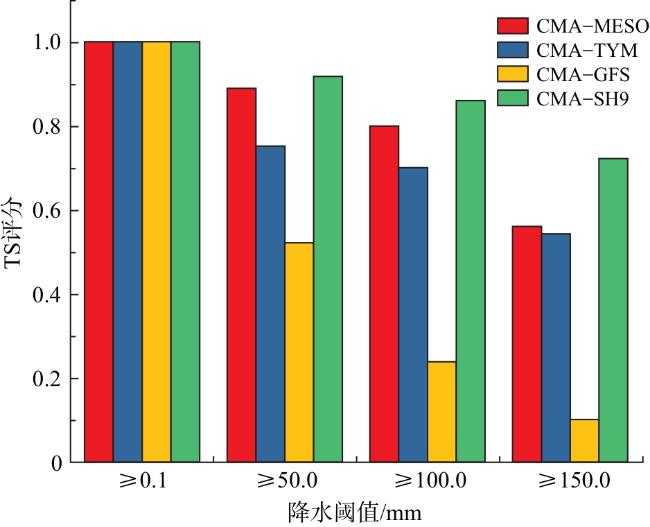
对于此次强降水天气过程,CMA-MESO、CMA-TYM和CMA-SH9模式预报均为暴雨到大暴雨量级,CMA-GFS区域模式预报为小到中雨量级。由图6可知,各区域模式对于累计降水量>0.1 mm的TS评分均为1,这是由于此次强降水过程研究区22个区域站均出现降水;对于累计降水量≥50.0 mm和≥100.0 mm,CMA-SH9的预报效果最好,CMA-MESO次之,CMA-GFS表现效果最差;对于累计降水量≥150.0 mm的降水预报,所有模式的TS评分均有下降,CMA-SH9的模式预报最优,CMA-GFS预报较差。综合来看,各区域模式对TS评分的表现顺序为CMA-SH9>CMA-MESO>CMA-TYM>CMA-GFS。
2.2.2 降水量预报BIAS检验
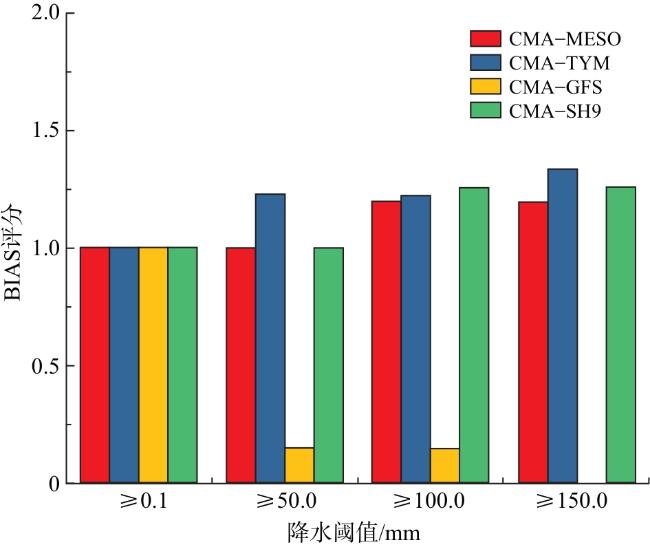
由图7可知,各区域模式在大阈值上整体预报偏大,其中累计降水量≥50.0 mm的预报偏差最大。累计降水量>0.1 mm的BIAS评分均为1;累计降水量≥50.0 mm的降水预报,CMA-MESO和CMA-SH9相差不大,预报偏差偏小,BIAS值更接近1;累计降水量≥100.0 mm和≥150.0 mm的降水预报,CMA-MESO、CMA-TYM和CMA-SH9模式预报偏差均较大,空报站数渐多,CMA-MESO预报偏差最小;而CMA-GFS在累计降水量≥50.0 mm、≥100.0 mm和≥150.0 mm的BIAS评分始终较低,直至降低为0,这主要是因为该模式整体降水量预报较低,漏报站数过多。综合来看,各区域模式对BIAS评分的表现顺序为CMA-MESO>CMA-SH9>CMA-TYM>CMA-GFS;对于高空槽位置及副热带高压来说,CMA-MESO、CMA-SH9和CMA-TYM 模式对强度预报较准确,且位置变化不大,稳定度好。


3 结论
本研究对2022年7月6—7日研究区1次大暴雨天气过程的成因进行分析,探讨不同预报模式的表现效果,得到如下结论。
(1)研究区此次大暴雨天气过程主要受台风“暹芭”变性后的温带气旋与高空槽共同影响,源源不断地向研究区输送暖湿空气,为本次大暴雨过程提供稳定的水汽条件,使研究区受强降水影响的时间较长,受灾影响严重。
(2)热带气旋“暹芭”变性后的温带气旋自海南登陆后,一路向东北地区移动,引导暖湿气流向北输送,与此同时高空槽则不断东移加深,槽后有偏南方向的冷平流,冷暖空气在辽宁地区交汇,且低涡前部低空急流加强,导致研究区出现暴雨到大暴雨。
(3)研究区0 ℃层高度偏高,层结不稳定,垂直风切变较大,整层大气湿度较大,水汽饱和层深厚,水汽条件较好,低空急流稳定保持在15 m/s左右,6日23:00至7日2:00,研究区上空水汽通量散度辐合显著增强,出现短时强降水。
(4)CMA-MESO、CMA-TYM、CMA-GFS和CMA-SH9 4种区域模式对累计降水量>0.1 mm的TS评分、BIAS评分均为1;对于≥150.0 mm的降水预报,各区域模式的TS评分、BIAS评分均有下降。总的来说,CMA-SH9的模式预报较优,CMA-MESO空报站数最少,预报偏差最小。