

暴雨作为一种极端天气现象,可能对人类社会和自然环境造成严重影响,同时也会对农业生产产生一定程度的影响,如引发农田内涝、导致作物倒伏、诱发病虫害暴发,同时破坏土壤理化性状、影响作物光合作用与养分吸收,最终造成农作物减产[1-2]。暴雨的发生与充分的水汽供应密切相关[3-4]。水汽输送作为暴雨形成的关键物理过程,近年来,较多气象学者关注暴雨水汽的来源。例如,相关学者运用混合单粒子拉格朗日积分轨迹模型(HYSPLIT后向轨迹模型)对水汽输送特征进行研究,该方法可有效定量计算水汽贡献率[5-6]。王佳津等[7]对四川盆地夏季暴雨水汽路径和源地进行分析,得出了阿拉伯海也是一个比较重要的水汽源地,且该源地的水汽大都经过孟加拉湾地区再输送到盆地。杨轲然等[8]提出印度洋的水汽对云南冬季降水有着重要作用。
凉山州位于四川省的西南部,地处青藏高原东缘横断山区,属亚热带高原季风气候区[9]。近年来,随着全球气候变化加剧,凉山州频繁遭受暴雨灾害的侵袭,特别是2020年冕宁县“6·26”特大暴雨和2021年金阳县“8·21”极端降水事件[10-11],这些灾害不仅对当地的基础设施和农业生产造成严重破坏,还对人民群众的生命财产安全构成重大威胁。因此,分析暴雨天气过程的水汽输送,有助于了解大气降水的水汽源地,明确水汽贡献率,从而增加暴雨预报预警的科学性和精准度,为农业生产发展提供更可靠的气象信息支持,减少因暴雨等极端天气引发的经济损失和人员伤亡风险,切实保障人民群众的生命财产安全。基于此,本研究利用2024年7月19—21日常规地面及高空气象观测资料、ERA5再分析资料,对19日20:00至21日8:00 凉山州一次区域性暴雨过程的环流特征与水汽输送特征展开分析。
1 资料与方法
本文利用2024年7月19—21日研究区的常规地面及高空气象观测资料、ERA5再分析资料(时间分辨率为6 h,水平分辨率0.25°×0.25°),利用天气学方法对暴雨过程进行降水实况、环流形势分析以及水汽条件分析。
本文参考文献[5-6]的方法,利用GDAS资料(时间分辨率6 h,水平分辨率1°×1°),使用由美国国家海洋大气局(NOAA)和澳大利亚气象局合作开发的HYSPLIT后向轨迹模型模拟暴雨区水汽的后向运动轨迹。以暴雨中心冕宁县(102.16° E、28.55° N)为模拟靶点,选取2024年7月19日20:00(暴雨初期)作为轨迹起始时间。鉴于对流层中低层集中了大气中大部分的水汽,结合研究区高海拔地形特征(平均海拔2 000~3 000 m),设定3 km(约700 hPa)、4 km(约600 hPa)、5.5 km(约500 hPa)为模拟初始高度,追踪时长120 h(5 d),时间步长选取6 h,得到研究区暴雨区的主要水汽来源、输送以及贡献率,从而研究本次暴雨发生期间的水汽输送特征。
2 结果与分析
2.1 降水实况和环流形势
2.1.1 降水实况
2024年7月19日20:00至21日8:00,研究区出现了1次区域性暴雨天气过程。降水中心雨带为带状,呈西南—东北方向分布,最大小时雨强(47.1 mm)出现在冕宁县和爱乡临江气象观测站,过程累积降水量最大出现在冕宁县惠安镇沙坝气象观测站(245.4 mm)。
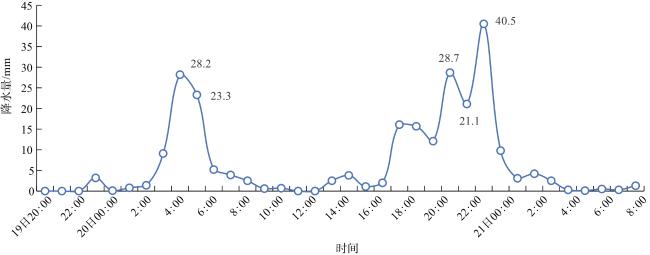
从降水中心逐时雨量演变可见(图1),惠安镇沙坝气象观测站的降水过程可分为两个阶段,短时强降水累计5 h。具体表现为第一阶段降水始于19日23:00的阵性降水,20日4:00突发性增强并达到峰值(28.2 mm/h),随后降水强度迅速衰减,5:00—16:00以零星阵雨为主;第二阶段降水自20日17:00再度开始并增强,22:00出现过程最强降雨(40.5 mm/h),此后迅速减弱。两阶段峰值间隔18 h,表现出明显的间歇性强降水特征。
2.1.2 环流形势
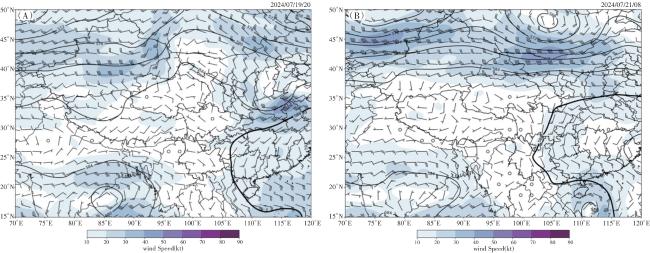
环流机制分析表明,本次暴雨过程主要受以下因素协同作用:一是副高西伸北抬对高原低涡东移形成动力阻挡,导致低涡系统在川西高原长时间滞留;二是低层西南低空急流为研究区提供充沛暖湿水汽以及不稳定能量,低层辐合上升运动,配合地形抬升效应,最终导致本次区域性暴雨天气的发生。
2.2 水汽条件分析
2.2.1 水汽通量分布
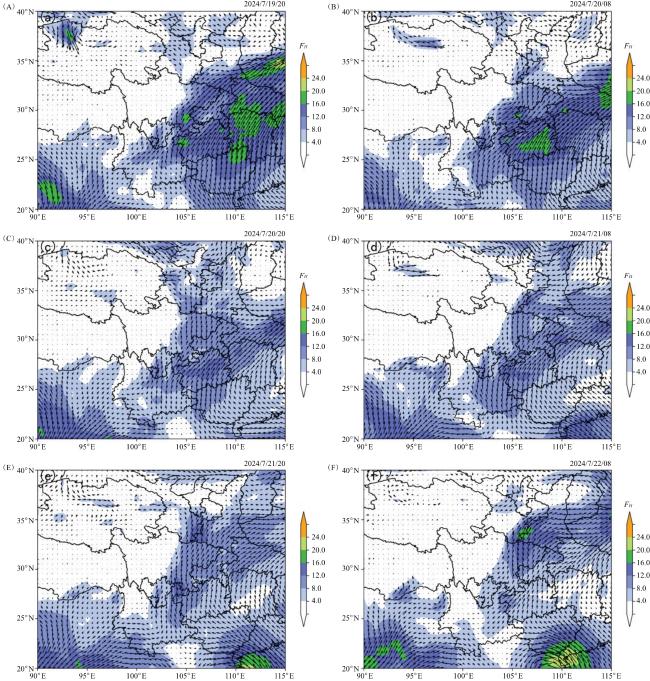
在暴雨天气研究中,水汽通量的强度与方向可有效表征水汽输送路径及贡献源区,解析降水的水汽来源及输送特征,对揭示降水成因与机制具有重要意义。基于2024年7月19日至22日每日20:00和8:00的700 hPa水汽通量空间分布(图3)分析表明,此次暴雨过程中进入研究区的水汽主要有以下3条路径:一个是南海路径,源自南海的东南气流,受副高西侧气流引导,经广西向云南西部、中部地区输送,随后进入研究区范围;二是孟加拉湾西南路径,由孟加拉湾经西南气流引导直接输送至研究区;三是孟加拉湾偏西路径,源自孟加拉湾的偏西气流东移至云南中部地区,后转向偏北或东北方向影响研究区,其水汽通量辐合中心与降水中心区高度吻合。结果表明,研究区19日20:00至21日8:00持续存在明显的水汽辐合区,表现为一条贯穿凉山州全域的西南—东北向水汽输送带,最大通量>16 g/(cm·hPa·s);在21日8:00后,随着副高的显著西伸北抬,该输送带逐渐减弱并消散,这与强降水衰减时段呈现了较好的同频响应。
2.2.2 水汽通量散度
充足的水汽供应是暴雨天气形成的核心条件之一。由于局部地区的水汽难以支撑强降水天气过程,持续的外部水汽输送至暴雨区尤为关键,其中水汽通量散度的空间分布可有效地表征水汽辐合辐散的特征状况。700 hPa水汽通量散度空间分布显示,强降水阶段受高原低涡系统影响,研究区北部、西部及南部持续维持水汽通量散度负值区形成显著水汽辐合中心,最大辐合强度<-4×10⁻⁶ kg/(m²·s),与暴雨落区高度重合。后随着副高西伸并控制研究东部及北部,低涡系统减弱消散,研究大部分地区转为水汽通量散度正值区,以水汽辐散为主,仅北部和西部残留弱辐合,辐合强度<-2×10⁻⁶ kg/(m²·s),水汽聚集效应消失,强降水过程结束。
2.3 HYSPLIT水汽来源及聚类
为定量解析此次暴雨过程的水汽来源特征,本研究采用HYSPLIT后向轨迹模型进行追踪分析。由图4A可知,3 km高度上的水汽轨迹主要分为西南(1号和2号)和东南(3号)两大水汽输送通道。1号通道的水汽主要源自缅甸及周边地区,2号通道的水汽主要来自孟加拉湾地区,水汽贡献率分别为50%、17%;3号通道的水汽主要源自云南和广西地区,水汽贡献率为33%。综合比较,西南路径的水汽轨迹数目贡献率(67%)约是东南路径(33%)的两倍。因此,3 km高度层的水汽主要来源于孟加拉湾及缅甸周边地区。
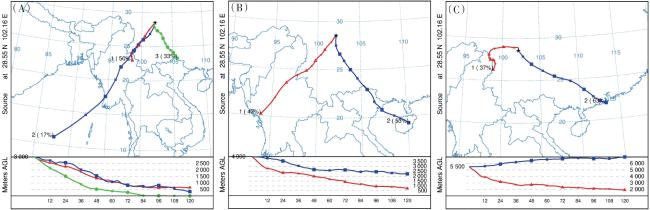


由图4B可知,4 km高度上的水汽轨迹分布特征与3 km高度层相似,主要通过西南(1号)和东南(2号)两条水汽输送通道输送水汽。1号通道的水汽主要源自孟加拉湾地区,水汽贡献率为47%,为该高度层水汽输送的主要通道之一。2号通道的水汽主要源自南海地区,水汽贡献率为53%,略高于1号通道,同样是该高度层水汽输送的重要通道。
由图4C可知,5.5 km高度上的水汽轨迹分布特征主要分为2类:偏西(1号)和东南(2号)通道。1号通道的水汽主要源自青藏高原东侧及云南地区,水汽贡献率为37%,对该高度层水汽输送具有显著影响;2号通道的水汽主要源自南海地区,水汽贡献率为63%,是该高度层水汽输送的主要通道。
对比不同高度的轨迹特征图表明,一是低层暖湿输送与正反馈,600~700 hPa(3~4 km)水汽均源自低层输送的暖湿水汽,受高原低值系统的抬升作用影响,暖湿气流上升并释放凝结潜热,进一步强化上升运动,形成正反馈机制;二是南海通道的垂直增强效应,东南路径贡献率随高度增加显著增加,这与副高西伸而导致的低空急流倾斜上升密切相关。
3 结论
本文基于研究区的常规地面及高空气象观测资料、ERA5再分析资料和NCEP GDAS资料,结合HYSPLIT后向轨迹模型,系统分析了凉山州2024年7月19—21日区域性暴雨过程的环流特征和水汽输送特征,得到以下主要结论。
(1)500 hPa川西高原低涡与西伸的副高形成动力对峙,导致低涡系统长时间滞留川西高原,维持低层强烈辐合及上升运动。700 hPa西南低空急流输送暖湿水汽及不稳定能量,与低涡辐合区叠加触发对流。高原低值系统的持续辐合与副高外围的西南急流耦合,形成“低层辐合—中层输送—高层辐散”的垂直环流配置,最终驱动区域性暴雨的发生。
(2)700 hPa水汽通量空间分布表明,本次暴雨过程中进入研究区的水汽主要有3条路径,分别是南海路径、孟加拉湾西南路径和孟加拉湾偏西路径。研究区北部、西部及南部持续维持水汽通量散度负值区,形成显著水汽辐合中心,与暴雨落区高度重合。
(3)采用HYSPLIT后向轨迹模型分析发现,600~700 hPa水汽均是低层输送的暖湿水汽,暖湿气流上升释放凝结潜热,进一步强化上升运动,形成正反馈机制;东南路径的水汽贡献率随高度增加显著增加。