

传统村落是指历史悠久、物质和非物质文化遗产丰富的村落,其承载着悠久的生产智慧与多彩的文化艺术形态[1-2]。各地积极推动省级传统村落名录的建设工作,鼓励多主体参与地方性保护名录的创建,从而形成多层次、全覆盖的保护格局。现阶段,部分村落的保护与发展出现了村庄风貌改变、景观协调性被破坏等问题[2]。针对上述问题,亟需开展传统村落景观基因的系统提取工作,并提出针对性的风貌保护策略。
在传统村落研究中,“景观基因”是指承载其独特性并可供识别的最小文化景观单元。该概念为系统解构与分析聚落的深层特征提供了核心要素与判别依据[3-4]。唐梁凤[4]将该概念应用到传统村落文化景观的研究中,指出景观基因是某一景观与众不同的特有遗传因子。景观基因信息链是景观基因从抽象走向具体、并依规组合以凸显其特性的系统过程[5]。基于生物学概念构建的“胞—形—链”图示法通过识别与解析人文景观要素,为区域文化建立专属图谱。该链条结构有助于实现景观基因特征的识别、分类及可视化表达。
景观基因信息链作为景观基因理论的深化成果,广泛应用于传统村落的文化景观识别、分类与结构解析。该理论强调以“一目标、两途径”为方法基础,以“信息元—信息点—信息廊道—信息网络”四要素为核心结构,旨在通过点、线、面逐级关联的方式揭示村落景观的整体布局[6]。景观信息元承载区域独特的历史文化记忆,是村落文化的核心内涵;信息点则是信息元的可视化表达,是具有标识性的景观物象;信息廊道由多个信息点串联而成,具有明显的线性视觉特征;信息网络则是廊道与节点持续扩展交织形成的整体结构,是村落景观的命脉。综上,景观基因信息链能够为传统村落保护、更新与文化重构提供系统化路径。本研究通过实地调研与数据分析,系统识别和提取了山东省青岛市即墨凤凰古城的景观要素基因;在此基础上,构建适用于当地特征的景观基因信息链,进而明确村落景观的核心特质,为传统村落人居环境在文化遗产保护层面的提升与优化提供理论依据与实践路径。
1 材料与方法
1.1 研究区基本情况
研究选址于山东省青岛市即墨区凤凰古村,该村是即墨区沿海传统村庄的一个典型代表,是联通海陆的重要节点,其依托独特的海防格局和港湾体系,在渔盐贸易、海上交通、文化交流等方面发挥着重要作用。沿海地带村落分布密集,既有依山就势的山海村落,也有依港而兴的渔业村庄,空间形态多样,建筑风貌独具特色,凝结了海防文化、海洋文化与民俗文化的复合特征。这些村落承载了丰富的历史记忆和地域文化景观,是研究北方沿海聚落形态演变与传统文化传承的重要样本。对这些村庄景观基因的系统挖掘与解析,不仅有助于揭示其独特的地域文化特色,而且对推动乡村全面振兴战略下的文化传承、风貌保护与产业发展具有重要意义。
该村落以明清古建筑群为核心特色,目前保存有56处清代建筑。这些建筑工艺精湛,砖石雕刻、垂檐瓦脊、缝花墙饰保存完好,以木构榫卯、砖墙陶罐镶嵌等技艺体现胶东民居特色。自然景观方面,凤凰山林木繁茂,村落与农田、水系交织,形成“水—田—林—居”共生格局。近年来,该村落依托古建筑保护与乡村旅游融合发展,积极开展农耕体验、非遗手作采摘、文旅研学等项目。该村落已成为集生态休闲、文化传承为一体的传统村落活化样本,具有典型性与重要研究价值。
1.2 研究数据
本研究数据主要通过以下3种途径获取:(1)收集与研究区相关的历史与规划类文本资料,包括《即墨县志》《金口镇志》《金口镇全域旅游发展总体规划》和《青岛市即墨区历史文化名村总体规划》等,以获取村落的历史沿革、文化遗产保护信息;(2)借助无人机对该村落开展测绘与影像采集工作,以获取高精度图像资料[4];(3)通过实地调研收集包括摄影、访谈及问卷等在内的原始数据,并将村部提供的基础信息与研究者实地走访获取的资料进行整合,形成较为全面的数据体系。
1.3 景观基因识别指标体系构建
以景观基因的识别与提取原则为指导,结合实地调研成果,将该古村景观基因的识别指标从物质形态角度区分为物质与非物质景观基因两大类别。
1.4 村落景观基因信息链构建流程
综合运用实地走访、文献梳理、深度访谈及航拍分析等方式,系统收集了景观要素基因:空间特征、建筑风貌、环境因素、习俗活动和传统工艺。通过将现场收集的材料与地方提供的档案内容进行相互补充、交叉验证,构建多元的数据体系[7]。
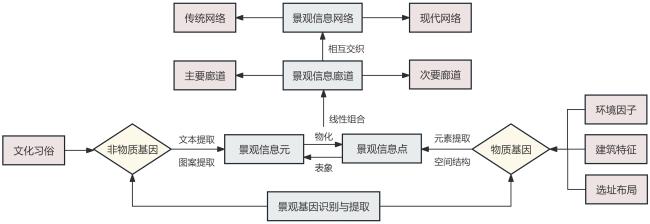
从景观要素视角出发,景观基因信息链的整体构建可分为5个主要步骤[8-9]。第一步是对所选村落开展实地调查,系统搜集并归类其物质性与非物质性景观基因;第二步是基于上述基因识别结果,运用文本编码与图像识别技术,对节庆习俗、传统工艺等非物质景观要素进行二次筛选与归纳;第三步,聚焦于物质层面,识别以传统建筑和环境要素为主的景观信息点,在明确信息元与其物化载体的关联后,通过解构其构成元素与空间属性,实现核心特征的提炼;第四步,对信息廊道进行分类与特征总结,通过现场勘查、村志文献的收集以及卫星影像的比对,概括出不同类型的线性廊道,并明确其功能与空间分布关系;第五步,综合前述成果,判断信息网络的结构与组成,评估整体风貌的协同性,从而为传统聚落的保护与利用提供科学参考(图1)。
2 结果与分析
2.1 景观基因提取结果
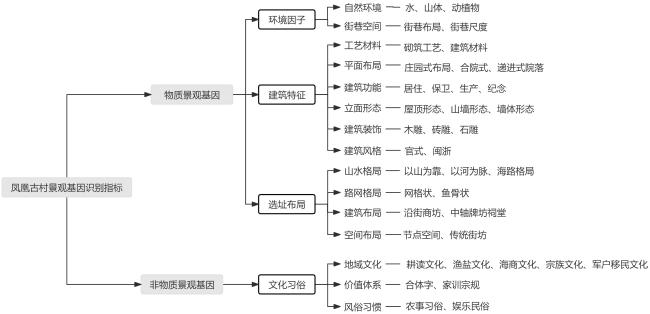
物质景观基因基于环境因子、建筑特征及选址布局3个方面,提取共12项识别指标;非物质景观基因仅提取文化习俗,将之划分为地域文化、价值体系与风俗习惯3项识别指标(图2)。
本研究从空间形态与文脉内涵入手,对凤凰古村的二维平面布局、三维立体结构、渔耕文化和传统文化进行了整体分析,并据此绘制了景观基因谱系图(图3)。从二维平面来看,研究区的建筑屋顶造型主要有硬山顶、清水脊、燕尾脊、连脊、雌毛脊5种类型。屋顶坡度较大,利于雨水快速排泄,增强了建筑的防护性。院落布局主要分为庄园式、合院式及递进式,同时存在部分逆进式院落,平面形态多呈“凹字形”“方形”,反映出典型的胶东民居空间结构。建筑材料以青砖、蝴蝶瓦、糯米灰浆为主,并结合传统的陶罐嵌墙工艺,形成了独特的地域特色。装饰方面,木雕、砖雕、石雕工艺精美,檐部、门楣、窗棂装饰细腻,凸显了村落的审美与技艺特征。整体色彩以灰瓦、青砖、土黄为主,显示其朴素古雅。
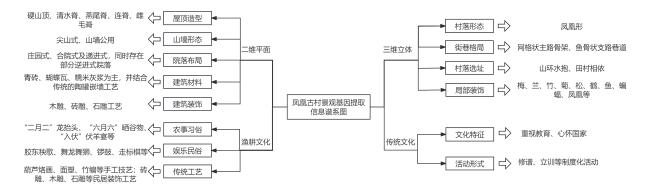
从三维空间来看,研究区依托凤凰山与北阡河之间的山水格局,整体空间呈现“山环水抱、田村相依”的格局。村落空间结构呈现“海陆交汇、岛屿村落”的沿海防御性格局,外围以街巷网格串联形成骨架,主干街道沿南北走向延伸,支巷呈“鱼骨状”分布,层级清晰。内部院落建筑沿街成排布置,巷道尺度较小,民居紧凑密集,街巷空间与农田、水系交织,构成“主街—支巷—院落”的空间秩序,实现户户相连、巷巷贯通。整体上,村落依山就势,街巷脉络顺应地形,形成了以山为屏、以河为轴的聚落空间形态。建筑局部装饰主题多取材于自然意象,如梅、兰、竹、菊、松、鹤、鱼、蝙蝠、凤凰等。其中,松、鹤象征长寿与高洁,鱼与莲花寓意连年有余,蝙蝠象征福气,凤凰则是吉祥与繁荣的象征。这些装饰不仅用于门楣、梁枋、窗棂等细部构件上,还体现在民居门楼与祠堂建筑的雕刻装饰中。
渔耕文化方面,研究区地处金口古港贸易航线腹地,依山傍海、河港交织,兼具渔业与农耕双重职能,村民在长期渔耕生产实践中形成了独特的民俗体系与工艺传统。在习俗活动上,保留与农事节令密切相关的岁时民俗,如“二月二”龙抬头祈丰收、“六月六”晾晒谷物、“入伏”伏羊宴等。在娱乐民俗方面,盛行胶东秧歌、舞龙舞狮、锣鼓、走标棋等表演与竞技性活动,常在春节、庙会和丰收庆典中集中上演,成为社区公共文化生活的重要组成部分。在传统工艺上,传承葫芦烙画、面塑、竹编、草编等手工技艺,并保留砖雕、木雕、石雕等民居装饰工艺,形成了“农事民俗—娱乐民俗—传统工艺”三位一体的文化景观体系,集中体现了凤凰古村以渔耕为主的地域文化底色。
传统文化方面,以重视教育、心怀家国的理念为价值体系,相关实践活动融入村落的社会生活结构,有助于维系社区凝聚力,构建和谐有序的乡土文化风貌。
2.2 景观基因信息链的构建
基于景观基因信息链构建方法,结合研究区景观基因提取结果,可明确其在“信息元—信息点—信息廊道—信息网络”四个层级上的特征构建路径。在信息元层面,乡村民俗及农耕生活方式,构成深厚而独特的村落文化母体;在信息点层面,清代田宅、房氏老宅、古树、村口牌楼及传统院落等构成主要的物化节点,体现了村落文化的具体载体。信息廊道由凤凰街、凤亭街、凤五街等传统街巷构成主体框架,辅以呈网格状与鱼骨状分布的巷道系统,使村落空间具有清晰的层次结构。信息网络由上述节点与廊道交织而成,呈现明显的“传统核心—现代边缘”格局,既保留了历史街巷的文化特色,也暴露出部分区域因现代建设而导致的风貌不协调问题。整体而言,景观基因信息链的构建为凤凰古村景观体系的认知、保护与优化提供了明确的结构框架与理论支撑。
2.2.1 景观基因信息元
基于景观基因的提取结果,进一步构建了景观基因信息链。该信息链的核心组成部分主要提炼自价值体系、民风民俗及传统工艺等关键维度。在价值体系方面,研究区逐渐形成了崇尚文化、重视教育、崇尚道德、廉洁从政、孝敬父母的社会文化和家国观念。同时,村中部分家族祠堂与庙宇建筑承担着村落议事等功能,是村落精神认同的核心节点。部分建筑虽仍作为“景观信息点”存在,但保存状况不一,局部结构出现破损、风貌退化、材料老化等问题,使其文化象征性与空间功能性有所下降。在民风民俗方面,研究区除了庆祝传统的中华节日外,还存在如二月二、六月六和入伏等庆祝活动。在传统工艺方面,研究区延续了胶东地区典型的民居“三雕”(砖雕、石雕、木雕)技艺,古建筑墙体、门楣、梁枋上普遍保留有砖雕、石雕、木雕等装饰元素,工艺细腻、构图精巧,题材多为吉祥寓意纹样与民间故事。村中还保存有胶东豆面灯碗制作技艺。此外,胶东秧歌表演、葫芦烙画、墙头彩绘、竹编、草编等民间技艺在村中亦有传承,这些技艺兼具实用性、观赏性与仪式性,是村落非物质文化遗产景观的重要组成部分。
2.2.2 景观基因信息点
从传统建筑来看,凤凰古村的建筑风貌整体以木构榫卯结构为主,辅以青砖、灰瓦、砂石等材料,多为庄园式、合院式与递进式院落布局。院落中心设厅房,主屋与后院之间常设侧开的“青龙门”,兼具主仆分流与庄园防卫功能。屋顶形制多为翘角、雌毛脊、正脊、狗牙檐,山墙高耸,外墙普遍采用细缝花砖、蝴蝶小瓦及镂空景墙,巷道多以青石铺设。立面装饰精致,保留大量“三雕”工艺,体现出北方官宅与闽浙民居的融合特色。村落核心区古宅密集,仍有村民居住,不少院落自行修缮,整体格局保存较好。在环境因子方面,研究区兼具自然景观与人文景观特征。在自然环境上,村落依山傍水而建,南靠凤凰山,东临丁字湾,北接五龙河,北迁河自村中贯穿南北,将山、水、村、田紧密联系。该村地势南高北低,海拔7~15 m,宅院建筑依循这一自然坡度层叠而建,灰瓦与白墙交织的聚落肌理,随地形变化呈现出鲜明的韵律感,形成“山—水—村—院”相互交织的空间格局,体现了顺应山川形势、与自然共生的选址理念。村落在长期发展中不断演化,核心区保留大量明清时期的传统院落、牌坊等历史性构筑物。整体来看,凤凰古村的环境因子体现出因地制宜的自然格局与延续性的人文积淀,是其景观信息的重要组成部分。
2.2.3 景观信息廊道特征分析
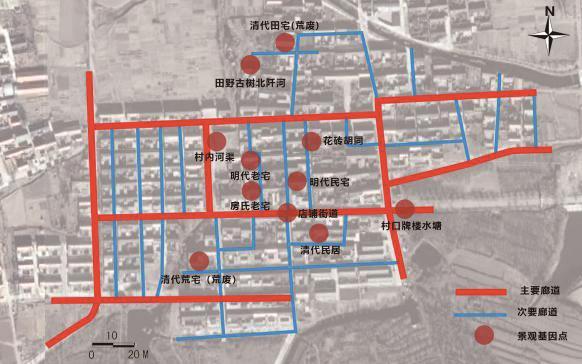
村落内部廊道具备清晰的主次层级体系。其中,核心构架由呈东西轴向分布的中心大街凤凰街,以及凤亭街与凤五街共同构成;而南北走向的金古街则作为连接纽带,将这些主要廊道有机串联,形成了支撑整个村落的空间骨架。同时,主要廊道也分布着许多景观基因点,包括清代田宅、田野古树、村口牌楼等。这几条主要信息廊道承载着重要的旅游观光功能。次要廊道主要由若干巷子、胡同构成,多为网格状和鱼骨状分布,深入村落内部,将村落的细部空间与主干廊道紧密衔接。这些次级廊道不仅承担日常通行功能,也作为连接景观基因点的微观网络,实现了村落的文化空间的连续性与可达性。景观信息廊道与传统民居、宗族祠堂、古树及公共节点交织分布,不同古建筑分布其中,反映出村落社会结构的空间化表现。
街巷空间在文化景观感知上具有较高的价值,但其尺度和布局存在一定的文化感知差异。商业主街与窄巷之间缺乏协调性,未能形成统一和谐的文化氛围。部分道路的功能逐渐转变为连接文化、展示景观与推动乡村旅游的复合性空间体系。景观信息廊道的演化,不仅延续了村落的空间结构,也反映了现代社会对乡村景观价值的再认识与再利用。其既是历史文化的传承载体,也是当代乡村全面振兴过程中生态、文化与经济融合发展的重要纽带。
2.2.4 景观信息网络特征分析
从整体空间格局来看,凤凰古村依托山水格局而生,呈现出典型的“山环三面、水抱一方”的聚落特征,形成了“山护村落、水养邑人”的生态格局。北部山体构筑了村落的天然屏障,南部溪流发挥灌溉与生态调节功能,使村落气候温润宜居,体现出人居环境与自然地理的高度契合。村落选址与布局顺应地势,主街沿地形高程向平缓处延展,支巷依坡而建,形成主次分明、动静相宜的空间秩序。主要廊道以凤凰街为主轴,串联祠堂、古宅、古树、牌坊等景观信息点,构成村落的景观信息主廊道;而众多支巷与胡同共同构建出次级信息网络,使得景观要素之间在空间上实现了有机衔接(图4)。这种依山就势的景观结构既体现了传统聚落“顺势而构、以形取势”的空间智慧,也反映出自然环境与人文格局的共生关系。


该村庄整体空间脉络清晰,但局部空间联系不紧密。随着现代化建设的推进,部分街巷因改建而失去历史连续性,一些景观节点虽保存完整,但与周边环境的协调性减弱。综合而言,村落古建筑与街巷的整体保存度较高,核心景观保持原貌,其余区域尚具修复潜力。基于此现状,应实施分级保护机制。对于保存状况良好的建筑,进行定期维护;对破损严重的建筑,采取及时的抢救性修缮措施,以此有效彰显其独特的景观价值,并防止因自然或人为因素导致的进一步损毁。
3 结论与讨论
本研究立足于景观基因理论框架,结合实地调查与案例分析,对凤凰古村进行景观基因的辨识与提炼,并据此建立起相应的景观基因信息链与景观基因信息层次结构。在此基础上,从景观信息元、信息点、信息廊道及信息网络4个维度,对该村的景观构成进行了系统性分析。研究结果表明:(1)研究区蕴含的文化景观基因资源丰富,具备较丰富的文化资源;(2)村落中的景观基因信息点整体保存状况良好,以古建筑及历史文化景观为代表,展现出鲜明的地方特色;(3)该村的景观基因廊道大部分保存较好,延续了传统街巷的空间格局与历史功能;(4)该村的景观基因网络相对完整,但受到现代化进程影响,部分传统景观与现代设施的融合存在不协调现象,导致景观信息的连续性和文化感知性有所减弱。
在后续凤凰古村的保护与发展过程中,可进一步加强非物质文化遗产的传承和融入,将传统风俗与现代景观相结合,提升公共空间与互动设施的文化性,满足村民与游客的文化体验需求。同时,针对景观信息廊道与空间连续性,需优化现代化改造与传统文化保护之间的平衡,确保景观基因网络的有效传承与再利用。
本研究借助景观基因理论对凤凰古村景观现状进行了探索性分析,所得结论主要基于定性描述。为推进该领域研究,后续可通过整合多源时空数据,构建传统村落景观特征的空间与时序模型,推动了定性分析向定量解析的转变。该方法有助于实现对景观要素保存状况与文化价值的精确评估,从而系统揭示传统村落风貌的形成机制,并为科学保护策略的制定提供依据。