

乡村作为人类长期聚居形成的基础性空间单元,是守护乡土文化基因、构建和谐人地关系的生态基底[1]。乡村景观作为自然肌理与人文脉络的复合载体,对其特征的保护与有机更新,是实现乡村可持续发展的关键路径之一[2]。如汪硕[3]构建了雄安新区乡村文化景观活化传承的设计体系与方法,为相关设计实践提供参考。
山东省青岛市环崂山的沿海渔村,拥有背山面海的自然景观格局,逐渐形成以渔文化为核心的人文景观。在村落发展过程中,这些渔村面临生态环境保护、文化延续传承等多方面发展需求。因此,探索渔村景观文化传承与发展的新路径,成为推动村落产业、文化、生态等方面综合发展的重要任务。冯雪毅[4]以该区域的青山渔村为研究对象,梳理其空间演变与民居特征、诊断空间发展制约因素,提出“三生”空间融合的优化策略。基于此,本文以崂山沿海渔村为研究对象,研究分析了其文化传承与发展路径,并以其中的青山渔村为例,进行实践应用设计,为同类沿海渔村的可持续发展提供参考。
1 沿海渔村景观文化现状
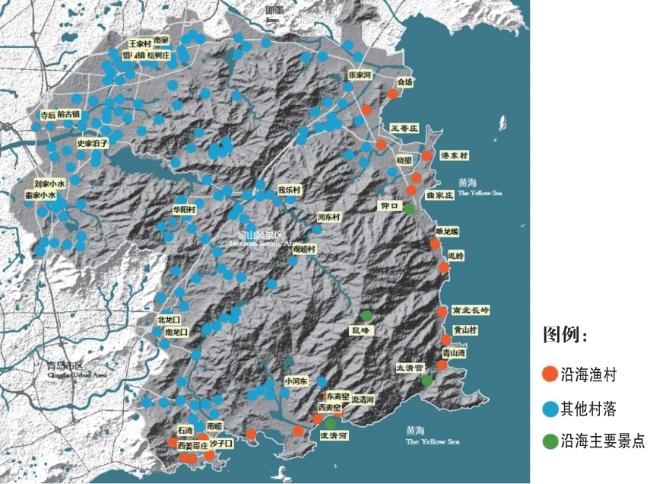
研究区域东侧与南侧临海,两侧分布的村庄背山面海,自然景观优美,具备独特的地理优势以及深厚的文化根源。例如,崂山南坡的流清河、西麦窑、沙子口、姜哥庄、石湾等;崂山东坡的青山渔村、黄山村、雕龙嘴村等(图1)。渔村在地理位置和村落格局上的差异,使村落景观文化呈现出不同的特点。
1.1 人文景观特点
研究区沿海渔村的人文景观由生产空间和生活空间组成。其中,生产空间包括渔业、茶业等生产所需空间。生活空间则包括民居、巷道、基础设施等。
1.1.1 生产空间
研究区沿海渔村的生产文化景观以渔文化和茶文化为主。渔文化是渔村典型的生产文化景观,主要是由渔业运作所需的渔港作业空间、渔船、栈桥等构成的产业景观。近年来,更是涌现出以海鲜为特色的渔家宴餐饮服务。大多数渔村皆是以渔文化为文化核心,而研究区独特的地理环境造就了茶生长的优越条件,形成了有别于其他渔村的独特茶生产文化景观。依托研究区沿海地理环境形成的特殊小气候,多数渔村种植崂山茶,茶产业是该地区的重要经济来源[5]。
1.1.2 生活空间
研究区的渔村大多依山势而建,随山形起伏高低错落,村内街巷依山就势,为坡道或台阶。独特的地势与地质条件,形成了该地独特的生活文化景观。以青山渔村为例,该渔村坐落于东西向高差约90 m的山坡上,建筑依据地形顺势而建,形制复杂多样,布局紧凑,形成了错落有致的民居格局。受地形限制,建筑呈现纵向发展的趋势,屋顶多采用红瓦,部分百年老建筑为灰色屋顶,还有少量新翻修的建筑屋面采用深红色复合材料[6]。渔村民居的庭院尺度较小,部分庭院进深不足2 m,大多采用一字形建筑加庭院的布局,少量为L形或回字形建筑围合庭院。
1.2 自然景观特点
研究区渔村呈现出三面环山、一侧临海的自然景观格局。山体环绕减少了冬季寒风的侵袭,夏季则引入了海风,同时海水发挥调节温度的作用,使村落具备了夏凉冬暖的宜居小气候。独特的地质条件造就了沿海村落丰富多样的自然景观节点,如试金石湾、八仙墩、晒钱石等。
2 沿海渔村景观文化有待提升的环节
2.1 人文景观方面
调研发现,研究区村落发展过程中规划设计指引、旅游需求驱动等因素,导致人文景观可能存在以下几个方面问题。一是部分渔村码头及海岸线区域存在无序摆摊、设施杂乱的状况,缺乏统一的规划设计,影响了景观的协调性以及游客的体验。二是部分渔村民宿、渔家宴等业态的布局缺乏规划引导和设计规范,未能有效彰显渔村的文化特色。三是部分渔民对一些特色鲜明的民居保护意识需要重点关注。
2.2 自然景观方面
调研发现,植被生长过程中的人为干预或植物的过度生长以及季节性生物群落失衡等因素,导致研究区自然景观存在以下几个方面问题。一是部分渔村周边的山体植物群落结构构成不合理,使林中植物种类单一、林中空隙过大、景观效果欠佳。二是部分渔村附近海域存在季节性水质浑浊、夏季浒苔频发问题,给海洋生态环境带来了影响。
3 沿海渔村人文景观传承与创新发展路径
村落空间承载着村民基本的生产与生活需求。结合渔村生产、生活空间的现状,可通过营造渔业展览体验、民宿等旅游服务功能空间,提升渔港等生产空间的品质,形成特色街巷空间景观,实现渔村人文景观文化的传承与发展,增强村民的本土文化保护意识,推动乡村的可持续发展。
3.1 生产空间景观文化提升策略
渔港作为沿海渔村重要的渔业空间,亦是极具特色的人文景观。针对渔港整体空间零散破败、设施破旧、建筑简陋等问题。提出如下景观提升策略:充分利用沿海岸线的游览空间,增加观海的廊亭设施,使游客可以停留观景、休憩;对渔港栈桥进行景观提升设计,在满足渔业作业空间的同时,沿外湾一侧建设观海木栈道,局部设计廊亭休憩空间,吸引游客参观并沉浸式体验渔文化;同时对可利用的闲置旧建筑进行功能置换改造设计。
3.2 生活空间景观文化提升策略
在沿海渔村民居群落的自然演变进程中,逐步形成了步移景异的街巷景观。根据渔村的空间特点,适当增加公共开放空间,能够促进人群之间的交流互动,进而提升景观环境的质量[7]。结合现存街巷特点,提出如下街巷景观提升策略。(1)以渔村生产文化展示为主题,在村落中开展巷道景观提升设计,营造出充满生活气息与场景感的街巷空间,让游客在游览期间能够身临其境体验渔村生活,打造具有渔村特色的景观巷道。(2)通过街巷展示其石墙、屋顶覆草等传统建筑技艺,分析其冬暖夏凉的建造特性,探索传统民居营造中所蕴含的生态智慧。(3)选取街巷中的适宜观海地点,对街巷观海景观节点进行改造设计,使游客能够充分领略渔村周边的自然景观。(4)选取街巷中较为开阔的空间,设计以渔文化为主题的景观节点,向游客展示渔村文化。
3.3 基于旅游业态升级与文旅融合的发展路径
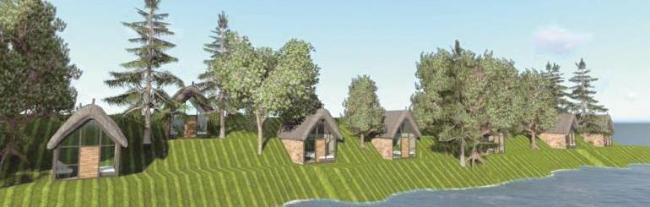
为吸引更多游客前往渔村观光游览、休闲娱乐、体验生活,进而带动渔村的住宿与餐饮行业繁荣,推动渔村旅游业态的健康有序发展,现提出以下发展策略。(1)结合渔村的地理位置与渔业发展历史,于村落临海之处打造渔业体验功能空间,开展渔船上撒网、收网等活动,以加深游客对渔文化的体验。同时,让村民在日常生活中增强对渔文化的自豪感与认同感,促进渔文化的传承与发展,推动形成兼具现代气息与历史质感的渔村多样化发展模式。(2)设计渔业展览和博物馆,对渔村的渔业历史文化进行展示与宣传。(3)进行特色渔文化民宿设计,吸引游客在渔村住宿,沉浸式体验渔村生活。(4)统一规划设计渔家宴,对现有店面的室内外就餐环境进行改造设计,使其具备渔村特色并形成一定规模。
3.4 基于传统文化和民俗传承的景观营造策略
传统文化与当地民俗的传承和发展,是渔村景观提升改造需要考量的因素,也是展现渔村文化的重要载体[8]。针对研究区渔村的传统文化与民俗特点,提出以下发展策略。(1)对原有自然环境中的地形和植物进行适度改造,让村落景观自然地融入周边环境,提升渔村生态环境质量。(2)结合村落原有的本土文化,对其功能空间开展保护性修缮工作,排除潜在的安全隐患,提高景观环境质量。(3)挖掘渔村文化特色,打造体现渔村文化的景观节点,优化民居的功能布局,推动文化的传承与弘扬。
4 沿海渔村自然景观可持续发展路径
基于沿海渔村依山面海的自然地理环境特点,提出以保护和提升自然环境为目标的村域生态化景观结构优化路径。
4.1 优化自然植物群落结构
针对村落周边山体植物群落结构不合理的状况,应提高渔村周边山体的绿化覆盖率,增加乡土植物的种植,尤其要提高乔木的覆盖比例,构建保护山体的多层次自然植物群落结构。例如,对黑松、刺槐混交植物群落进行近自然改造,优先选择与立地条件适配的本土乔木物种,构建多物种共生的复合群落,提升群落的物种丰富度与结构复杂性。
4.2 提升海域水质
针对渔村附近存在的海水季节性水质浑浊、夏季浒苔的现象,提出以下改造提升策略。实现村落近海养殖结构的升级,采用可持续发展的“鱼-虾-贝-藻-参”立体化生态养殖模式,实现海洋渔业固碳减排、绿色发展的目标,形成生物自循环系统[9]。在村域近海空间针对自有生物结构进行生存环境的提升改造,夏季进行浒苔清除,为渔村近海空间的生物多样性营造所需的自然生存环境。
5 沿海渔村景观文化传承发展路径的实践应用
基于上述提出的传承发展路径,以青山渔村为研究对象,开展实践应用探索,为渔村景观文化建设提供思路。
5.1 青山渔村基本情况
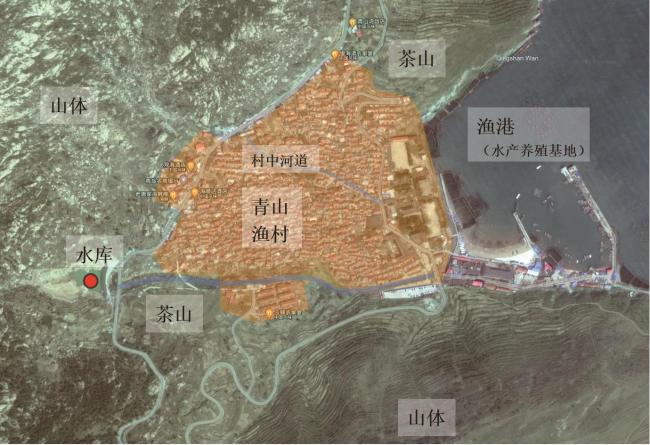
青山渔村地处崂山东南部,三面环山,东侧临海,海岸线长达7.21 km,拥有山林面积400 hm2左右、耕地面积65 hm2、茶田面积20 hm2左右,海上养殖面积27 hm2左右。该区域景观空间涵盖生产、生活、生态3类。其中,生产空间由渔业码头、茶田等构成,生活空间由民居、街巷、基础服务设施等组成,生态空间则包括海湾、山林等,构建了自然与人文相互融合的景观格局(图2)。
5.2 基于渔文化体验和科普的展览建筑设计实践
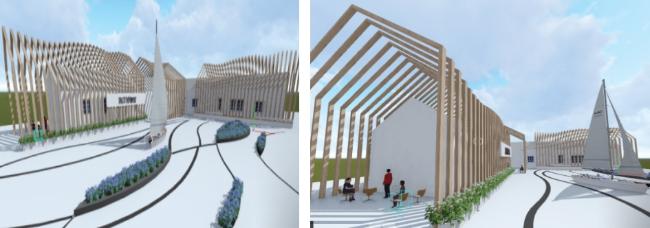
渔村中存在较多破旧的闲置建筑,这些建筑的构造形式与建筑风格展现了村落建筑的发展历史,具备较高的保护和利用价值。将这些具有一定价值的闲置建筑与渔文化相结合,进行改造设计,具体设计如下。选取渔村沿海空间或外围空间的典型闲置建筑,开展功能置换设计,在设计中融入大海、渔船、船锚等与渔文化相关的元素,将其改造为用于渔村渔业文化体验与科普的建筑空间(图3)。
5.3 基于民居文化传承的特色民宿设计实践
5.4 基于原有地形特色的街巷改造设计实践
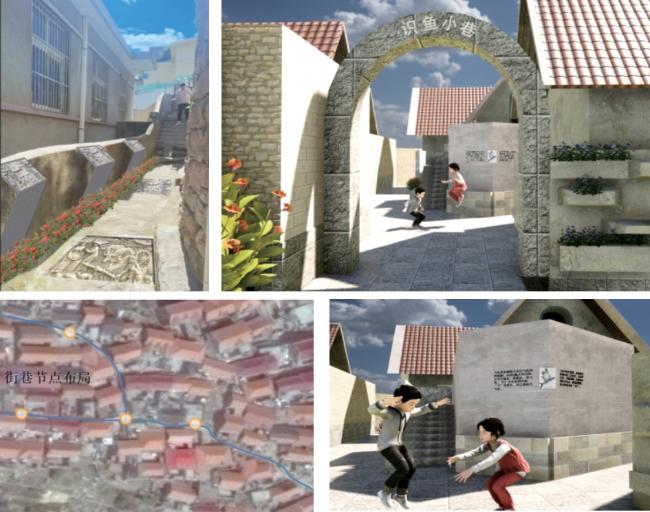
青山渔村的巷道空间高差变化大、路线曲折、景观层次丰富,文化与观赏价值较高,但内部街巷未吸引太多游客。对街巷内部进行一定主题的提升设计可提高古巷道的利用价值,设计如下。选取一条自西向东、由高至低且空间转折丰富的自然巷道,开展以“渔文化露天博物馆”为主题的改造设计。沿着巷道路径,利用铺装、围墙、屋面等元素展示渔村文化,打造具有渔文化特色的景观巷道(图5)。
5.5 基于渔文化传承的景观节点设计实践
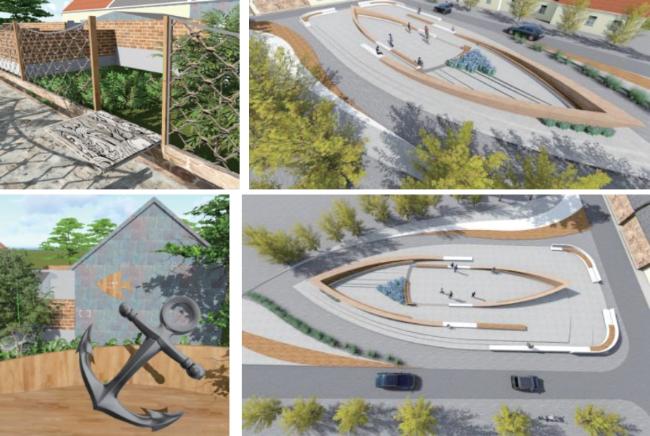
在渔村景观文化提升设计中融入渔文化元素,既能增强村民的认同感,又能为游客提供沉浸式渔文化体验,具体设计如下。在渔村民居庭院外围采用虚实结合的方式,利用渔网的通透视线,形成空间的连通感,在满足空间界定的同时,实现了对渔文化的联想;过门石图案采用捕鱼相关主题的石雕。在街头转角等公共空间,使用船锚等渔业元素融入景观商品设计。在渔村公共空间采用海上渔船的创意,设计休闲广场,为村民和游客创造休闲、交流空间(图6)。


此外,自然景观方面,可通过提高乔木的覆盖比例,优化自然群落结构;采用可持续发展的“鱼-虾-贝-藻-参”立体化生态养殖模式,提升海域水质。
6 结语
本文调研分析了研究区渔村的景观文化的现状,提出其传承发展路径,并通过具体村落的设计实践完成了路径的可行性验证。研究区渔村凭借其独特的山海自然景观以及以渔文化为核心的人文景观,构成重要的文化景观体系,为推动其文化价值的有效转化与持续延续,本文提出的核心设计路径如下。
(1)构建渔村整体生态景观格局。突出渔村背山面海的地理环境优势,加强对沿海公共景观空间的生态化改造,优化山体的植被结构、提升海域水质。
(2)合理融入渔村旅游服务功能,促进旅游业态健康发展。结合渔村地理、历史特点和渔村发展需求,在景观建设中融入渔业体验、展览、渔村特色民宿、渔家宴等旅游服务功能,实现渔村景观建设与产业形态多元化相结合的发展模式。
(3)传承发展渔村民俗和传统文化等景观文化特色。挖掘渔村建筑和景观中的传统文化和当地民俗特色,并将其融入景观节点和建筑的改造设计中。在沿海、街巷、民居、庭院等不同层级的渔村景观改造设计和建筑的室内设计中,融入渔网、渔船、船锚等渔文化元素,形成有辨识度的渔村景观文化。