

暴雨是常见的灾害性天气之一,其突发性强、降水强度大、降水持续时间长,可能带来洪涝灾害,给社会经济和人们生产生活造成严重影响。在农业生产领域,暴雨使田间低洼地带可能出现积水,导致农作物受淹,农业设施如大棚等可能遭受损坏;强降水过程还有利于异地“两迁”害虫迁入,诱发病虫害发生等[1]。目前,有关暴雨成因的研究较多,主要是由不同尺度系统相互作用造成,如天气尺度和中尺度系统的相互作用使降水长时间维持较强的上升运动,为极端降水提供动力条件[2-4]。极端降水的形成还依赖强盛的水汽输送条件,付炜等[5]对2次强西南急流背景下的暖区暴雨事件开展对比分析,发现西南低空急流的暖湿气流输送是促成更大累积降水量的关键因素。此外,凝结潜热的释放[6]、地形[7]等也是引起极端暴雨的重要因素。
台风是造成极端暴雨的一个重要原因。台风可以为暴雨区输送充沛的水汽[8-10]。陈德花等[11]研究发现,台风倒槽内形成的中尺度对流云团是暴雨发生的一个重要原因;范学峰等[12]研究认为,台风倒槽顶部的辐合作用为暴雨产生提供了动力条件。董美莹等[13]对浙江的台风倒槽暴雨进行统计,发现暴雨区一般距离台风中心2.5~10个纬距。此外,台风还会形成远距离暴雨。2018年第22号台风“山竹”的登陆位置距江苏省10个纬距以上,达到台风远距离暴雨形式标准;而2014年第15号台风“海鸥”与台风“山竹”路径相似,却未对该地区造成明显风雨影响。基于此,本研究以2018年第22号台风“山竹”、2014 年第15号台风“海鸥”为例,结合区域自动站与ERA5 再分析资料,通过对比二者影响期间研究区的环流形势及水汽条件,深入探讨该地区台风远距离暴雨形成的原因,为相似地区暴雨预警提供参考。
1 材料与方法
1.1 台风基本情况
2018年第22号台风“山竹”于2018年9月7日20:00生成,其源地位于西北太平洋洋面,生成后沿偏西方向移动并逐渐发展为超强台风,15日台风受登陆菲律宾的影响减弱为强台风级,移动方向略向北偏转,16日17:00“山竹”在广东登陆,登陆后迅速减弱为台风级,并保持西北方向移动,17日20:00对其停止编号。
2014年第15号台风“海鸥”与台风“山竹”路径相似,位置偏南,于海南岛登陆,登陆前后均保持台风级。
1.2 分析方法
本文降水量数据来源于中国地面逐小时资料数据集,选取了江苏省自动站前1 h累积降水量,环流形式及水汽条件等来源于欧洲中期天气预报中心(ECMWF)的第五代全球大气再分析数据(ERA5),其水平分辨率为0.25°×0.25°,水平分辨率38层。本文采用天气学分析方法[14],对比研究2018年第22号台风“山竹”与2014 年第15号台风 “海鸥”发生期间研究区的环流形势和水汽条件,剖析研究区台风远距离暴雨的可能成因。
2 结果与分析
2.1 降水实况
受2018年第22号台风“山竹”影响,2018年9月16—17日研究区的南部地区,尤其是东南部地区出现明显降水。总降水分布显示,江苏东南部地区降水量在50~200 mm,个别站点超过200 mm,其中最大过程雨量为297.4 mm,出现在苏州常熟。强降水中心主要出现在南通市及苏州市。降水主要发生在9月16日傍晚至17日凌晨,其中最大雨量为92.8 mm,出现在16日20:00的南通海门站。本次过程具有小时雨量大、降水时段集中的特点。
2014年第15号台风“海鸥”并未对研究区造成明显风雨影响,2014年9月14日至17日14:00(强度减弱为热带低压级),研究区中北部仅出现了小雨天气。
2.2 环流背景
2018年9月17日2:00研究区东南部出现暴雨天气,此时“山竹”登陆,其200 hPa高度上北侧明显有一支西南强风速带,该风速带与中高纬西风带的汇合加强,研究区上空的西风带风速加大,在东南部地区上空发展出明显的辐散,辐散中心达到15.6×10⁻⁵/s,产生“抽吸”作用,有利于上升运动的维持。17日2:00的500 hPa高度场和850 hPa风场如图1A所示,500 hPa“山竹”沿西北方向移动,并在广东登陆,研究区受副高的控制,副高略有东退,脊线东退至105°E附近,北部有短波槽生成,但距暴雨区较远,对降水没有明显影响;850 hPa风场“山竹”东北方向存在台风倒槽,槽底位于研究区南部地区,形成暖式切变,台风外围环流与副高西侧的西南气流汇合,形成了一支西南急流向研究区输送水汽,本次强降水中心位于850 hPa暖式切变线的暖区一侧,也是西南急流的顶端。
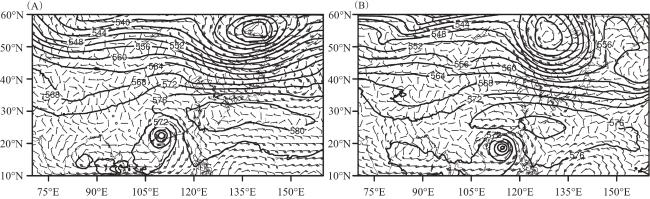
远距离台风降水中,台风对降水的主要贡献来源于水汽输送。因此,对比分析发现,研究区形成台风远距离暴雨的关键在于台风与副热带高压能够形成足够强盛的偏南急流,以输送水汽和能量。
2.3 水汽条件
2018年9月17日2:00研究区850 hPa水汽通量和水汽通量散度如图2A所示,此时形成强水汽辐合中心,与本次强降水中心位置一致,水汽通量大值中心约为22.1 g/(s∙cm∙hPa),水汽通量辐合中心约为-17.0 g/(s∙cm2∙hPa)。18日6:00暴雨区的水汽通量明显减小,水汽通量最大值减小至7 g/(s∙cm∙hPa)。本次降水在850 hPa高度以下受到台风倒槽的影响,但与台风本体的关系并不密切,从850 hPa的水汽来源看,研究区南部地区的水汽通道和台风本体的水汽通道是分开的,与陈淑琴等[14]研究结论一致。本次降水主要受到台风外围偏南低空急流输送水汽的影响,而500 hPa处在副高控制之下,无西风槽配合难以使降水系统发展。
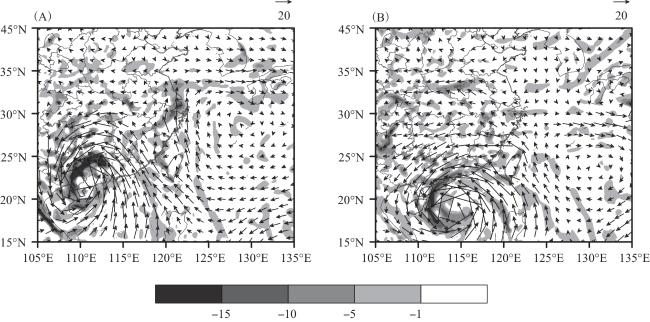


2014年9月15日20:00台风“海鸥”影响期间研究区的水汽通量及水汽通量散度如图2B所示,研究区水汽通量较小,缺少强水汽辐合中心,且从水汽通量的路径上可以看出,台风外围水汽沿台风环流方向输送,缺少副高西侧偏南气流的配合,难以将水汽输送至研究区。
3 结论
本研究利用区域自动站、ERA5再分析资料,通过对比路径相似的2018年第22号台风“山竹”与2014年第15号台风“海鸥”影响期内研究区的环流形势及水汽条件,对研究区远距离台风暴雨的成因进行分析,得出以下结论。
(1)受2018年第22号台风“山竹”影响,2018年9月16—17日研究区南部地区出现强降水过程,达到暴雨到大暴雨级别,并伴有短时强降水;而路径相似的2014年第15号台风“海鸥”并未对该地区造成明显风雨影响。
(2)副热带高压、台风倒槽、低空急流是台风“山竹”远距离暴雨形式的主要影响系统,台风外围环流与副高西侧的西南气流汇合,形成了一支西南急流向江苏地区输送水汽,最终导致了研究区南部暴雨的形成。
(3)对比台风“山竹”和台风“海鸥”的形势场可知,台风“山竹”与台风“海鸥”路径相似,但“海鸥”路径略偏南,导致了急流与倒槽位置偏南;此外,二者在500 hPa形势场类似,副高脊线均位于105° E附近,但“山竹”影响期间副热带高压海上中心更为强盛,使得副高西侧有更强的偏南风配合台风输送水汽和能量。