

可食性景观是指以可供人类安全食用的植物为核心景观元素,与建筑、水体、地形、园林小品等景观构成要素有机融合形成的复合型园林景观[1]。可食性植物是指植物的全部或部分器官(包括根、茎、叶、花、果实、种子)可供人类安全食用的一类植物[2]。相关学者对可食地景研究较多,例如,蒋爱萍等[3]介绍了可食地景的核心概念,深入分析了其在园林景观中的实践应用实例,同时对可食地景的应用布局形式及常用可食性植物种类进行了归类梳理,最终结合发展现状,对其在园林领域的运用前景提出了针对性的意见与建议;刘舒怡等[4]聚焦可食地景在乡村景观营造中的应用场景,系统研究了其发展现状、发展趋势,以及应用方式、实施策略。
街巷是进入村落的重要通道,可将其作为载体,栽植山村乡土可食性植物,并由村民自主开展养护管理[5]。在营造过程中遵循植物自然生长规律,采用自然农法进行培育,以维护生态多样性与生态系统稳定性,构建参与式可食性景观。可食植物景观能够通过更复杂的食物链产生不同的环境效益,同时提升土地利用率,回归土地的生产性[6]。
本文分析了北京山村街巷植物景观规划现状、山村地区常见可食性植物以及应用形式,并对北京昌平长峪城村街巷绿地空间进行可食性植物景观营造,为可食性植物在乡村地区的应用提供参考。
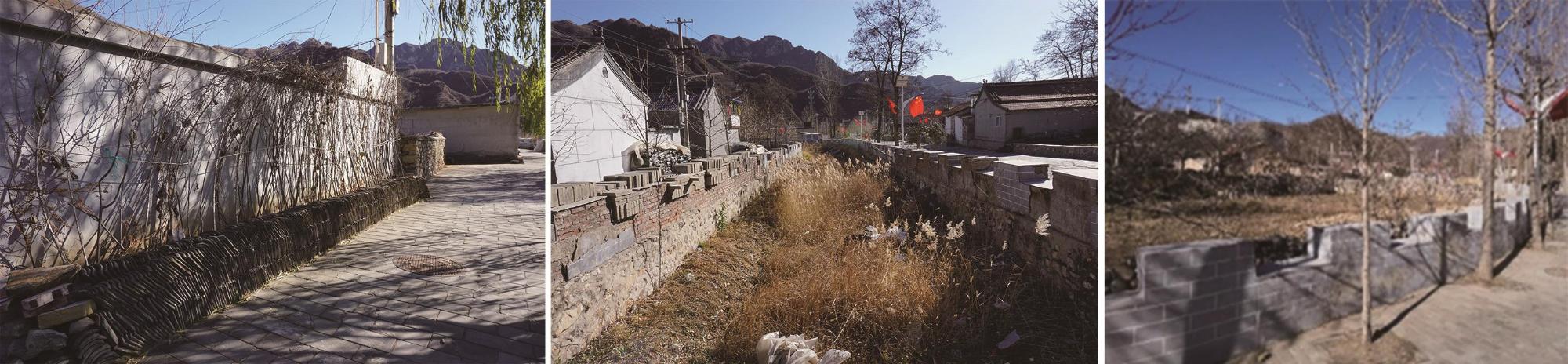
1 山村街巷植物景观规划现状
2 山村地区常见可食性植物
2.1 按植物使用功能分类
该地可食性植物按照植物使用功能分类可分为粮食作物、油料作物、蔬菜作物、瓜果作物、饲料作物、药用作物等。粮食作物包括玉米、莜麦、小麦、粟、马铃薯、高粱等;油料作物包括核桃、大豆、花椒、花生、油菜等;蔬菜作物包括小茴香、紫苏、地肤、碱蓬、诸葛菜、荠菜、野韭菜、黄花菜、蚕豆、豌豆、茄子、西红柿、笋瓜、西葫芦、苦瓜、丝瓜、冬瓜、莴苣、蒜、葱、香菜、南瓜、黄瓜等;瓜果作物包括苹果、梨、李、山桃、杏、山楂、石榴、柿树、杜梨、拐枣、黑枣、鸡桑、毛樱桃、牛迭肚、向日葵、野草莓、山葡萄、猕猴桃等;饲料作物包括构树、山野豌豆、扯根菜等;药用作物包括榆树、皂荚、槐、香椿、胡颓子、木槿、金露梅、玫瑰、欧李、山莓、枸杞、酸枣、桔梗、蒲公英、山药、大黄、马齿苋、薄荷、藿香等。其中,属于蔬菜作物与瓜果作物的可食性植物种类较多。
2.2 按照植物的食用部位分类
该区可食性植物按照食用部位可划分为叶菜类,花、芽及茎类,果实种子类,根茎、球茎及块茎类,坚果及干豆类。叶菜类包括大白菜、黄花菜、韭菜、小茴香、紫苏、地肤、碱蓬、诸葛菜、荠菜、薄荷、藿香、葱、香菜、菠菜等;花、芽及茎类包括香椿、皂荚、槐树、玫瑰、金露梅、蒲公英、油菜花等;果实种子类包括核桃、花生、玉米、小麦、莜麦、粟、花椒、笋瓜、西葫芦、冬瓜、蒜、南瓜、茄子、黄瓜、西红柿、苹果、梨、李、山桃、杏、山楂、石榴、柿树、板栗、海棠、杜梨、拐枣、黑枣、鸡桑、毛榛子、毛樱桃、牛迭肚、向日葵、山葡萄、猕猴桃、构树、枸杞、酸枣等;根茎、球茎及块茎类包括马铃薯、莴苣、萝卜、山药、竹笋、野慈姑等;坚果及干豆类包括大豆、豌豆、花生、蚕豆、扁豆、板栗、山榛子、腰果、银杏等。按可食用部位对可食性植物进行分类,在构建生态稳定植物群落的同时,能够兼顾生产性功能需求,提升可食景观的综合效益。
2.3 按照不同观赏季节分类
北京山村可食性植物按照观赏季节分为春季、夏季、秋季、冬季可食性植物,并根据观赏部位不同,细分为观花、观果、观叶、观枝等类型。春季观花可食性植物包括大豆、豌豆、花生、蚕豆、扁豆、板栗、山榛子、腰果、银杏等;夏季观果可食性植物包括山桃、山梨、山杏、花椒、黄瓜、枸杞、丝瓜、葡萄、草莓、竹笋等;夏季观花可食性植物包括百合、玫瑰、向日葵、玫瑰、南瓜、黄瓜、莲、马齿苋、菜花、石榴等;夏季观叶可食性植物包括榆树、银杏、地锦、菠菜、香菜、韭菜、葱、蒜、委陵菜、紫苏、藿香、薄荷等;秋季观果可食性植物包括莜麦、玉米、银杏、山榛子、核桃、猕猴桃、山葡萄、蚕豆、大豆、黄豆、花生、山药、黄瓜、南瓜、花生、向日葵、核桃等;秋季观叶可食性植物包括银杏、黄栌、地肤、菠菜、萝卜、荠菜等;冬季观叶可食性植物包括小叶黄杨、女贞、白菜、葱、萝卜等;冬季观枝可食性植物包括紫藤、山葡萄、银杏、地肤等。在可食性植物景观规划过程中,需结合园林植物配置理念,合理搭配兼具观赏性与可食性的植物种类,构建“四季有景、三季有花”的特色可食性植物景观。
3 山村街巷可食性植物的应用形式
3.1 篱垣式
在可食性植物景观规划中,宜采用高度不超过1.1 m的篱架、砖土墙、木质护栏、铁丝网等硬性围护构件,结合攀援性可食性植物进行配置,构建绿墙、花墙、绿篱、绿栏等多样化绿色围护形式。该设计模式不仅能够美化街巷景观环境,还能起到分割空间的作用。篱垣式绿化对攀援性可食性植物要求不高,几乎所有的藤本植物均适用于篱垣式绿化,但也需根据具体构件材料选择相应的植物[10]。
3.2 棚架式
利用花架、走廊等廊式构筑物,引导攀援性可食性植物依附生长,从而使其盖满整个构筑物的顶部,形成荫棚或绿廊,这是园林景观中较为常见的藤本植物造景模式。在采用该形式进行植物造景时,优先选用适应性强且兼具观赏特性的可食性植物。对植物体型较大或结果丰富的木本、藤本植物,采用较坚固的构筑物材料;对于草本等植物材料,采用轻巧型架构材料。棚架式绿化具有观赏和遮阴的作用,同时也可以形成供人们聊天、游憩的私密空间。
3.3 附壁式
通过2种方式构建附壁式可食性植物景观:一是在地面或屋顶栽植具备吸盘、气生根等攀缘特性的可食性攀缘植物;二是引导藤本类可食性植物攀附于建筑物墙面直立或倾斜生长,实现植物沿墙面的自然扩张。两种方式有机结合,可有效打破建筑物坚硬刻板的外形轮廓,降低建筑表面温度,实现绿化环境、美化建筑外观的双重效果,同时发挥降温节能的生态价值,适配山村街巷建筑景观的优化需求。对于无吸附能力或吸附能力较弱的攀缘植物,可采用搭建条形或网状结构等人工辅助手段,引导其向上攀附生长。但这种形式成本较高、费时费力,还可能对平面造成破坏,一般不宜大面积推广。
3.4 挑台式
挑台式植物种植是指在方便日常管理的小型台式空间进行绿化,如阳台、窗台等,使用槽式、盆式等容器进行可食性植物的种植,在技术手段上较易实现[11]。在挑台式可食性植物景观设计过程中,需充分考量挑台的最大承载能力,严禁选用重量过大的种植容器及枝叶繁茂的植物;土壤优先选用质地较轻、兼具保水保肥性能的腐殖土,通过科学选材与合理配置,保障景观设计的安全性与实用性。
3.5 花境式
花境是通过模拟大自然中野生花卉自由生长的状态,用自然斑块状的形式混合种植的一种半自然式植物造景形式[12]。在山村街巷空间中,通过筛选适配当地生境、可搭配共生的植物材料,丰富街巷景观层次。
3.6 花带式
花带式是以观赏花卉为主体材料的植物景观,种植形式呈带状分布。一般常见于草坪周围、树木边缘、墙角、山石旁、水池旁等处,重在表现植物带状的形式美,种植宽度以1.0~1.5 m为宜[13]。在山村街巷中,街巷通常呈线性分布在村落中,花带式种植可食性植物较为常见。
3.7 种植池式
种植池是指高出地面的围合式种植空间,在山村街巷营造中应用广泛。村民常围绕宅院、道路两旁堆垒形成高度适中的种植池,既方便日常管理操作,又能清晰界定种植范围。种植池可与树池等结合,搭配可食性植物造景,兼顾实用性与景观性,适配山村街巷的空间特点与使用需求。
3.8 盆栽式
盆栽式是指在山村街巷中以瓦罐、瓷器等作为可食性植物的栽植容器,可摆放于屋顶、门前屋后、街旁、窗台、阳台、树池等处。
4 长峪城村街巷可食性植物景观设计实践
4.1 长峪城村街巷绿地基本情况
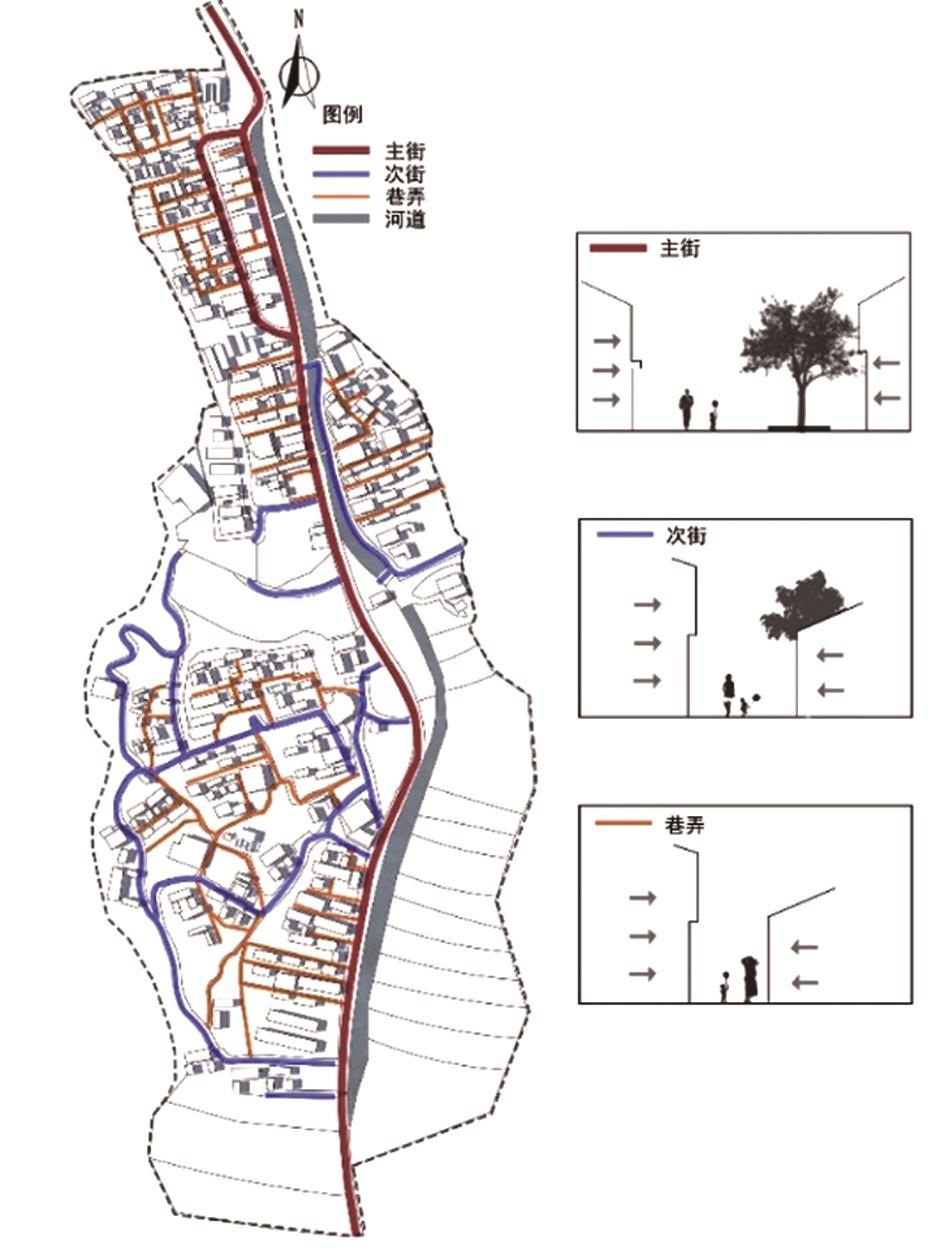
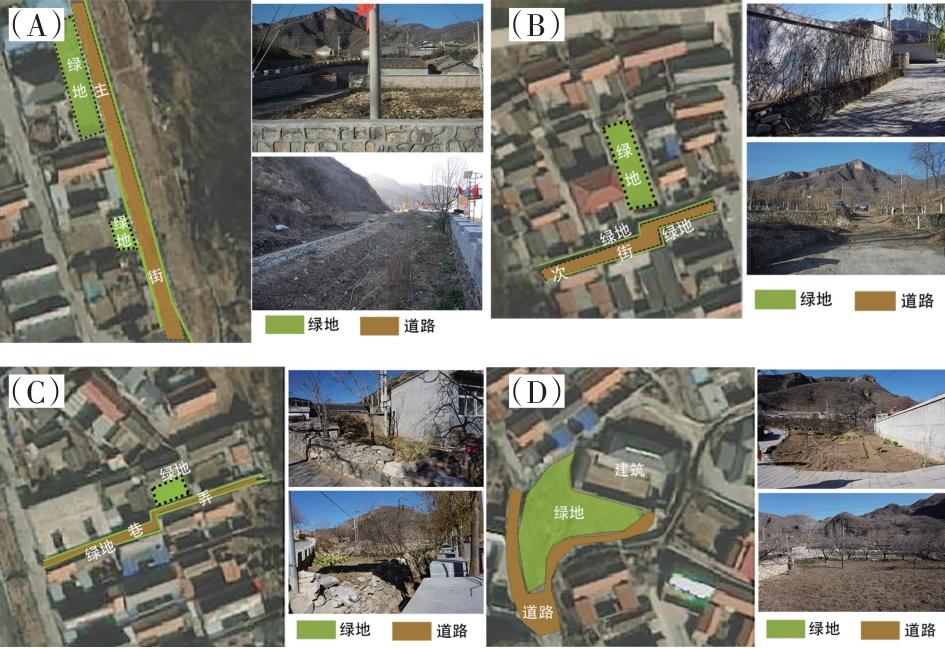
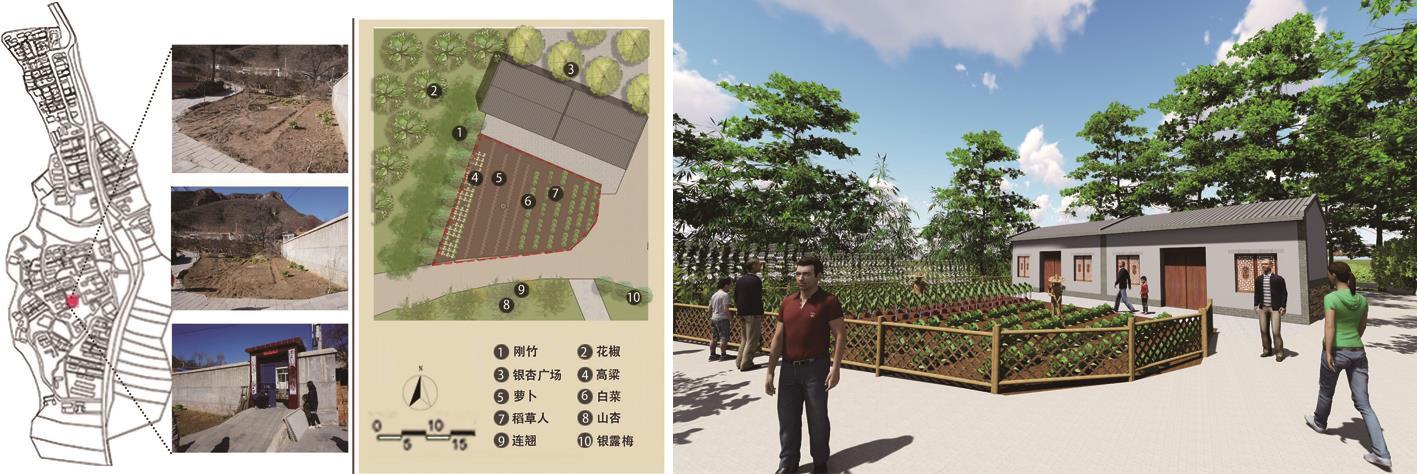
研究区地处长峪峡谷。该村街巷主要由主街—次街—巷弄三级道路构成[14](图2)。根据绿地在不同等级街巷空间中的分布情况,将核心区街巷绿地空间类型分为主街型街巷绿地空间、次街型街巷绿地空间、巷弄型街巷绿地空间以及入户型街巷绿地空间(图3)。主街承担着衔接村落内外空间的重要作用,宽度较宽,绿地分布多沿街巷两侧进行布置,起到引导视线、形象展示的作用,多采用种植池式、花带式、花境式、盆栽式等种植形式,一般种植核桃、海棠等植物。次街是主街通往住宅的重要道路,起着分散人流的作用,较宽的次街两侧有种植池等绿地空间,常种植向日葵、萝卜等。巷弄一般宽度较窄,仅能供一人或一车通行,绿地分布一般以种植池为主,种植山桃、芹菜等。入户型街巷绿地空间一般指宅院周围的绿地空间,这类空间根据周围环境不同,面积可大可小;多采用花带式等种植方式,种植榆树、石榴等树种。
4.2 长峪城村街巷绿地空间可食性植物景观设计
4.2.1 主街型街巷绿地
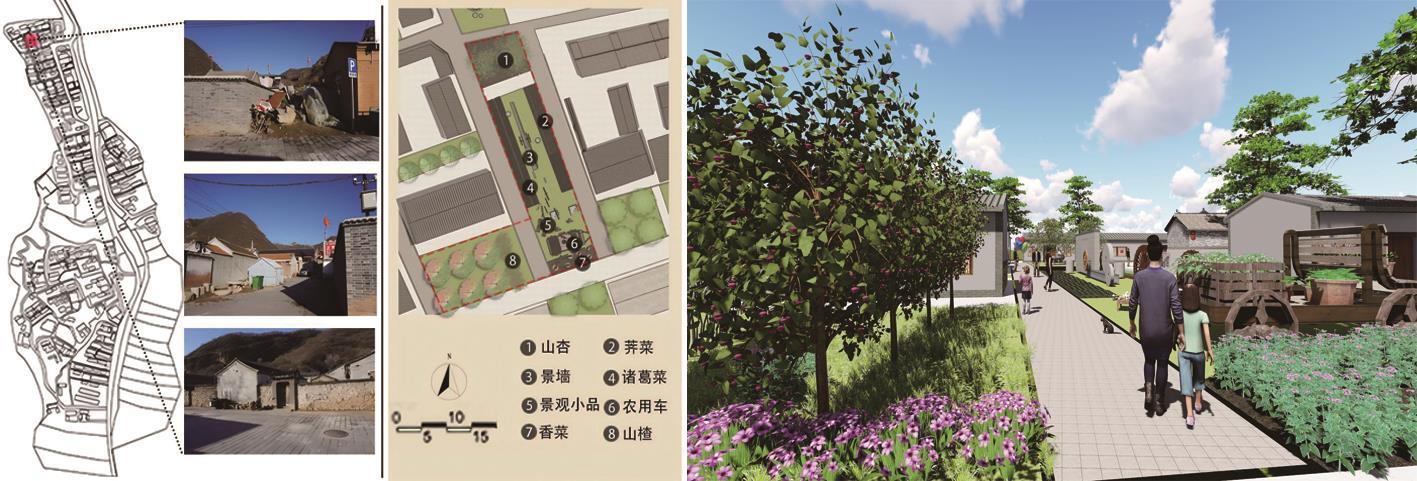
主街街巷空间人流量较大,可食性植物景观多采用两面可观赏的种植形式,如种植池式、花带式、花境式、盆栽式等,既能有效引导人流视线,又能充分展现村落特色风貌。在原有空间基础之上,与乡村整体景观环境相协调,保持景观上的连续性。可食性植物种类选择遵循植物多样性的原则,尽量保留街巷两侧原有植物,如核桃、海棠等,保持乡土植物的种植特色,并搭配种植杏、枣、花椒、紫苏、碱蓬、诸葛菜、荠菜、藿香等可食性植物,在竖向上形成一个既有观赏性又有实用性的景观群落结构,最大程度地发挥街巷两侧景观绿化的生态效益和景观效益。同时,运用木车、枯木等景观小品增添空间趣味,吸引人流(图4)。
4.2.2 次街型街巷绿地
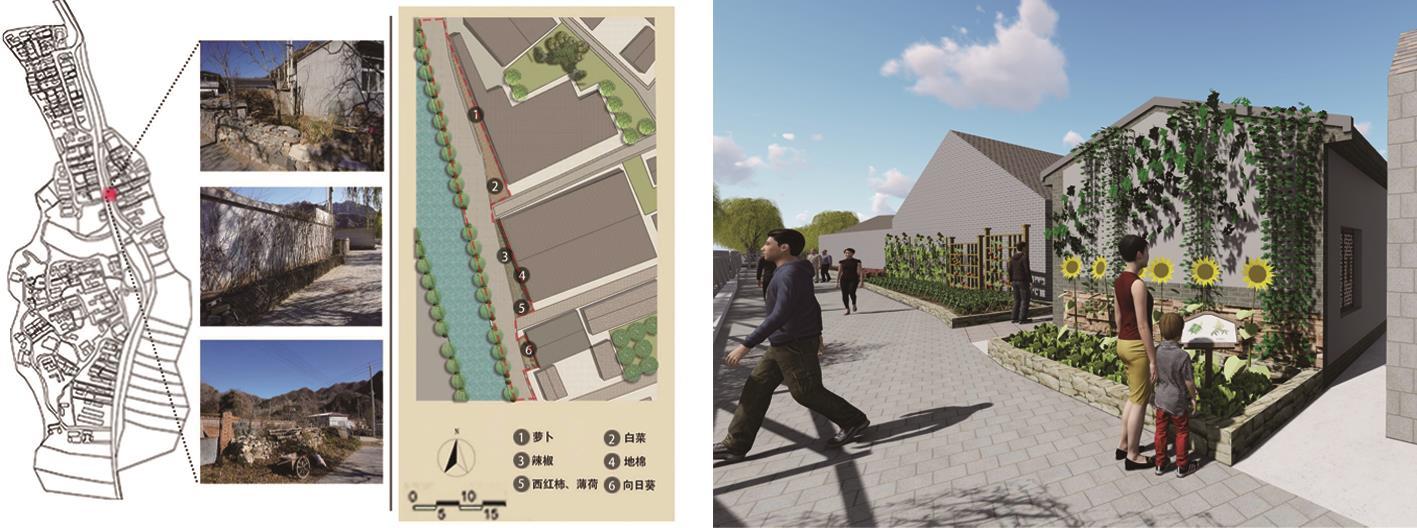
次街连接主街及巷弄,住宅建筑沿街矗立,建筑界面为可食性植物景观立面设计提供支持,种植模式主要以附壁式、篱垣式、花带式等为主,既能柔化空间界面,又能起到良好的人流分散与引导作用。在设计时主要体现景观的生产性、科普性及参与性,为当地居民提供交流、休闲娱乐的场地。设置景观展示牌,科普可食性植物景观相关知识,其颜色和形式与周围建筑风格保持统一。可食性植物选择向日葵、萝卜、白菜、辣椒、扁豆、西红柿、地锦、山葡萄等(图5)。
4.2.3 巷弄型街巷绿地
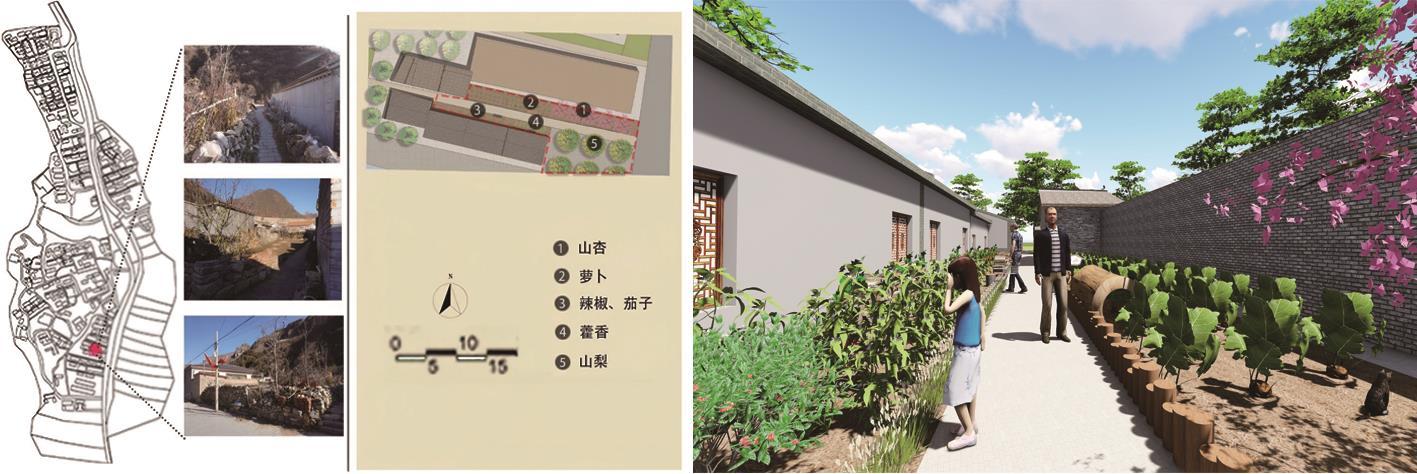
巷弄型街巷与村落次街相连,为住宅的入户路,主要为住宅所有者服务,公共性不强。街巷尺度较窄,种植模式主要采用花带式、花境式,有助于简化种植层次,保障通行顺畅。可食性植物种类选择以农家常见可食植物为主,满足住户相关需求,主要有山桃、芹菜、薄荷、藿香、香菜、生菜、蒲公英等(图6)。
4.2.4 入户型街巷绿地


5 结语
本文分析了北京山村街巷植物景观规划现状、山村地区常见可食性植物及其应用形式,并以北京昌平长峪城村街巷绿地空间为载体进行可食性植物设计实践。研究区山村街巷的植物规划在树种配置、科学管护、规划种植等方面暂面临一定挑战;该地植物资源丰富,可从植物使用功能、可食用部位及观赏季节三个维度对可食性植物进行分类;植物景观应用形式有篱垣式、棚架式、附壁式、挑台式、花境式等;结合街巷绿地空间建筑、道路、水体、小品等元素进行可食性植物景观设计,寻求乡村景观设计的创新,打造有乡土气息、魅力独特的乡村景观。