

外来入侵植物是指通过自然或人为途径引入到自然分布区外,并在自然、半自然生态系统或生境中建立种群,对入侵地的生态环境或其中一些物种造成威胁的植物[1]。刺果瓜(Sicyos angulatus)属于强入侵物种,其能抢占生境资源,快速繁殖生长,通过影响本地植物的生态过程和群落动态,破坏其生态系统结构和功能,引起其数量减少[2]。近年来,该植物在全球范围内持续扩散蔓延,严重干扰入侵区域农业生产活动;同时,其与本土物种争夺生存空间,对入侵区域生物多样性构成威胁[3]。
目前,关于刺果瓜的研究主要集中在危害及分布蔓延趋势、营养和繁殖生长竞争策略、防治措施以及医药应用等方面。杨冬臣等[4]、徐艳玲等[5]基于MaxEnt模型预测刺果瓜在我国的适生区及潜在分布范围,结果表明,受气候变化影响,其适生区将持续扩张,可能向西北方向及高纬度地区延伸。何莉莉等[6]研究发现,该植物在玉米田适生区可导致玉米产量减损达50%。张克亮等[7]研究指出,当前对刺果瓜的防治以人工拔除、机械清除、化学防治和生物防治为主。Kim等[8]研究表明,刺果瓜凭借独特的生物学特性,对盐酸—乙醇诱导的小鼠急性胃炎及胃溃疡具有一定胃黏膜保护作用,说明该物种在人类胃部疾病辅助治疗领域具备良好的开发潜力与应用前景。
当前,刺果瓜在贵州省威宁县有分布,为贵州省植物新记录种,相关凭证标本保存于贵州省生物研究所植物标本馆(HGAS)。外来入侵植物的防治与生物安全、生态安全息息相关[9]。因此,及时掌握其扩散动态,对于科学制定防控对策具有重要意义。本文对刺果瓜的植物学特征、危害特点、入侵途径进行了概述,并提出防治措施,旨在为相关地区的刺果瓜防治提供参考。
1 刺果瓜植物学特征
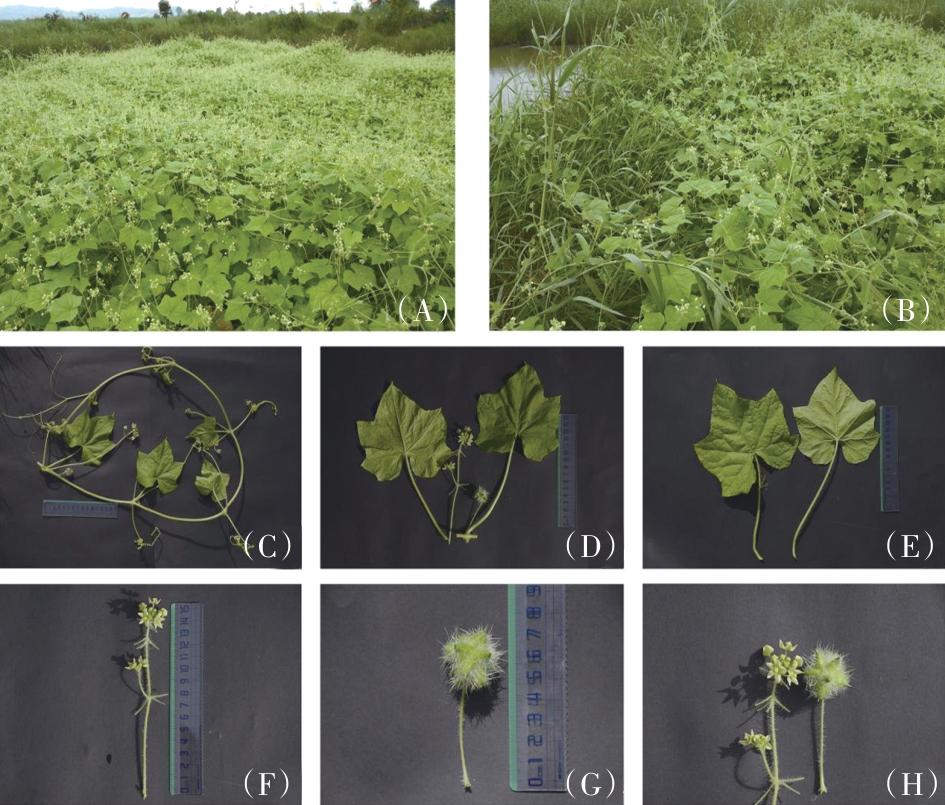
刺果瓜为葫芦科刺果瓜属一年生草质藤本植物,茎细长,通常在5~6 m,具有纵向排列的棱槽,其上散生硬毛(图1C);卷须3~5裂[10],裂片三角形,叶柄长,具有短柔毛;叶圆形或卵圆形,长、宽近等长,在5~20 cm;边缘具锯齿,两面微糙(图1E)。雌雄同株,雄花总状或头状聚伞花序,花序梗长10~20 cm,具短柔毛(图1D);花直径9~14 mm,白色至淡黄绿色,能吸引蜜蜂、黄蜂、蝴蝶等传粉昆虫。花托长4~5 mm,花冠具浓密柔毛,花萼5片,披针形至锥形;雌花聚成头状花序,无柄,花序梗长1~2 cm(图1F)。果实簇生,长卵圆形,长10~15 mm,顶端尖,其上密布长刚毛,不开裂,内含种子1枚(图1G)。种子橄榄形至扁卵形,光滑,长7~10 mm。花期7—10月,果期8—11月[11]。该植物为单性花,自交不亲和,雌株数量较雄株多,有利于提高雌株的传粉受精概率,从而为刺果瓜繁殖种子创造了有利条件,使其在短时间内快速扩散。


2 刺果瓜的危害特点
刺果瓜是极具威胁的外来入侵物种之一,目前该植物已被列入《中国自然生态系统外来入侵物种名单》(第四批)和《重点管理外来入侵物种名录》,也被列入我国检疫性恶性杂草名录。刺果瓜繁殖能力极强,果实密被刚毛,藤蔓具备攀援特性,可覆盖局部乃至整个树冠,遮挡光照、阻碍林木光合作用,严重时造成植株衰亡[13]。该植物在种间竞争中可释放化感物质,通过化感效应在生境竞争中占据明显优势,易形成单优种群落,从而造成本土物种数量减少、农作物减产,降低区域物种多样性[2]。刺果瓜可入侵玉米、大豆等农作物,通过攀援覆盖植株冠层,严重抑制其光合作用。李霄峰等[14]研究报道,每10 m²农田内,若刺果瓜入侵数量在15~20株,可造成玉米减产80%。
3 刺果瓜的入侵途径
4 刺果瓜防控对策
近年来,随着威宁县旅游业、交通运输业和对外贸易的快速发展,区域人员流动与物流强度明显增强,加之贵州喀斯特地貌分布广泛,生态系统本底较脆弱,生物入侵引发的生态安全风险将进一步加剧。目前,刺果瓜仅在威宁县呈点状、小面积分布,处于“可根除窗口期”。若不及时采取有效干预措施,可能形成持久性土壤种子库,增加后续治理难度[18]。因此,需构建集监测预警、快速处置、源头管控与社会共治于一体的综合防控体系,抓住根除时机,阻断扩散路径,提升刺果瓜防控的整体效能。
4.1 加强监测与早期快速响应
刺果瓜繁殖力极强,易形成单优群落,须早监测、快清除[19]。现阶段该入侵植物在威宁县呈点状发生,应立即以发现地为核心、向外辐射5~10 km开展系统调查,并同步覆盖周边县市。依托现有县—乡—村三级农技员、生态护林员网络,健全全域常态化监测体系,重点排查耕地、果园、公路沿线及喀斯特石缝等隐蔽生境。定点布设红外相机、无人机巡护,常年监测候鸟种群、数量、活动范围及迁徙停留周期,锁定取食、排泄、停留高频点位。建立即时清除机制,检查人员现场拍照、微信工作群实时上传定位,植保机构组织人工拔除或割除,确保在种子成熟前处理完成,防止形成持久土壤种子库。
4.2 物理防除与化学防治协同
4.3 源头检疫与关键通道拦截
刺果瓜对玉米、大豆、苹果、核桃等研究区特色作物具有缠绕压顶危害,应将玉米种子、大豆种子、果树苗木、牧草包衣种子及带土寄主全部纳入高风险检疫名录。采购前,要求供货方随货附具“无刺果瓜混杂”植物检疫合格证明,并对每批次种子进行X光机过筛或DNA条形码复核。设置3座临时检查点,重点抽检调运玉米种子、烤烟漂浮苗、肉牛运输车厢垫草及轮胎缝隙,严防刺果瓜种子随货物、牲畜跨区域传入。
4.4 构建长效监测与区域联防平台
目前,威宁地区已发现刺果瓜零星分布,但该物种的繁殖来源与扩散传播路径尚不明确,亟须构建常态化长效监测体系。一是建立刺果瓜入侵数据库,发现踪迹及时上报,以便快速掌握分布面积、数量动态变化。二是建立区域协调联防制度,与已发现刺果瓜分布的周边省市协同构建区域联防体系[21]。三是在刺果瓜繁殖体成熟前,及时向尚未分布但传播风险较高的相邻区域发布预警信息,强化植物检疫措施。一旦在原本无分布区域发现刺果瓜,立即向周边地区发出预警,做到早发现、早清除,有效防范其潜在扩散带来的生态影响。
4.5 加强科普宣传
制作介绍刺果瓜识别要点及危害的宣传手册,在学校、社区或农村集市分发,结合案例讲解危害,增强全民防范入侵物种意识;加强对农业、园林等从业人员和种植者的科普培训,提升对刺果瓜种子、秧苗、果实的鉴定识别能力和危害认识[22]。
5 结语
刺果瓜具有独特的生物学特性,可分泌化感物质,能够快速侵占生境、抑制周边植物生长,入侵潜力极强。本文系统分析了刺果瓜的生物学特性、传播方式及防控技术措施,旨在为威宁地区未来开展刺果瓜入侵防控工作提供实践参考。调查发现,刺果瓜通过缠绕茎蔓攀附芦苇并造成绞杀效应,不仅与芦苇竞争光照、水分和养分,还通过物理压迫导致芦苇茎秆弯曲甚至折断,引起局部倒伏,部分区域原有的芦苇群落已出现明显退化或消失。该现象表明,刺果瓜不仅具有较强的环境适应性与抗逆能力,还可通过抑制周边植物生长,进而改变入侵区域的群落组成。研究区刺果瓜现存种群呈局域性分布,尚未进入扩散暴发期。可及时采取人工刈割、整株拔除等物理防控措施,破坏其攀援附着结构,切断种子扩散传播途径。同时建立常态化长期监测机制,对适生区域开展定期踏查,重点关注农田边缘、湿地周边等高风险入侵地段;对于大范围区域及人员难以抵达的点位,可采用无人机辅助遥感监测,力争在种群大规模暴发前实现精准防控,维护区域生态稳定与农业生产安全。